Feeds:
Posts
Comments
Eight women representing prominent mental diag...
Image via Wikipedia

pointer to symptommedia.org – fantastic video resource of specific symptoms of mental illness.

“The intention of these clips are to be used in the classroom setting as visual compliments to the written description of symptoms for psychological phenomena found in the DSM handbook.”

Reblog this post [with Zemanta]
Drowning
Image by Sbrimbillina via Flickr

Here’s a gene whose relationship to mental function is very straightforward.  If you hold your breath, your blood pH falls (more CO2 leads to more free H+ protons dissolved in your blood stream).  You also may become anxious, or worse if you are forced to hold your breath.  How does this process work?

Ziemann et al., in their new paper, “The Amygdala Is a Chemosensor that Detects Carbon Dioxide and Acidosis to Elicit Fear Behavior” [doi 10.1016/j.cell.2009.10.029] show that the acid sensing ion channel-1a (ASIC1a) gene is a proton-sensing Na+ and Ca++ channel – designed to activate dendritic spines when sensing H+ and drive neuronal activity.  Mice that lack this gene are not sensitive to higher CO2 levels, but when the protein is replaced in the amygdala, the mice show fearful behavior in response to higher CO2 levels.  Mother nature has provided a very straightforward way – ASIC1a activation of our fear center – of letting us know that no oxygen is a BAD thing!

Reblog this post [with Zemanta]

*** PODCAST accompanies this post ***

Nowadays, it seems that genomics is spreading beyond the rarefied realm of science and academia into the general, consumer-based popular culture.  Quelle surprise!?  Yes, the era of the personal genome is close at hand, even as present technology  provides – directly to the general consumer public – a  genome-wide sampling of many hundreds of thousands of single nucleotide variants.   As curious early adopters begin to surf their personal genomic information, one might wonder how they, and  homo sapiens in general, will ultimately utilize their genome information.  Interestingly, some have already adapted the personal genome to facilitate what homo sapiens loves to do most – that is, to interact with one another.  They are at the vanguard of a new and hip form of social interaction known as “personal genome sharing”.  People connecting in cyberspace – via  haplotype or sequence alignment – initiating new social contacts with distant cousins (of which there may be many tens of thousands at 5th cousins and beyond).  Sharing genes that regulate the social interaction of sharing genes, as it were.

A broader view of social genes, within the context of our neo-Darwinian synthesis, however, shows that the relationship between the genome and social behavior can be rather complex.  When genes contribute directly to the fitness of an organism (eg. sharper tooth and claw), it is relatively straightforward to explain how novel fitness-conferring genetic variants increase in frequency from generation to generation.  Even when genetic variants are selfish, that is, when they subvert the recombination or gamete production machinery, in some cases to the detriment of their individual host, they can still readily spread through populations.  However, when a new genetic variant confers a fitness benefit to unrelated individuals by enhancing a cooperative or reciprocally-altruistic form of social interaction, it becomes more difficult to explain how such a novel genetic variant can take hold and spread in a large, randomly mating population.  Debates on the feasibility natural selection acting “above the level of the individual” seem settled against this proposition.  However, even in the face of such difficult population genetic conundrums, research on the psychology, biology and evolutionary genetics of social interactions continues unabated.  Like our primate and other mammalian cousins, with whom homo sapiens shares some 90-99% genetic identity, we are an intensely social species as our literature, poetry, music, cinema, not to mention the more recent twittering, myspacing, facebooking and genome-sharing demonstrate.

Indeed, many of the most compelling examples of genetic research on social interactions are those that reveal the devastating impacts on psychological development and function when social interaction is restricted.  In cases of maternal and/or peer-group social separation stress, the effects on gene expression in the brain are dramatic and lead to long-lasting consequences on human emotional function.  Studies on loneliness by John Cacioppo and colleagues reveal that even the perception of loneliness is aversive enough to raise arousal levels which, may, have adaptive value.  A number of specific genes have been shown to interact with a history of neglect or maltreatment in childhood and, subsequently, increase the risk of depression or emotional lability in adulthood.  Clearly then, despite the difficulties in explaining how new “social genes” arise and take hold in populations, the human genome been shaped over evolutionary time to function optimally within the context of a social group.

From this perspective, a new paper, “Oxytocin receptor genetic variation relates to empathy and stress reactivity in humans” by Sarina Rodrigues and colleagues [doi.org/10.1073/pnas.0909579106] may be of broad interest as a recent addition to a long-standing, but now very rapidly growing, flow of genetic research on genes and social interactions.  The research team explored just a single genetic variant in the gene encoding the receptor for a small neuropeptide known as oxytocin, a protein with well-studied effects on human social interactions.  Intra-nasal administration of oxytocin, for example, has been reported to enhance eye-gaze, trust, generosity and the ability to infer the emotional state of others.  In the Rodrigues et al., study, a silent G to A change (rs53576) within exon 3 of the oxytocin receptor (OXTR) gene is used to subgroup an ethnically diverse population of 192 healthy college students who participated in assessments for pro-social traits such as the “Reading the Mind in the Eyes” (RMET) test of empathetic accuracy as well as measures of dispositional empathy.  Although an appraisal of emotionality in others is not a cooperative behavior per se, it has been demonstrated to be essential for healthy social function.  The Rodrigues et al., team find that the subgroup of students who carried the GG genotype were more accurate and able to discern the emotional state of others than students who carried the A-allele.  Such molecular genetic results are an important branching point to further examine neural and cognitive mechanisms of empathy as well as long-standing population genetic concerns of how new genetic variants like the A-allele of rs53576 arose and managed to take-hold in human populations.

Regarding the latter, there are many avenues for inquiry, but oxytocin’s role in the regulation of the reproductive cycle and social behavior stands out as an ideal target for natural selection.  Reproductive and behavioral-genetic factors that influence the ritualized interactions between males and females have been demonstrated to be targets of natural selection during the process of speciation.  New variants can reduce the cross-mating of closely related species who might otherwise mate and produce sterile or inviable hybrid offspring.  So-called pre-mating speciation mechanisms are an efficient means, therefore, to ensure that reproduction leads to fit and fertile offspring.  In connection with this idea, reports of an eye-gaze assessment similar to the RMET test used by Rodrigues et al., revealed that women’s pupils dilate more widely to photos of men they were sexually attracted to during their period of the menstrual cycle of greatest fertility, thus demonstrating a viable link between social preference and reproductive biology.  However, in the Rodrigues et al., study, it was the G-allele that was associated with superior social appraisal and this allele is not the novel allele, but rather the ancestral allele that is carried by chimpanzees, macaques and orangutans.  Therefore, it does not seem that the novel A-allele would have been targeted by natural selection in this type of pre-mating social-interaction scenrio.  Might other aspects of OXTR function provide more insight then?  Rodrigues et al.,  explore the role of the gene beyond the social interaction dimension and note that OXTR is widely expressed in limbic circuitry and also plays a broader modulatory role in many emotional reactivity.  For this reason, they sought to assess the stress responsivity of the participants via changes in heart-rate that are elicited by the unpredictable onset of an acoustic startle.  The results show that the A-allele carriers showed greater stress reactivity and also greater scores on a 12-point scale of affective reactivity.  Might greater emotional vigilance in the face of adversity confer a fitness advantage for A-allele carriers? Perhaps this could be further explored.

Regarding the neural and cognitive mechanisms of empathy and other pro-social traits, the Rodrigues et al., strategy demonstrates that when human psychological research includes genetic information it can more readily be informed by a wealth of non-human animal models.  Comparisons of genotype-phenotype correlations at the behavioral, physiological, anatomical and cellular levels across different model systems is one general strategy for generating hypotheses about how a gene like OXTR mediates and moderates cognitive function and also why it (and human behavior) evolved.  For example, mice that lack the OXTR gene show higher levels of aggression and deficits in social recognition memory.  In humans, genetic associations of the A-allele with autism, and social loneliness form possible translational bridges.  In other areas of human psychology such as in the areas of attention and inhibition, several genetic variants correlate with specific  mental operations and areas of brain activation.  The psychological construct of inhibition, once debated purely from a behavioral psychological perspective, is now better understood to be carried out by a collection of neural networks that function in the lateral frontal cortex as well as basal ganglia and frontal midline.  Individual differences in the activation of these brain regions have been shown to relate to genetic differences in a number of dopaminergic genes, whose function in animal models is readily linked to the physiologic function of specific neural circuits and types of synapses.  In the area of social psychology, where such types of neuroimaging-genetic studies are just getting underway, the use of “hyper-scanning”, a method that involves the simultaneous neuroimaging of two or more individuals playing a social game (prisoners dilemma) reveals a co-activation of dopamine-rich brain areas when players are able to make sound predictions of other participant’s choices.  These types of social games can model specific aspects of reciprocal social interactions such as trust, punishment, policing, sanctions etc. that have been postulated to support the evolution of social behavior via reciprocal altruism.  Similar imaging work showed that intra-nasal administration of oxytocin potently reduced amygdala activation and decreased amygdala coupling to brainstem regions implicated in autonomic and behavioural manifestations of fear.  Such recent examples affirm the presence of a core neural circuitry involved in social interaction whose anatomical and physiological properties can be probed using genetic methods in human and non-human populations.

Although there will remain complexities in explaining how new “social genes” can arise and move through evolutionary space and time (let alone cyberspace!) the inter-flows of genetic data and social psychological function in homo sapiens will likely increase.  The rising tide should inevitably force both psychologists and evolutionary biologists to break out of long-standing academic silos and work together to construct coherent models that are consistent with cognitive-genetic findings as well as population- genetic and phylogenetic data.  Such efforts will heavily depend on a foundation of psychological research into “social genes” in a manner illustrated by Rodrigues et al.

*** PODCAST accompanies this post *** Thanks agian Dr. Rodrigues!!!

Reblog this post [with Zemanta]

Topoisomerase

Beer ad

Where da rodents kick it
Image by Scrunchleface via Flickr

A recent GWAS study identified the 3′ region of the liver- (not brain) expressed PECR gene (rs7590720(G) and rs1344694(T)) on chromosome 2 as a risk factor for alcohol dependency.  These results, as reported by Treutlein et al., in “Genome-wide Association Study of Alcohol Dependence” were based on a population of 487 male inpatients and a follow-up re-test in a population of 1024 male inpatients and 996 control participants.

The authors also asked whether lab rats who – given the choice between water-based and ethanol-spiked beverages over the course of 1 year – showed differential gene expression in those rats that were alcohol preferrers vs. alcohol non-preferring rats.  Among a total of 542 genes that were found to be differentially expressed in the amygdala and caudate nucleus of alcohol vs. non-alcohol-preferring rat strains,  a mere 3 genes – that is the human orthologs of these 3 genes – did also show significant association with alcohol dependency in the human populations.  Here are the “rat genes” (ie. human homologs that show differential expression in rats and association with alcohol dependency in humans): rs1614972(C) in the alcohol dehydrogenase 1C (ADH1C) gene, rs13273672(C) in the GATA binding protein 4 (GATA4) gene, and rs11640875(A) in the cadherin 13 (CDH13) gene.

My 23andMe profile gives a mixed AG at rs7590720, and a mixed GT at rs1344694 while I show a mixed CT at rs1614972, CT at rs13273672 and AG at rs11640875.  Boooring! a middling heterozygote at all 5 alcohol prefer/dependency loci.   Were these the loci for chocolate prefer/dependency I would be a full risk-bearing homozygote.


Reblog this post [with Zemanta]

genes and brains meme-art

actually my brain!

johnbrain_chrsms

sgt-peppers-lonely-heart-club-braines

ruler - STUPID INCOMPETENT MANUFACTURERS
Image by Biking Nikon PDX via Flickr

One of the difficult aspects of understanding mental illness, is separating the real causes of the illness from what might be secondary or tertiary consequences of having the illness.  If you think about a car whose engine is not running normally, there may be many observable things going wrong (pinging sound, stalling, smoke, vibration, overheating, loss of power, etc.) – but, what is the real cause of the problem?  What should be done to fix the car? – a faulty sparkplug or timing belt perhaps?  Such is often the problem in medicine, where a fundamental problem can lead to a complex, hard-to-disentangle, etiology of symptoms.  Ideally, you would fix the core problem and then expect the secondary and tertiary consequences to normalize.

This inherent difficulty, particularly in mental illness, is one of the reasons that genetic research is of such interest.  Presumably, the genetic risk factors are deeper and more fundamentally involved in the root causes of the illness – and hence – are preferable targets for treatment.  The recent paper, “Widespread Reductions of Cortical Thickness in Schizophrenia and Spectrum Disorders and Evidence of Heritability” [Arch Gen Psychiatry. 2009;66(5):467-477] seeks to ascertain whether one aspect of schizophrenia – a widespread and well-documented thinning of the neocortex – is due to genetic risk (hence something that is closer to a primary cause) or – rather – if cortical thinning is not due to genetics, and so more of a secondary consequence of things that go wrong earlier in the development of the illness.

To explore this idea, the team of Goldman et al., did something novel.  Rather than examine the differences in cortical thickness between patients and control subjects, the team evaluated the cortical thickness of 59 patients and 72 unaffected siblings as well as 196 unrelated, matched control participants.  If the cortical thickness of the siblings (who share 50% of their genetic variation) was more similar to the patients, then it would suggest that the cortical thinning of the patients was under genetic control and hence – perhaps – a biological trait that is more of a primary cause.  On the other hand, if the cortical thickness of the siblings (who share 0% of their genetic variation) was more similar to that of the healthy control participants, then it would suggest that cortical thinning was – perhaps more of a secondary consequence of some earlier deficit.

The high-resolution structural neuroimaging allowed the team to carefully assess cortical thickness – which is normally between a mere 2 and 4 millimeters – across different areas of the cortex.  The team reports that, for the most part, the cortical thickness measures of the siblings were more similar to the unrelated controls – thus suggesting that cortical thickness may not be a direct component of the genetic risk architecture for schizophrenia.  Still, the paper discusses several candidate mechanisms which could lead to cortical thinning in the illness – some of which might be assessed in the future using other imaging modalities in the context of their patient/sibling/control experimental design.

Reblog this post [with Zemanta]
Mi iPod con vídeo
Image by juanpol via Flickr

It was a great pleasure to speak with Professor Garet Lahvis from the Department of Behavioral Neuroscience at the Oregon Health and Science University, and learn more about how the biology of empathy and social behaviors in general can be approached with animal models that are suitable for genetic studies.  The podcast is HERE and the post on his lab’s recent paper, “Empathy Is Moderated by Genetic Background in Mice” is HEREThank you again Dr. Lahvis!

Reblog this post [with Zemanta]
LARRY DAVID AT TRIBECA FILM FESTIVAL WIKIPEDIA
Image by roberthuffstutter via Flickr

pointer to: Eye-on-DNA’s post of last nights episode of “Lopez Tonight” where Larry David shared the unveiling of his “Ancestry-by-DNA” results.  He was good sport and it was great to see science as FUNHis results made me wonder if such ancestry tests are reliable though.

Reblog this post [with Zemanta]
Gravestone of Samuel Coleridge-Taylor,Wallington
Image by sludgegulper via Flickr

Few events are as hard to understand as the loss of a loved one to suicide – a fatal confluence of factors that are oft scrutinized – but whose analysis can provide little comfort to family and friends.  To me, one frightening and vexing aspect of what is known about the biological roots of depression, anxiety, impulsivity and other mental traits and states associated with suicide, is the way in which early life (even prenatal) experience can influence events in later life.  As covered in this blog here and here, there appear to be very early interactions between emotional experience in early life and the methylation of specific points in the genome.  Such methylation – often referred to as epigenetic marks – can regulate the expression of genes that are important for synaptic plasticity and cognitive development.

The recent paper, “Alternative Splicing, Methylation State, and Expression Profile of Tropomyosin-Related Kinase B in the Frontal Cortex of Suicide Completers” is a recent example of a link between epigenetic marks and suicide.  The team of Ernst et al., examined gene expression profiles from the frontal cortex and cerebellum of 28 males lost to suicide and 11 control, ethnically-matched control participants.  Using a subject-by-subject comparison method described as “extreme value analysis” the team identified 2 Affymetrix probes: 221794_at and 221796_at – that are specific to NTRK2 (TRKB) gene – that showed significantly lower expression in several areas of the frontal cortex.  The team also found that these probes were specific to exon 16 – which is expressed only in the TRKB.T1 isoform that is expressed only in astrocytes.

Further analysis showed that there were no genetic differences in the promoter region of this gene that would explain the expression differences, but, however, that there were 2 methylation sites (epigenetic differences) whose methylation status correlated with expression levels (P=0.01 and 0.004).  As a control, the DNA-methylation at these sites was not correlated with TRKB.T1 expression when DNA and RNA was taken from the cerebellum (a control since the cerebellum is not thought to be directly involved in the regulation of mood).

In the case of TRKB.T1 expression, the team reports that more methylation at these 2 sites in the promoter region is associated with less TRKB.T1 expression in the frontal cortex.  Where and when are these marks laid down?  Are they reversible?  How can we know or suspect what is happening to our epigenome (you can’t measure this by spitting into a cup as with current genome sequencing methods)? To me, the team has identified an important clue from which such follow-up questions can be addressed.  Now that they have a biomarker, they can help us begin to better understand our complex and often difficult emotional lives within a broader biological context.

Reblog this post [with Zemanta]
slow motion video
Image via Wikipedia

The neuregulin-1 (NRG1) gene is widely known as one of the most well-replicated genetic risk factors for schizophrenia.  Converging evidence shows that it is associated with schizophrenia at the gene expression and mouse model levels which are consistent with its molecular functions in neural development.   However, in several recent genome-wide association studies (GWAS), there appeared nary a blip of association at the 8p12 locus where NRG1 resides.  What gives?

While there are many possibilities for this phenomenon (some discussed here), the recent paper, “Support for NRG1 as a Susceptibility Factor for Schizophrenia in a Northern Swedish Isolated Population” by Maaike Alaerts and colleagues, suggest that the typical GWAS study may not adequately probe genetic variation at a fine enough scale – or, if you will, use a netting with sufficiently small holes.  By holes, I mean both the physical distance between genetic markers and the frequency with which they occur in populations.  While GWAS studies may use upwards of 500,000 markers – that’s a pretty fine scale net for a 3,000,000,000bp genome (about 6,000bp apart) – Alaerts and colleagues set forth with slightly finer-scale netting.  They focus on a 157kb region that is about 60kb upstream from the start of the NRG1 gene and construct a net consisting of 37 variants between the markers rs4268087 and rs17601950 (average spacing about 5kb).  They used the tagger program to select markers that account for all haplotypes whose frequency is higher than 1.5%.  Thus – even though there are still more than 500 possible snps in the region Alaerts and colleagues are exploring, they are using a slightly finer netting than a typical GWAS.

The results of their analysis (using GENEPOP) of 486 patients and 514 ethnically matched control participants from northern Sweden did reveal significant associations in an area slightly downstream (about 50kb closer to the start point of the NRG1 gene) than the location of the “previously often replicated variants”, suggesting that the region does confer some risk for schizophrenia, but, that diagnostic markers for such risk will be different for different populations.  More telling however are the very weak effects of the haplotypes that show significant association.  Those haplotypes with the most significance show meager differences in how often they are observed in patients vs. controls.  For example, one haplotype was observed in 5% of patients vs. 3% of controls. Others examples were, 11 vs. 9, 25 vs. 22 and 40% vs. 35% – revealing the very modest (krill sized) effects that single genetic variants can have in conferring risk toward mental illness.

However, there are potentially lots of krill in the genomic sea!

Reblog this post [with Zemanta]
MAOA
Image via Wikipedia

pointer to: The Neurocritic’s coverage on the association of low-efficiency alleles of MAOA and credit card debt.  Will there be a genotype box to check on future credit card applications? More posts on MAOA here.

Reblog this post [with Zemanta]
two pencils grade hb
Image via Wikipedia

pointer to: Darryl Cunningham Investigates – an amazing artist who’s work delves into mental health topics.

Reblog this post [with Zemanta]

movie_poster

Genome oppression

genetics_protest

Stuart Little
Image via Wikipedia

** podcast interview accompanies this post ** Lab mice have it pretty good I suppose.  Chow, water and mating ad libitum, fresh bedding, no predators.  Back in grad school, I usually handled my little mouse subjects gently so as not to frighten them and always followed the guidelines for humane treatment.  At the end of the day, however, I must confess that I didn’t actually care or empathize much with them.  For the most part, my attitude was, “Hey, they’re just mice – its not like I have Stuart Little here!”   I wonder.

As genetics and psychology are increasingly used to jointly explore the mechanisms of human cognition, more and more papers – particularly in the area of social and emotional systems – will make me question the, “hey, they’re just mice” assumption.

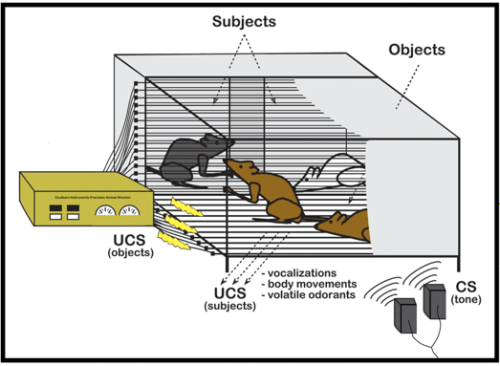
The free and open PLoS ONE paper, “Empathy Is Moderated by Genetic Background in Mice” is one of interest in this regard.  The authors have devised an experimental paradigm to ask whether emotional distress (to a brief foot-shock) in one mouse can influence the emotional state of an observer.  According to the authors, one of the inbred mouse strains, “acquired a classical conditioning (Pavlovian) association, which engendered a freezing response that was dependent upon the previous experience of distress in nearby conspecifics.”

Such a model – which to me, looks pretty humane, that is, in light of what they have learned about mice and empathy, and especially since human volunteers routinely participate in such mild wrist-shock paradigms – will likely be very useful for studies of specific genes where one can compare the “empathy” scores of inbred strains with and without the genetic modification.

mouseempathy

Reblog this post [with Zemanta]

Junk DNA

junkDNA

BrainMilk_blue4_small