Feeds:
Posts
Comments

Posts Tagged ‘evolution’

Mi iPod con vídeo
Image by juanpol via Flickr

It was a great pleasure to speak with Professor Garet Lahvis from the Department of Behavioral Neuroscience at the Oregon Health and Science University, and learn more about how the biology of empathy and social behaviors in general can be approached with animal models that are suitable for genetic studies.  The podcast is HERE and the post on his lab’s recent paper, “Empathy Is Moderated by Genetic Background in Mice” is HEREThank you again Dr. Lahvis!

Reblog this post [with Zemanta]

Read Full Post »

ipod
Image by Oliver Lavery via Flickr

Daniel R. Weinberger, M.D., Chief of the Clinical Brain Disorders Branch and Director of the Genes, Cognition and Psychosis Program, National Institute of Mental Health  discusses the background, findings and general issues of genes and mental illness in this brief interview on his paper, “A primate-specific, brain isoform of KCNH2 affects cortical physiology, cognition, neuronal repolarization and risk of schizophrenia”.  Click  HERE for the podcast and HERE for the original post.

Thanks again to Dr. Weinberger for his generous participation!

Reblog this post [with Zemanta]

Read Full Post »

Logo of the United States National Institute o...
Image via Wikipedia

Many thanks to Dr. Christina S. Barr from the National Institutes of Health/National Institute on Alcohol Abuse and Alcoholism-Laboratory of Clinical and Translational Studies, National Institutes of Health Animal Center for taking the time to comment on her team’s recent publication, “Functional CRH variation increases stress-induced alcohol consumption in primates” [doi:10.1073/pnas.0902863106] which was covered here.  On behalf of students and interested readers, I am so grateful to her for doing this!  Thank you Dr. Barr!

For readers who are unfamiliar with the extensive literature on this topic, can you give them some basic background context for the study?

“In rodents, increased CRH system functioning in parts of the brain that drive anxious responding (ie, amygdala) occurs following extended access to alcohol and causes animals to transition to the addicted state.  In rodent lines in which genetic factors drive increased CRH system functioning, those animals are essentially phenocopies of those in the post-dependent state.  We had a variant in the macaque that we expected would drive increased CRH expression in response to stress, and similar variants may exist in humans.  We, therefore, hypothesized that this type of genetic variation may interact with prior stress exposure to increase alcohol drinking.”

Can you tells us more about the experimental design strategy and methods?

“This was a study that relied on use of archived NIAAA datasets. The behavioral and endocrine data had been collected years ago, but we took a gene of interest, and determined whether there was variation. We then put a considerable amount of effort into assessing the functional effects of this variant, in order to have a better understanding of how it might relate to individual variation. We then genotyped archived DNA samples in the colony for this polymorphism.”

“I am actually a veterinarian in addition to being a neuroscientist- we have the “3 R’s”. Reduce, refine, and replace…..meaning that animal studies should involve reduced numbers, should be refined to minimize pain/distress and should be replaced with molecular studies if possible.  This is an example of how you can marry use of archived data and sophisticated molecular biology techniques/data analysis to come up with a testable hypothesis without the use of animal subjects. (of course, it means you need to have access to the datasets….;)”

How do the results relate to broader questions and your field at large?

“I became interested in this system because it is one that appears to be under intense selection.  In a wide variety of animal species, individuals or strains that are particularly stress-reactive may be more likely to survive and reproduce successfully in highly variable or stressful environments. Over the course of human evolution, however, selective pressures have shifted, as have the nature and chronicity of stress exposures.  In fact, in modern society, highly stress-reactive individuals, who are no less likely to be eaten by a predator (predation not being a major cause of mortality in modern humans), may instead be more likely to fall susceptible to various-stress related disorders, including chronic infections, diabetes, heart disease, accelerated brain aging, stress-related psychiatric disorders, and even drug and alcohol problems. Therefore, these genetic variants that are persistent in modern humans may make individuals more vulnerable to “modern problems.”

I do hope this helps. Let me know if it doesn’t, and I will try to better answer your questions.”

THANK YOU AGAIN VERY MUCH DR. BARR!!

Reblog this post [with Zemanta]

Read Full Post »

Read Full Post »

neo-Darwinist graffiti

neoDarwin_grafitti

Read Full Post »

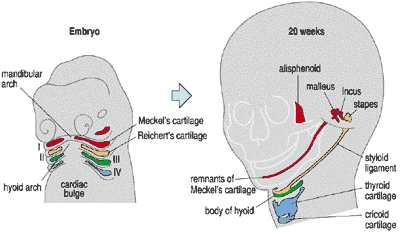
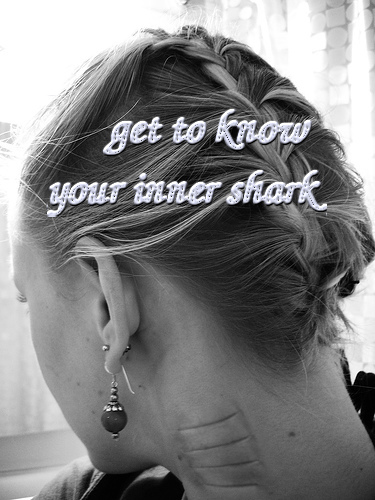
arch_fatesAm having a wonderful time reading, “Your Inner Fish” by Professor Neil Shubin – an exploration into the deep evolutionary roots of the human body.  Amazed to contemplate the embryonic structures known as the branchial arches, or gill arches – which we share with sharks! – and the role of the gcm2 gene that is expressed in these arches and controls salt balance in humans and fish.  Pharyngula has a wonderful post on this !! 

Hoping to find more deep evolutionary roots of mind and brain.
innershark

Reblog this post [with Zemanta]

Read Full Post »

William Faulkner
Image via Wikipedia

What hurts more – a broken toe or a broken heart?  Ask a parent and their forlorn 15 year-old who was not invited to the party that everyone is going to, and you might get different answers.  In some cases, the internal anguish of social exclusion or estrangement, may even – paradoxically – be relieved by self-infliction of physical pain, which is construed by some neuro-psychiatrists as a coping mechanism, wherein endogenous opioids are released by the physical injury (cutting, for instance) and may then soothe the internal feeling of anguish.

While there are many social, and psychological factors pertaining to the way in which people cope with internal and external pain, a recent research article from Dr. Naomi Eisenberger’s lab sheds light on a very basic aspect of this complex process – that is – the similarities and differences of neural mechanisms underlying social and physical pain.  In their recent paper, “Variation in the μ-opioid receptor gene (OPRM1) is associated with dispositional and neural sensitivity to social rejection” [doi:10.1073/pnas.0812612106] the authors asked healthy participants to lay in an MRI scanner and play a video game of catch / toss the ball with other “real people” by way of a computer interface.  During the game, the participant was rudely socially excluded by the other two players in order to induce the feelings of social rejection.  Participants also completed an instrument known as the “Mehrabian Sensitivity to Rejection Scale” and were genotyped for an A-to-G SNP (rs1799971) located in the opioid receptor (OPRM1) gene.  Previous research as found that the G-allele of OPRM1 is less expressed and that individuals who carry the GG form tend to need higher doses of opioids to feel relief from physical pain, and GG rhesus monkeys (interestingly, we share the same ancient A-to-G polymorphism with our primate ancestors) demonstrate more distress when separated from their mothers.

The results of the study show that the participants who carry the AA genotype are somewhat less sensitive to social rejection and also show less brain activity in the anterior cingulate cortex (an area whose activity has long been associated with responses to physical pain) as well as the anterior insula (an area often times associated with unpleasant gut feelings) when excluded during the ball-toss game.  Further statistical analyses showed that the activity in the cingulate cortex was a mediator of the genetic association with rejection sensitivity – suggesting that the genetic difference exerts its effect by way of its role in the anterior cingulate cortex.   Hence, they have localized where in the brain, this particular genetic variant exerts its effect.  Very cool indeed!!

Stepping back, I can’t help but think of the difficulties people have in coping with internal anguish, which – if not understood by their peers – can, mercilessly, lead to further exclusion, estrangement and stigmatization.  Studies like this one reveal – from behavior, to brain, to genome – the basic biology of this important aspect of our social lives, and can help to reverse the marginalization of people coping with internal anguish.

—-

The picture is of William Faulkner who is quoted, “Given the choice between the experience of pain and nothing, I would choose pain.”  I wonder if he was an AA or a G-carrier?  I feel rather lucky to find that my 23andMe profile shows an AA at this site.

Reblog this post [with Zemanta]

Read Full Post »

Backyard trampoline
Image by Kevin Steele via Flickr

For more than a decade, we’ve known that at least 95% of the human genome is junk – or junque – if you’re offended by the thought that “you” emerged from a single cell whose genome is mostly a vast pile of crap – or crappe – if you insist.  Hmmm, what is this crap?  It turns out to be a lot of random repeating sequences and a massive collection of evolutionary artifacts left over from the evolution of earlier genomes – mainly bits of retroviruses who once inserted themselves irreversibly into our ancestors’ genomes.  One subset of this type of – can we upgrade it from crappe to “relic” now? – is something we’ve labelled “autonomously mobile DNA sequences” or more specifically, “long interspersed nuclear elements (LINEs or L1s)”.  This class of DNA relic comprises more than 15% of the human genome (that’s about 3-5x more than the relevant genomic sequence from which you emerge) and retains the ability to pick itself up out of the genome – via an RNA intermediate – and insert itself into new places in the genome.  This has been observed to happen in the germ line of humans and a few L1 insertions are even responsible for genetic forms of humn disease (for example in the factor VIII gene giving rise to haemophilia).  The mechanism of transposition – or “jumping” as these elements are sometimes called “jumping genes” – involves the assembly of a certain type of transcriptional, transport and reverse-transcription (RNA back to DNA) apparatus that is known to be available in stem cells, but hardly ever  in somatic cells.

Except, it would seem, for the brain – which as we’ve covered here before – keeps its precious neurons and glia functioning under separate rules.  Let’s face it, if a liver cell dies, you just replace it without notice, but if neurons die, so do your childhood memories.  So its not too surprising, perhaps, that brain cells have special ‘stem-cell-like’ rules for keeping themselves youthful.  This seems to be borne out again in a paper entitled, “L1 retrotransposition in human neural progenitor cells” by Coufal et al., [doi:10.1038/nature08248].  Here the team shows that L1 elements are able to transpose themselves in neural stem cells and that there are more L1 elements (about 80 copies more per cell) in the hippocampus than in liver or heart cells.  So apparently, the hippocampus, which does seem to contain a niche of stem cells, permits the transposition or “jumping” of L1 elements in a way that the liver and heart do not.  Sounds like a fun place to be a gene!

Reblog this post [with Zemanta]

Read Full Post »

Nalazište pračovjeka Krapina
Image via Wikipedia

pointer to this 5-part video discussion from the 2009 World Science Festival.

In part 1 @ 8:30mins Sir Paul Nurse makes the plug for the nexus of neuroscience-genomics-humanities.  In part 3 @0:20secs Renee Reijo Pera makes the case for basic developmental biology as a key, while @12:00mins Francis Collins makes the case for parenting as a key shaper of the potential of the genome.  In part 4 @16:00mins Nikolas Rose cautions on the “screen & intervene” mentality that has grown (degenerated) around the nexus of genomics and neuroscience.  Lastly, in part 5 @4:25mins Francis Collins stirs up the panel with questions on human spirituality.

Each of these topics is something I’m striving to explore more here.  What a wonderfully interesting future lies ahead in this area!


Reblog this post [with Zemanta]

Read Full Post »

Haroun and the Sea of Stories cover
Image via Wikipedia

Recently, I’ve been reading Brian Boyd’s new book, On the Origin of Stories, – a lengthy work that relates human evolution to our creative processes.  This line of inquiry is closely related to an interest in genetics and brain function, since links between genetic variation and brain function can be used as a starting point in phylogenetic analyses and explorations into the origins of human nature.  Human(ist)-specific genetic variants … hmmm … easier said than done – I know.

One reason why this topic may be especially complex are the very deep phylogenetic roots to human emotional regulation.  Indeed, the emotions, although we might construe to be aspects of mental life, are rather much more aspects of our physical life.  As Pliny the Elder pointed out when he opined “A merry heart doeth good like a medicine“, there is an obvious 2-way relationship between the our physical state (heart function for one) and our mental state.  Thus, our understanding of the origins of human nature (or stories, in the case of Brian Boyd) may involve deep-rooted phylogenetic explorations that dig well before homo sapiens related its first tales.

How far back?  Perhaps the paper by Porges,  “The polyvagal theory: New insights into adaptive reactions of the autonomic nervous system” [doi:10.3949/ccjm.76.s2.17] offers some advice.  He suggests that the regulation of cardiac function has been adapted within mammals to support the 2-way communication of facial expressions and heart function. To quote from Porges’ article, “A face–heart connection evolved as source nuclei of vagal pathways shifted ventrally from the older dorsal motor nucleus to the nucleus ambiguus. This resulted in an anatomical and neurophysiological linkage between neural regulation of the heart via the myelinated vagus and the special visceral efferent pathways that regulate the striated muscles of the face and head, forming an integrated social engagement system.”  More specifically, he seems to point to the myelination of the mammalian vagus nerve (other vertebrates have an unmyelinated vagus).

This is a loooong way back in evolution.  Still, it is a story well worth telling.

Reblog this post [with Zemanta]

Read Full Post »

A grandmother with her granddaughter
Image via Wikipedia

Among mammalian species, moms can have it rough. THEY do the foraging and the child rearing usually without the help of dad who may or may not be prancing about defending his territory or doing who knows what.  The biological systems that manage such a predicament for the female would, not surprisingly, be highly regulated and, I imagine, a major target of natural selection.  For example, conflicts between what’s best for the offspring and what’s best for mom could drive the evolution of genetic and epigenetic mechanisms that counter-balance the tendency of moms to conserve resources and for offspring to use resources.  One such epigenetic mechamism that has been implicated in parent-offspring conflict is so-called genomic imprinting – wherein certain epigenetic marks (methylation of C*pG’s in many cases) leads to the expression of genes a parent-of-origin-type manner (eg. the gene inherited from mom might be expressed while the gene inherited from dad would be transcriptionally repressed).

With this link between epigenetics and maternal investment in mind (and with Mother’s Day around the corner) I enjoyed the recent paper, “Lasting Epigenetic Influence of Early-Life Adversity on the BDNF Gene” by Roth and colleagues [doi: 10.1016/j.biopsych.2008.11.028] where they measured the relationship between BDNF expression and methylation as a function of maternal behavior (in stressful and non-stressful) conditions.  Like many other neuronally-expressed genes, stress seems to lead to more methylation, which can – sometimes – interfere with transcription.  In the Roth et al., paper, BDNF seems to show this pattern as well since BDNF was downregulated about 50% in the prefrontal cortex of rat pups who were reared under stressful conditions.  Concomitant increases in methylation in the pups (which was blocked with methyltransferase inhibitors) was examined as a possible reason for the BDNF downregulation.  Most interestingly, the female pups who were raised by stressed moms – were themselves lousy moms (demonstrated poor licking and grooming behavior) and gave birth to pups (granddaughters) who also bore similar epigenetic marks on BDNF.

Is this maternal-care/epigenetics phenomena related to parent-offspring conflict?  Perhaps so, or perhaps just a spandrel or an unintended consequence of other levels of regulation.  It will be fun to explore this further.  Until then – be sure to thank your GRANDmother on Mother’s Day! – or not, if your are poorly groomed.

Reblog this post [with Zemanta]

Read Full Post »

Binocular Smile
Image by cobalt123 via Flickr

Is the human brain a blank slate? or a pre-programmed machine that is ready to take the S.A.T.s right out of the box? Obviously neither, or both as it were. Some have gingerly waded into the nature vs. nuture debate and suggested that the human brain comes pre-wired to receive certain experiences – experience expectant – and thus acknowledge the importance of natural selection in shaping an organism via heritable factors but also the need to be able to use the brain to learn from experience and adapt on the fly.

In their paper entitled, “Nature versus Nurture in Ventral Visual Cortex: A Functional Magnetic Resonance Imaging Study of Twins [DOI:10.1523/JNEUROSCI.4001-07.2007] Thad Polk and colleagues provide a wonderful example of this.  The team suggested that the brain (visual system) should be somewhat innately (genomically if you will) prepared to process visual stimuli such as faces and objects, but not so for stimuli such as pseudo words.  They proposed to test the role of the genome by comparing patterns of brain activity in identical vs. fraternal twins.  If the brain activity patterns were very similar for identical twins, and less so for fraternal twins, then it is likely that the genome plays some role in the generation of brain (at least with respect to blood flow) responses to such stimuli. The team used fMRI to assess 13 pairs of identical twins and 11 pairs of fraternal twins for their brain responses to pictures of faces, houses, chairs and non-word strings on letters as well as control “scrambled” images that were comparable in visuo-spatial frequency.

Interestingly, the team found that for faces and houses, there were significant identical vs. fraternal differences in the “activation maps” of the twins but no such differences for chairs and pseudowords.  Thus it seems that the genome plays a role in the way the brain processes faces and houses (or perhaps faces and places in general), but not so much for items that are not found (or weren’t found by our evolutionary ancestors) in a natural setting.

I’m surprised by the chair result … although perhaps being a couch potato is something evolution does not select for.

Reblog this post [with Zemanta]

Read Full Post »

Computer Monkeys
Image by ChrisL_AK via Flickr

How many “facebook friends” do you have?   Well, of course, this depends on many things – perhaps just a matter of how much time you spend “on” facebook.  We all know of a few super facebookers with +300 friends and super-duper profligate facebook whales with +1000 friends, but it turns out that across facebook, the average number of friends per person is about 150.  Hmmm, I have been at this level for several months now, even while acknowledging  a pathetic tendency to procrastinate away the afternoon clicking around on facebook.  Like many people, I’ve hit a comfortable level at about 150 “friends” with folks that I know via childhood, school, work, family etc.  Few, if any, token friends.  Why 150? Might there be a reason for this?  A mathematical reason? A biological reason? An evolutionary reason?  All of the above?  None of the above?

According to Robin Dunbar,  professor at the Human Evolutionary Biology Research Group at University College London, “the size of a species’ neocortex is set by the range of group size required by the habitat(s) in which it typically lives, [but also] sets a limit on the number of relationships that it can maintain through time, and hence limits the maximum size of its group.”  Loosely translated, there may be a relationship between a larger neocortex that may provide more brain power to manage larger streams of “he said, she said, she did what? Oh No he DiDiNT!” information, among primates that live in differing group sizes.

A test of this “social brain hypothesis” would be to use the “relationship [of cortex size vs. group size] in reverse to predict group sizes for living species”. In his research article, “Co-evolution of Neocortex Size, Group Size and Language in Humans“, Dunbar asks the question, “what group size would we predict for anatomically modern humans, given our current neocortex size?”.  With a neocortex volume of 1006.5 cc and a total brain volume of 1251.8 cc, Dunbar places this information into an existing relationship between neocortex ratio and mean group size for a sample of 36 primate genera and extrapolates a value of 147 (with a wide confidence window of 100-231).  Neat man, very neat indeed!

Keeping in mind that this correlation between brain size and social group size does NOT PROVE causation, and that the magic number of 150 is likely just a coincidence (or is it? – just ask the Military, Gore-Tex, or Krippendorf’s tribe), it remains an interesting question to study further.  Better yet, perhaps this will motivate me to sign off of facebook and do something more productive!

Reblog this post [with Zemanta]

Read Full Post »

Few may pause on February 12 to note the 200 year anniversary of the birth of Charles Darwin and 150 years since the publication of  “On the Origin of Species” (click here to download).  To some extent, this may be expected since much of the controversy  (creator vs. autonomous biochemical processes) seems to have abated – NOT.  Politically, the issues are still red hot – in Kansas – and elsewhere across the globe.

But what about the science ?  Do we accept the basic tenets of evolution by way of genetic variation and natural selection ?  For goodness sake, I mean, we’ve just about (or soon will have) sequenced every living organsim-on-the-planet’s genome.  Surely there is no doubt about the validity of the so-called neo-Darwinian synthesis of basic/population genetics and the theory of evolution by natural selection.   Is there ?  Perhaps you can’t blame folks for trying to poke holes (as covered extensively by Sandwalk), especially on the big 200th anniversary.

One place where I am hearing some buzz on the teetering of neo-Darwinism and the Modern Synthesis lately is in the area of epigenetics.   Consider the paper by Arai et al., entitled, “Transgenerational rescue of a genetic defect in long-term potentiation and memory formation by juvenile enrichment” [doi: 10.1523/jneurosci.5057-08.2009].  In this paper, the researchers measured a trait known as long-term potentiation (LTP), wherein a synapse fires in a longer and stronger fashion.  This type of potentiation is thought to be a basic mechanism that neural networks use in learning and memory formation.  In their paper, the team found that certain synapses in the hippocampus were potentiated when animals were exposed to an “enriched” environment (normally mice are caged in empty bins lined with woodchips, but an enriched environment is one filled with tunnels, hidden passages, toys, ropes to climb & other stuff to discover and learn about).  The team shows that, in response to an enriched environment, the mice acquire the LTP trait.

The next thing the team found was that the offspring of female (but not male) mice that had acquired the LTP trait – did also show the LTP trait – even when they, themselves, did not experience the enriched environment.  Thus, the so-called acquired trait (LTP) was inherited by the offspring.  Hmmmm – sounds a bit Lamarckian to me, or, as the authors of this research article suggest, “Lamarckian-like”.  Is this a case that violates core tenets of the modern synthesis ?  Does it besmirch Darwin on his 200th birthday ?

No.  Here’s why in a nutshell.  The LTP trait is not passaged via the female germ line.  That is, the physiological and genetic (gene expression) changes that lead to LTP in the mothers are not encoded in the genome of her eggs.  Indeed, her haploid egg cells were set aside long, long before she ever experienced the enriched environment and acquired the LTP trait.  Rather the effect is one that seems to be dependent on her uterine environment and ability to transfer information from unterine milieu to developing offspring – whose developing brains seem to be endowed with the molecular components needed to facilitate LTP.  Figure 4c of the paper shows that the LTP trait was lost in the F2 generation – therefore the effect is not stably transmitted via the germline (as plain vanilla DNA mutations are).

For an overview of the complexities of incorporating the Central Dogma of Molecular Biology into the Theory of Evolution by Natural Selection, read chapter 4 (p76) Weismann, Lamarck and The Central Dogma of John Maynard Smith‘s book “The Theory of Evolution“.  Maynard Smith credits August Weismann’s germ plasm theory as a key factor in the modern synthesis since – by sequestering the germ line very early in development – acquired characteristics cannot be inherited via egg & sperm.  Hence, Lamarckian evolution is (in principle) not possible.  This seems to be the case here with the LTP trait.  In this spirit, the authors do a great job of reviewing other similar examples of how a mother’s uterine environment can lead to epigenetic modifications (click here for review article and here for a PLoS paper on the topic) – such as the viable yellow locus in the mouse [PMID: 18673496] and the effects of endocrine disruptors on methylation of germ cells [PMID: 16973726].

Well, it is amazing indeed how Darwin’s work continues to inspire us.  Happy 200th Birthday !

Reblog this post [with Zemanta]

Read Full Post »

OK, there’s not really a “coolest” part of the brain, but, some areas are pretty darn weird & wild.  Consider the cingulate cortex (shown here).  Electrical stimulation of the pACC region in humans can produce overwhelming fear – even a feeling that death is imminent – while stimulation of white matter tracts adjacent to area 25 can relieve treatment resistent depression. Activity in the MCC region is often associated – not with emotion – but with motor planning and selection of actions.  Stimulation of this area evoked the feeling of “I felt something, as though I was going to leave.” Interestingly, this region also contains a unique type of large neuron known as a von Economo cell,  found in humans and Bonobo chimpanzees, but not other primate species – leading some to speculate that this area must contribute to something that makes us uniquely human.  The PCC and RSC regions seem to be involved in how your brain computes where you are in 3-dimensional space, since activity in the PCC rises when participants mentally navigate pathways and routes of travel or assess the “self-relevance” of sensory stimuli, while lesions in RSC lead to topographic disorientation.  Whew, that’s a lot of functionality !  Indeed, with so many functions, its not surprising that this region is often linked to mental illness of all sorts.  In schizophrenia, for example, patients have difficulty controlling their actions (MCC regions have been implicated) as well as their emotions (ACC regions have been implicated) and maintaining a coherent sense of “self” (PCC & RSC regions have also been implicated).

Since we know that this brain region is implicated in mental illness and we know that mental illness arises – in part – due to genetic risk, it is of interest to begin to understand how genetic factors might relate to the development of structure, connectivity and function of the 4 sub-regions of the cingulate cortex.  With this in mind, it was great to see a recent paper from Brent Vogt and colleagues at the Cingulum Neurosciences Institute [doi: 10.1002/hbm.20667] which has begun to examine differential gene expression in these 4 subregions !  They examined the expression of an array of neurotransmitter receptors (at the protein level actually) and asked whether the expression of the receptors was able to differentiate (as lesions, activity and architectonics do) the 4 subregions.  In a word – yes – with the ACC region showing highest AMPA receptor expression and lowest GABA-A receptor expression.  This was very different from the MCC region which had the lowest AMPA receptor expression while PCC had the highest cholinergic M1 receptor expression.

This seems a great foundation for future studies that will continue to dissect the many interconnected – yet separable – functions of the cingulate cortex.  The “holy grail” of which might be to understand the evolutionary origins of the von Economo cells which are unique to our human lineage.  The genome encodes the story – we just need to learn to read it aloud.

Reblog this post [with Zemanta]

Read Full Post »

Day 191 - Stick it Out

Image by lintmachine via Flickr

Like “Joe the Plumber” (whose real name is Samuel), CNTNAP2 (whose real name is CASPR2) has achieved a bit of fame lately.  While recently appearing almost everywhere (here, here, here) except FOX News, CNTNAP2 (not Joe the Plumber) is apparently a transcriptional target of the infamous FOXP2 “language gene” – so says Sonja C. Vernes & colleagues [doi: 10.1056/NEJMoa0802828] who precipitated DNA-protein complexes using anti-FOXP2 antibodies from a cell line transiently expressing FOXP2. The team later evaluated measures of expressive and receptive language abilities and nonsense-word repetition and found that a series of snps – most significantly rs17236239 – were associated with performance of children from a consortium of families at risk for language impairment.  This adds to several previous reports of CNTNAP2 and risk for autism, a disorder where language ability is severely impaired.

So what’s all the fuss ? How can something so insignificant (rs17236239 not Joe the Plumber) stir up so much trouble ?  Well, as reported in a previous post, the expression of CNTNAP2 in the developing superior temporal cortex may be a relevant clue since this brain region is activated by language tasks.  Also, this gene encodes a rather massive protein which (as reported by Coman et al.,) seems to participate in the establishment of myelination and “nodes” that permit rapid neural transmission and long-range coordination across neural structures in the brain. Interestingly, this gene shows evidence for recent positive selection in humans (as posted on here and here) although the newly derived G-allele at rs17236239 seems to be the allele that is causing the language difficulties.  My own 23andMe profile shows a middling A/G here which makes it slightly hard to recall and repeat “Samuel Wurzelbacher”.

Reblog this post [with Zemanta]

Read Full Post »

My ‘HUMAN’ brain

A reconstruction of Australopithecus afarensis

Image via Wikipedia

Having a great time reading Michael Gazzaniga‘s new book, “Human – the science behind what makes us unique” and thought I’d see to what extent his conclusions might square with genetic data on population history and natural selection etc. and also evaluate my 23andMe profile to see to what extent I’m carrying the latest greatest derived alleles (more human-ish) or the older clunkier ancestral alleles.

I’ll try and keep updating this post as I work my way through the book. Here goes:

Chapter 1: Are human brains unique ?
Big Brains and Big Ideas ? (p.10) – In this section discussing how brain size may or may not relate to function and specialization of function, there are a number of genetic factors which have been linked to brain development and natural selection. Most well reported [doi: 10.1126/science.1116815] are the A44871G and C45126A variations in the ASPM gene. My 23andMe profile shows a GG and CA at these sites (rs964201 and rs3762271 respectively). Apparently, the G-allele (rs964201) and the A-allele (rs3762271) are derived, so I’m feeling very unique having scored 3/4 in this first query!

Reblog this post [with Zemanta]

Read Full Post »

Digital mock-up of human evolution display for...Image by Colin Purrington via Flickr

Just piling on to the many comments on today’s NY Times profile of David Goldstein who justifiably points out a dearth of whole-genome-snp-scanning success. One interesting debate is whether natural selection had anything to do with expunging the much sought-after (impossible to find) deleterious, disorder-promoting variants (he suggests yes) which means that whilst separate human cultures adapted to separate climate, predators, diets etc. one might expect to identify separate genetic variants that define racial or cultural subgroups (he says no). Huh?

According to the article, Goldstein “says he thinks that no significant genetic differences will be found between races because of his belief in the efficiency of natural selection. Just as selection turns out to have pruned away most disease-causing variants, it has also maximized human cognitive capacities because these are so critical to survival. “My best guess is that human intelligence was always a helpful thing in most places and times and we have all been under strong selection to be as bright as we can be.””

We have a free and open article describing the relationship of a common variant in the COMT gene with human intelligence, which is also supported by a recent meta-analysis on COMT. These findings certainly do not refute Dr. Goldstein’s conclusions, but rather make me wonder why the common valine/methionine variant in COMT might exert a tiny, but measurable, effect on intelligence. Balancing selection possibly ?

Reblog this post [with Zemanta]

Read Full Post »

The exuberant tail of the peacock is thought t...Image via Wikipedia I was just browsing the recent paper “Natural selection has driven population differentiation in modern humans” by Barreiro and colleagues (doi:10.1038/ng.78) and noticed in their supplementary table that the autism risk factor CNTNAP2 (as blogged about earlier here) contains at least one non-synonymous or 5′-UTR SNP with a high Fst value. Yann Klimenidis has a great post on this paper.

Reblog this post [with Zemanta]

Read Full Post »

Zebra Finch (Taeniopygia guttata)Image via Wikipedia The evolution of language sometimes seems like a sort of jewel in the evolutionary crown of homo sapiens. Evidence of positive selection in the verbal dyspraxia FOXP2 gene, is often discussed with amazement and a reverential tone befitting this special evolutionary achievement. Enter the humble zebra finch – who’s songs and language articulation could teach Sinatra a thing or two. Haesler and colleagues use short-hairpin RNAs to interfere with the zebra finch homolog of FOXP2 in a brain area known as ‘area x’ (functionally equivalent to the human striatum) where the gene is upregulated during the late summer when males must belt out their best version of Strangers in the Night to woo the females. In their paper, “Incomplete and Inaccurate Vocal Imitation after Knockdown of FoxP2 in Songbird Basal Ganglia Nucleus Area X“, (DOI) the research team finds that young zebra finches with lower expression of FOXP2 have difficulty learning new songs and are less able to articulate specific sounds and lyrical blurbs. These difficulties are much like the difficulties experienced by human children who carry mutations in FOXP2.

Related articles by Zemanta

Reblog this post [with Zemanta]

Read Full Post »

« Newer Posts - Older Posts »