With more and more genes being directly associated with personality or as moderators of correlations between personality and brain structure/function (here, here, here, here) it was fun to try out the latest online “big-5 personality profiler“.
10 mins of self-reflective fun. My profile displayed at left.
pointer to Jim Edwards’ article on a very unfortunate conflict of interest within NAMI – a very grassy grass roots organization providing outreach, advocacy and educational support to families and patients coping with mental illness.
According to NAMI, some 56% of its budget (annual revenues have been > $13M) was funded by pharma!
My own stigma-busting efforts are with a wonderfully dedicated group of NAMI volunteers (i.e. we do everything ourselves and don’t get a nickel from NAMI). WTF? This is a shame.
In Robert Sapolsky’s book, “Why Zebras Don’t Get Ulcers“, he details a biological feedback system wherein psychological stress leads to the release of glucocorticoids that have beneficial effects in the near-term but negative effects (e.g. ulcers, depression, etc.) in the long-term. The key to getting the near-term benefits and avoiding the long-term costs – is to be able to turn OFF the flow of glucocorticoids. This is normally dependent on circuitry involving the frontal cortex and hippocampus, that allow individuals to reset their expectations and acknowledge that everything is OK again. Here’s the catch (i.e. mother nature’s ironic sense of humor). These very glucocorticoids can initiate a kind of reorganization or ‘shrinkage’ to the hippocampus – and this can disable, or undermine the ability of the hippocampus to turn OFF the flow of glucocorticoids. Yes, that’s right, the very switch that turns OFF glucocorticoid flow is disabled by exposure to glucocorticoids! Can you imagine what happens when that switch (hippocampus) get progressively more disabled? Your ability to turn OFF glucocorticoids gets progressively worse and the negative effects of stress become more and more difficult to cope with.
Sounds depressing. Indeed it is, and there are many findings of reduced hippocampal volume in various depressive illnesses. The complex problem at hand, then, is how to reverse the runaway-train-like (depression leads to glucocorticoids which leads to smaller hippocampus which leads to more depression) effects of stress and depression?
One new avenue of research has been focused on the ability of the hippocampus to normally produce new cells – neurogenesis – throughout life. Might such cells be useful in reversing hippocampal remodeling (shrinkage)? If so, what molecules or genes might be targeted to drive this process in a treatment setting?
The recent paper by Joffe and colleagues, “Brain derived neurotrophic factorVal66Met polymorphism, the five factor model of personality and hippocampal volume: Implications for depressive illness” [doi: 10.1002/hbm.20592] offers some key insights. They examined 467 healthy participants of the Brain Resource International Database (a personalized medicine company with a focus on brain health) using personality tests, structural brain imaging and genotyping for an A-to-G variation (valine-to-methionine) polymorphism in the BDNF gene. They report that lower volume of the hippocampus was associated with higher scores of neuroticism (worriers) – but, this negative relationship was not found in all people – just those who carry the A- or methionine-allele. Thus, those individuals who carry the G/G (valine/valine) genotype of BDNF may be somewhat more protected from the negative (hippocampal remodeling) effects of psychological stress. Interestingly, the BDNF gene seems to play a role in brain repair! So perhaps this neuro-biochemical pathway can be explored to further therapeutic benefit. Exciting!!
By the way, the reason zebras don’t get ulcers, is because their life revolves around a lot of short term stressors (mainly hungry lions) where the glucocorticoid-stress system works wonderfully to keep them alive. Its only homo sapiens who has enough long-term memory to sit around in front of the TV and incessantly fret about the mortgage, the neighbors, the 401K etc., who have the capacity to bring down all the negative, toxic effects of chronic glucocorticoids exposure upon themselves. My 23andMe profile shows that I am a G/G valine/valine … does this mean I’m free to worry more? Now I’m worried. More on BDNF here.
In this podcast, Michael Corbin, founder of everyminute.org, shares some of his personal background, interests and efforts in the area of suicide prevention and mental health advocacy.
… from the Ashoka website … Ashoka’s Changemakers and the Robert Wood Johnson Foundation have launched a global search for “nudges” – innovative little pushes that help people make better decisions for their own health and the health of others.
2 finalists are working in the area of mental health:
It is commonly known that some of us handle stress better than others. Some can calmly accept the dire economic news of an impending layoff while others may fret incessantly day-in-and-out and endure many a sleepless night. Why ? What are some of the brain systems that mediate the effects of accute and chronic stress ? What genetic and environmental differences might influence the development of these systems ?
In an ongoing set of experiments, Professor Michael Meaney’s laboratory has focused on the role of the glucocorticoid receptor (GR) and its role as a feedback modulator in the so-called hypothalamic-pituitary-adrenal (HPA) axis. A number of experiments have shown that upregulation of the GR is somewhat beneficial insofar as it dampens the deleterious rise of circulating corticosteroids during stress. Therefore, any mechanism that downregulates or blocks the expression of GR may make it harder for a person to cope with the typical physiologic responses (increases in corticosteroids) to stressful experiences (news of a layoff).
What Professor Meaney’s lab has shown so convincingly over the past several years is that individual differences in the reactivity of the HPA system are heavily influenced by maternal and early life experience. That is, offspring (often rat or mouse pups) who have attentive mothers who keep them warm and well groomed, have more responsive HPA systems that more readily dampen the deleterious rise of corticosteroids in response to steroids. In some cases, the level of maternal care is enough to modify the level of CpG methylation in the promoter region of the glucocorticoid receptor. This type of “epigenetic” form of gene regulation is a way in which the promoter region can be altered in a long-term manner given a particular early-life experience. Unfortunately, this type of epigenetic mark, can lead to life-long difficulty in managing stress.
Their recent paper, “Epigenetic regulation of the glucocorticoid receptor in human brain associates with child abuse” [doi 10.1038/nn.2270] explores the extent of CpG methylation in post-mortem tissue (hippocampus) from 24 individuals who tragically passed away in completion of suicide. The research team compared the levels of methylation (via bisulfite mapping) in the GR promoter region and found that there was significantly more methylation in (n=12) individuals who had a recorded history of childhood abuse (sexual contact, severe physical abuse and/or severe neglect) as compared to (n=12) individuals with no history of abuse (their CpG levels were not distinguishable from control tissue). Thus (as confirmed by qRT-PCR) it seems as if epigenetic marks were visible in the genomes of hippocampal cell nuclei – which may have very well been written during early childhood trauma – and may have exacerbated the difficulties these individuals may have had in coping with psychosocial stress.
Further studies conducted by the team evaluate the possibility that the sites of abuse-induced-CpG methylation have the effect of blocking the binding of the EGR1 transcription factor which provides an additional mechanistic part in a larger complex of proteins that transduce the effects of experience into long-lasting behavioral predispositions.
For more on the exciting rise of epigenetics and its role in nature-meets-nuture and cognitive development click here.
One of the mental functions many of us take for granted is memory – that is – until we’re at the grocery store. If you’re like me, you dart out of the house confident that you don’t need a list since you’re just going to “pick up a few things” – only to return home and discover (hours later when you’re comfortably ensconced on the couch) that you forgot the ice cream. Damn, why can’t I have a more efficient working memory system ? What’s the matter with my lateral frontal cortex ? Can I (should I) blame it on my genes ? What genes specifically ?
One group recently reported the use of the so-called BOLD-response (blood oxygen level dependent) as a means to sift through the human genome and identify genes that mediate the level of brain activity in the lateral frontal cortex that occur during a working memory task – somewhat akin to remembering a list of groceries. Steven Potkin and associates in their paper, “Gene discovery through imaging-genetics: identification of two novel genes associated with schizophrenia” [doi: 10.1038/mp.2008.127] examine the level of brain activity in 28 patients with schizophrenia (a disorder where mental function in the lateral frontal cortex is disrupted) and correlate this brain activity (difference between short and long list) with genetic differences at 100,000 snps spread across the autosomes.
They identify 2 genes (that pass an additional series of statistical hurdles designed to weed-out false positive results) RSRC1 and ARHGAP18, heretofore, never having been connected to mental function. Although neither protein is neuron or brain-specific in its expression, ARHGAP18 is a member of the Rho/Rac/Cdc42-like GTPase activating (RhoGAP) gene family which are well known regulators of the actin cytoskeleton (perhaps a role in synaptic plasticity ?) and RSRC1 is reported to bind to actin homologs. Also, RSRC1 may play a role in forebrain development since it is expressed in cdc34+ stem cells that migrate under the control of TGF-alpha (As an aside, yours truly co-published a paper showing that TGF-alpha is regulated by early maternal care – possible connection ? Hmm). A last possibility is a role in RNA splicing which many SR-proteins like RSRC1 function in – which also could be important for synaptic function as many mRNA’s are stored in synaptic terminals.
The authors’ method is completely novel and they seem to have discovered 2 new points from which to further explore the genetic basis of mental disability. It will be of great interest to see where the research leads next.
Commuting to work is a total drag. Commuting to work in New York City is not just a total drag, but THE definitive commuting nightmare. Still, when one ponders the masses of people (more than 2 million each day) who tread in, out and around Manhattan, its pretty remarkable that one can get in to work and home again.
Consider then, the human brain, with 100 billion neuons and 1,000 trillion synapses – all of which need constant tender loving care and maintenance to keep firing along. In some cases, the commute to these synapses can be quite long – even for a molecule (eg. if a motor neuron were as wide as my car, the commute from the nucleus to the presynaptic membrane would be about 10 miles, which is about how long I must travel to get to work). Is the brain better able to transport cargo from home (the nucleus where lots of the basic materials are produced) to work (synaptic membranes which carry out information transfer) ?
I certainly hope so. But, like my own commute, it seems the human brain can have commuting nightmares of its own. One of the main transport vehicles in the brain is a molecule called Kinesin which literally walks (see the movie below) along microtubule tracks and delivers its cargo in little molecular satchels called protein transport vessicles. One of the components of these transport vessicles, a protein known as piccolo, is expressed in presynaptic zones and may be important for recycling presynaptic vessicles – as well as mental health.
Indeed, what might happen if the normal process of vessicle transport and synaptic maintenance were disrupted in the brain – a commuting debacle of sorts ? Well, Sullivan and colleagues [doi: 10.1038/mp.2008.125] report that a genome-wide association study of major depressive disorder yields piccolo (PCLO) as one of its major findings. The single nucleotide polymorphism rs2522833, which encodes a serine to alanine substitution near the calcium binding region (amino acid #4814) of PCLO was one of the most significant findings in the original study and a follow-up of a different case/control population study on major depressive disorder. The change from alanine to serine is notable, since the addition of N-acetylglucosamine to serine residues is a common mechanism for regulating intracellular traffic.
My 23andMe profile shows an AA for this site, which is the serine/serine form of PCLO (the form which can be modified by GlcNA -yay!) rather than the alanine/alanine form. This (A) allele is indicated as the major allele by the authors although the AA genotype is less common among individuals of European and Asian ethnicity, but quite common in sub-Saharan Africa. The authors don’t reveal which allele is associated with an increased risk of depression, but I already know the answer – I’ll never recover from the depression of my own commuting nightmare.
One of the weird things about chronic pain is that it can sometimes be more “in your brain” than, say “in your back” or “in your elbow“. Take for example, a phenomenon known as phantom limb pain – where individuals who lose a limb, can still complain of feeling pain in that very missing limb. As described here, it is possible to “unlearn” this pain – which is a learning process involving changes in synaptic connectivity in the brain.
Where then, and how, might pain and learning related to chronic pain be happening “in your brain” rather than in your back or elbow. Well, a recent paper from Min Zhuo’s lab at the University of Toronto have reported some new insights into synaptic mechanisms of pain. In their recent paper [doi:10.1186/1744-8069-4-40], “Enhancement of presynapticglutamate release and persistent inflammatory pain by increasing neuronal cAMP in the anterior cingulate cortex” they evaluate the role of presynaptic glutamamte release in a brain region known as the anterior cingulate cortex – a region whose activity is well-known to correlate with reports of pain.
One of the cool tricks they used to evaluate the role of pre- vs. post-synaptic actions of glutamate was to use mice that carry a G-protein coupled receptor from the sea slug (Aplysia) which can respond to octopamine (a chemical not normally found in mouse brains) to activate glutamate release pre-synaptically. When mice were administered octopamine in the cingulate cortex, became more sensitive to chronic pain. This identifies a very specific biochemical pathways and brain area for which pharmacologic and behavioral therapeutics might be designed for the treatment of chronic pain.
Image via WikipediaThe Wall Street Journal just ran a piece on the growing use of electro-convulsive (“shock”) therapy in elderly patients suffering from severe depression. While the clinical evidence may show this approach is effective – albeit scary – it is notable that another study published on the same day by Hunsberger et al., entitled, “Antidepressant actions of the exercise-regulated gene VGF ” (DOI). This paper reveals that a number of genes possessing antidepressant-like properties are induced by exercise. Yes, good old fashioned walkin’ and sweatin’. A few clinical trials have shown that, in older people especially, exercise is just as effective as anti-depressant medications. Furthermore, exercise seems to increase neurogenesis in the hippocampus in a manner that is parallel to anti-depressants. One of the genes induced by exercise, a growth factor named VGF, produces anti-depressant responses when administered into the mouse brain, while +/- hemizygous VGF animals show increased physiological and behavioral signs of stress. The authors point to the role of structural synaptic changes in long-term relief of depression, rather than short term increases in serotonin, but -ironically – note that VGF would be a great candidate for drug development. Hmmm, seems like I’ll skip the meds and the electrodes, and get to sweatin’ with a Richard Simmons video.*
*For the record, I do not currently own a Richard Simmons video.
It’s generally not fun to be browbeaten, bullied, bulldozed or downright oppressed – by the schoolyard bully or perhaps the micromanaging boss – in any form. While we’ve all been there – sometimes with initial feelings of sorrow, mopiness, lethargy, etc. – all part of the normal adaptive response to just pack-it-in and withdraw, the effects of social stress in some individuals can be quite profound and serious. The recent paper, “Molecular Adaptations Underlying Susceptibility and Resistance to Social Defeat in Brain Reward Regions” by Krishnan and company (DOI) provides some insight into mechanisms of social stress and how several genetic factors are implicated in the regulation of activity of a particular synapse linking the ventral tegmental area (VTA) and nucleus accumbens (NAc). Of particular interest is the protective effect of a single G to A nucleotide change (rs6265) in the brain derived neurotrophic factor (BDNF) that leads to a valine to methionine amino acid substitution at position 66, a portion of the protein thought to play a role in cytoplasmic trafficking. As reported, transgenic mice that carry the human form of the poorly secreted Met/Met form of BDNF did not suffer a typical withdrawl, depression-like syndrome when subjected to a paradigm of chronic social defeat as compared to defeated Val/Val (highly secreted form) mice. In correspondence with this finding, higher levels of BDNF were found in the NAc in human cases of human depression. The authors’ work provides a new mechanistic model for regulation of VTA-NAc synaptic activity that makes testable predictions about complex behaviors and avenues for prevention and remediation of one of life’s unpleasant, but inevitable, tribulations.
…darn-it ! my 23andMe profile shws that I am a C/C valine/valine … how depressing 😦
Image via WikipediaCan you recall that certain classmate who’s eyelids would slowly close during Genetics 101 lecture, followed by head-whips and finally unconscious, enviable slumber (if you can’t, then perhaps this classmate was you) ? Participants in the Framingham Heart Study were able to fill out questionnaires on daily sleep habits and measures of sleepiness and the resultant genome scan as reported in, “Genome-wide association of sleep and circadian phenotypes” by Gottliebet al., (DOI) provide some amazing candidates. Of several, rs324981 (Asn107Ile substitution in the putative ligand-binding pocket of the neuropeptide S receptor, NPSR1) was found to be associated with bedtime. I’d happily comment more on the biochemistry of this gene family, but I must have slept through that lecture.
I much enjoyed the June 15th podcast “Blame it on my genes” hosted at the New York Academy of Sciences. Here, Professor Paul Appelbaum lays out a biological framework for behavioral genetics wherein genes influence an individual’s sensitivity to experience in ways that predispose or insulate them from illness. As the basic science begins to map specific (gene x environment) examples, how, then, might this knowledge play out in the justice system where it could be used in “determinations of culpability?” Indeed, as covered by Professor Appelbaum, our justice system allows individuals to be excused from culpability when they are incapacitated (insanity defense) or via automatism (a sleepwalker commits a crime but is not consciously aware of it). Can, or should, genetic background be used in this way (a genetic determinism defense)? Professor Appelbaum reviews a key Supreme Court ruling from “Robinson v. California” citing the opinions of Justice Hugo Black that recognize that just because someone is influenced by causal factors, does not mean that that person cannot choose rationally. This opinion is based on the principle of compatibilism (free will and determinism are compatible) which apparently is rooted in an ancient school of Greek philosophers. Nevertheless, there is a lot of action in the lower courts where genetic evidence is being proffered to mitigate or lessen culpability – interesting times ahead. Perhaps the judiciary is already subscribed to “The DNA Network!”
Daniel Weinberger and company have a new installment in-press at Biological Psychiatry in their epic program to untangle the genetic basis of schizophrenia – “Heritability of Brain Morphology Related to Schizophrenia: A Large-Scale Automated Magnetic Resonance Imaging Segmentation Study.” Like all complex illness, schizophrenia is regulated by a variety of environmental sources (perinatal complications, stress & substance abuse are a few) and equally regulated by heritable factors. Although several specific genes for schizophrenia have been painstakingly identified, the genes are expressed widely throughout the brain – making it difficult to pinpoint where in the brain the gene interacts with the environment to exert its detrimental effects. To solve this problem, Weinberger and colleagues pioneered a method known as imaging-genetics where they look at how individual genetic differences correlate with differences in brain structure or functional activity (if you ever have a chance to volunteer for an fMRI brain imaging study – go for it – it’ll be one of the top 10 weirdest experiences of your life). In their latest report, the team pioneers a new “fully-automated whole brain segmentation” technique to show that the genetic factors that put individuals at risk may be functioning vis-a-vis the hippocampus and neocortex. This narrows the search space a lot! and is a major step forward in beginning to localize where in the brain the genetic risk originates.
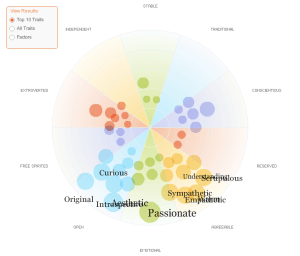 With more and more genes being directly associated with personality or as moderators of correlations between personality and brain structure/function (here, here, here, here) it was fun to try out the latest online “big-5 personality profiler“.
![Reblog this post [with Zemanta]](https://i0.wp.com/img.zemanta.com/reblog_c.png)


![Reblog this post [with Zemanta]](https://i0.wp.com/img.zemanta.com/reblog_e.png)


 Genes 2 Brains 2 Mind 2 Me