Feeds:
Posts
Comments

Archive for November, 2010

Telomere caps he:תמונה:Telomere caps.gif
Image via Wikipedia

A startling article that appears today in the science journal Nature, shows that reactivation and restoration of DNA telomeres was sufficient to reverse the aging process! From the article:

Telomerase reactivation reverses tissue degeneration in aged telomerase-deficient mice.

Accumulating evidence implicating telomere damage as a driver of age-associated organ decline and disease risk1, 3 and the marked reversal of systemic degenerative phenotypes in adult mice observed here support the development of regenerative strategies designed to restore telomere integrity.

Love yourself, love your DNA – especially the telomeres ! For more on this topic, see a few weeks back, when I covered a research article by Nobel Prize winning scientist Elizabeth Blackburn on meditation, telomeres and longevity.

Enhanced by Zemanta

Read Full Post »

Stick model of NAD + , based on x-ray diffract...
Image via Wikipedia

Yogis are by far the healthiest eaters I have ever met.  If you’re reading this blog, you’re probably one of them – faithful in the observance of your Yamas and Niyamas – leaving me  reluctant to confess my own (pre-yoga) pizza-scarfing, soda-swilling ways.  Please don’t hold it against me.  I’ve changed, really.

Here – as plain as I can make it – is the scientific reason why eating a low-calorie vegetarian diet is a good thing.  Good, as in living longer and cancer-free.

All you need to know is that when you eat less, your levels of Nicotinamide adenine dinucleotide (NAD – the contorted, yogic-looking molecule shown at left) are HIGH – and this increases the activity of the “longevity gene” SIR2. The amazing life-extending effects of the NAD-dependent SIR2 genes are described in detail on Leonard Guarente’s website at M.I.T.:

The discovery that Sir2p requires NAD for its activity immediately suggested a link between SIR2 activity and caloric restriction. This link was strengthened by the observation that life span extension by caloric restriction requires Sir2 protein. Caloric restriction is likely to reduce the carbon flow through glycolysis and result in more free cytoplasmic NAD. SIR2 could act as a sensor of NAD levels within the nucleus. Under conditions of caloric restriction, NAD levels are high, SIR2 is activated, and the rate of aging is decreased.

The hard science link between cancer and NAD is more recent – this week in fact – with the release of a study entitled, “Transcriptional regulation of BRCA1 expression by a metabolic switch” [doi:10.1038/nsmb.1941].  Here the researchers found that NAD/NADH levels via binding to CTBP1 can regulate the anti-tumor properties of BRCA1.  In a nutshell, a high-calorie diet leads to LOW levels of NAD which has the net effect (via CTBP1) of turning OFF the anti-tumor gene BRCA1 (a bad thing).  From the article:

The elevated expression of estrogen in the context of higher levels of NADH or lower NAD+/NADH ratios due to high caloric intake and/or obesity could establish a state in which the pro-proliferative effects of estrogen are not completely balanced by the protective functions of BRCA1 that would normally restrain estrogen-induced proliferation and heighten genome surveillance.

I realize that most yoga folks need no such hard science to convince them of the merits of a low-calorie, healthy diet.  In the science-world however, empirical evidence can take decades to gather, so its an important milestone to now have established causal links between caloric intake, longevity and cancer risk.

For (former) junk food junkies like myself, there is no room to debate or side-step the issue.  Eat less, eat healthy – live longer and cancer-free.  More on yoga and aging (here, here, here).  Now, off to the shala for NADasana pose!

Enhanced by Zemanta

Read Full Post »

Myelin Repair Foundation Logo
Image by Myelin Repair Foundation via Flickr

from Ye et al., 2009:

HDAC1/2 genes encode proteins that modify the epigenome (make it less accessible for gene expression).

When HDAC1/2 functions around the HES5 and ID2/4 (repressors of white matter development) genes, the epigenetic changes (less acetylation of chromatin) helps to repress the repressors.

This type of epigenetic repression of gene expression (genes that repress white matter development) is essential for white matter development.

Enhanced by Zemanta

Read Full Post »

Calm foot, stressed foot

No left turn
Image via Wikipedia

A fellow blogger from our shala explored an interesting question a few weeks back, “In practicing asana, why do we frequently start on the right side, not the left?

As a newbie, I’m usually too worn out, sweaty and befuddled to notice, except when the instructor barks out (about once per class), “your other left john – turn the other way!

Does it really matter?  I mean we’re going to do both sides anyway – right? or was it left? ugh!

I don’t know, but came across an interesting science article today entitled, “Forebrain emotional asymmetry: a neuroanatomical basis?” [doi:10.1016/j.tics.2005.10.005] by Bud Craig from the Barrow Neurological Institute in Phoenix, AZ.

Dr. Craig reviews ample evidence showing how the nervous system in the BODY (peripheral nervous system) is very different on the LEFT vs. the RIGHT sides …

The peripheral nerves of the autonomic nervous system are the only major nerves of the body that are asymmetric.

and that these bodily asymmetries lead to asymmetries in the brain …

The confluence of these strikingly parallel asymmetries suggests a homeostatic neuroanatomical model of emotional asymmetry, in which the left forebrain is associated predominantly with parasympathetic activity, and thus with nourishment, safety, positive affect, approach (appetitive) behavior, and group-oriented (affiliative) emotions, while the right forebrain is associated predominantly with sympathetic activity, and thus with arousal, danger, negative affect, withdrawal (aversive) behavior, and individual-oriented (survival) emotions.

This model instantiates neurobiologically the psychological proposal that a hypothetical ‘calm and connection system’ opposes the arousal/stress system.

In a nutshell, information sent up to the left brain stem – mainly via the vagus (a.k.a – the living Kundalini serpent in your body) – makes you feel really calm and connected.  Yoga, with its myriad forms of breathing, twisting, inverting etc. seems to have perfected the art of engaging the vagus “Kundalini” nerve and generating maximum amounts of parasympathetic nervous system activity.  This is a gooood thing indeed!

So, if the LEFT side of the brain stem and brain receive information that make you feel calm and connected, why the RIGHT FOOT? … because, in our cerebral cortex, the the left half of the brain controls the right side (foot included!) of the body.

Does anyone really know for sure?  Perhaps I’d do best not to worry about why, and just focus on feelin’ good during practice.

Enhanced by Zemanta

Read Full Post »

Richard Freeman

Read Full Post »

A young woman and man embracing while outdoors.
Image via Wikipedia

Please forgive the absurd title here … its just a play on words from a flabby, middle-aged science geek who is as alluring to “the ladies” as an old leather boot.

Like a lot of males (with active fantasy lives I suppose), my interest was piqued by the recent headline, “What Do Women Really Want? Oxytocin” – based on a recent lecture at this years Society for Neuroscience annual conference.

Oxytocin is a small hormone that also modulates brain activity.  Many have referred it as the “Love Hormone” because it is released into the female brain during breastfeeding (where moms report feeling inextricably drawn to their infants), orgasm and other trust-building and social bonding experiences.  So, the premise of the title (from the male point of view), is a fairly simplistic – but futile – effort to circumvent the whole “social interaction thing” and reduce dating down to handy ways of raising oxytocin levels in females (voila! happier females more prone to social (ahem) bonding).

Of course, Mother Nature is not stupid.  Unless you are an infant, there is no “increase in oxytocin” without a prior “social bonding or shared social experience”.  Mother Nature has the upper hand here … no physical bonding without social binding first!

So, what the heck does this have to do with yoga?  Yes, its true that yoga studios are packed with friendly, health conscious females, but, the practice is mainly a solitary endeavor.  Aside from the chatter before and after class, and the small amount of oxytocin that is released during exercise, there is no social bonding going on that would release the so-called “love hormone”.  Thus, even though “women want yoga”, yoga class may not be the ideal location to “score with chicks”.

However, there may be one aspect of yoga practice that can facilitate social bonding (and hence oxytocin release).  One benefit of a yoga practice (as covered here, here) is an increased ability to “be present” – an improved ability to pay closer attention to your own thoughts and feelings, and also, the thoughts and feelings of another person.

The scientific literature is fairly rich in research showing a close relationship between attention, shared- or joint-attention, trust and oxytocin, and the idea is pretty obvious.  If you are really paying attention to the other person, and paying attention to your shared experience in the moment, the social bond will be stronger, more enjoyable and longer-lasting.  Right?

Soooo – if you want the oxytocin to flow – look your partner in the eye, listen to their thoughts, listen to your own reactions, listen to, and feel their breath as it intermingles with your own, feel their feelings and your own, slow-down and enjoy the minute details of the whole experience and be “right there, right now” with them.  Even if you’ve been with the same person for 40 years, each moment will be new and interesting.

Yoga will teach you how to do this.

Enhanced by Zemanta

Read Full Post »

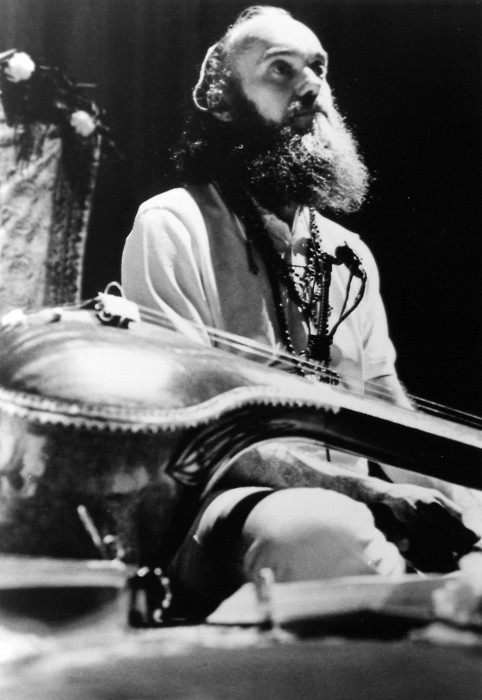
In his new movie, former Harvard psychology professor turned spiritual teacher Ram Dass (Dr. Richard Alpert), hails us to, “love everybody and tell the truth”.

Tell the truth.  Not only a great rule to live by, but one of the things that I’ve always loved about science … its a way to discover and face the objective “truth” as separate from our subjective wants and wishes.

Take the latest scientific data on happiness.  I mean, from a – scientific point of view – what really makes us happy? Daniel Gilbert (another) Harvard psychology professor has published a research article entitled, “A Wandering Mind Is an Unhappy Mind” [doi:10.1126/science.1192439].  The researchers used a cool mobile web application trackyourhappiness.org to collect:

an unusually large database of real-time reports of thoughts, feelings, and actions of a broad range of people as they went about their daily activities. …  The database currently contains nearly a quarter of a million samples from about 5000 people from 83 different countries who range in age from 18 to 88 and who collectively represent every one of 86 major occupational categories. … what people were thinking was a better predictor of their happiness than was what they were doing. …  The ability to think about what is not happening is a cognitive achievement that comes at an emotional cost. (the figure from the paper shows the happiness scores of mind wandering vs. not wandering)

As covered very nicely in the NY Times, it turns out that when folks’ minds were engaged in focused activities, they were happier as compared to when their minds were wandering.  So, it seems that scientific data support the ancient teachings (and Dass’ 1971 book) to Be Here Now!

Here’s the new movie clip found on RamDass.org:

Enhanced by Zemanta

Read Full Post »

Have you ever seen the list “100 Benefits of Meditation“?  Of course, many of these benefits are psychological. You know, things like: helps control own thoughts (#39) and helps with focus & concentration (#40).  But many of the 100 benefits are rather physical, bodily, physiological, immunological and even biochemical benefits (such as #16- reduction of free radicals, less tissue damage).

These are awesome claims, and I’ve certainly found that mediation helps me feel more emotionally balanced and physically relaxed,  but I’m wondering – from a hard science point of view – how legit some of these claims might be.  For example, “#12 Enhances the immune system – REALLY?  How might yoga and mediation enhance my immune system?

In a previous post on the amazing vagus nerve – the only nerve in your body that, like the ancient Kundalini serpent, rises from the root of your gut to the brain – AND – a nerve that is a key to the cure of treatment resistant depression – it was suggested that much of the alleviation of suffering that comes from yoga comes from the stimulation of this amazing nerve during postures and breathing.

Somehow, the ancient yogis really got it right when they came up with the notion of Kundalini serpent – so strange, but so cool!

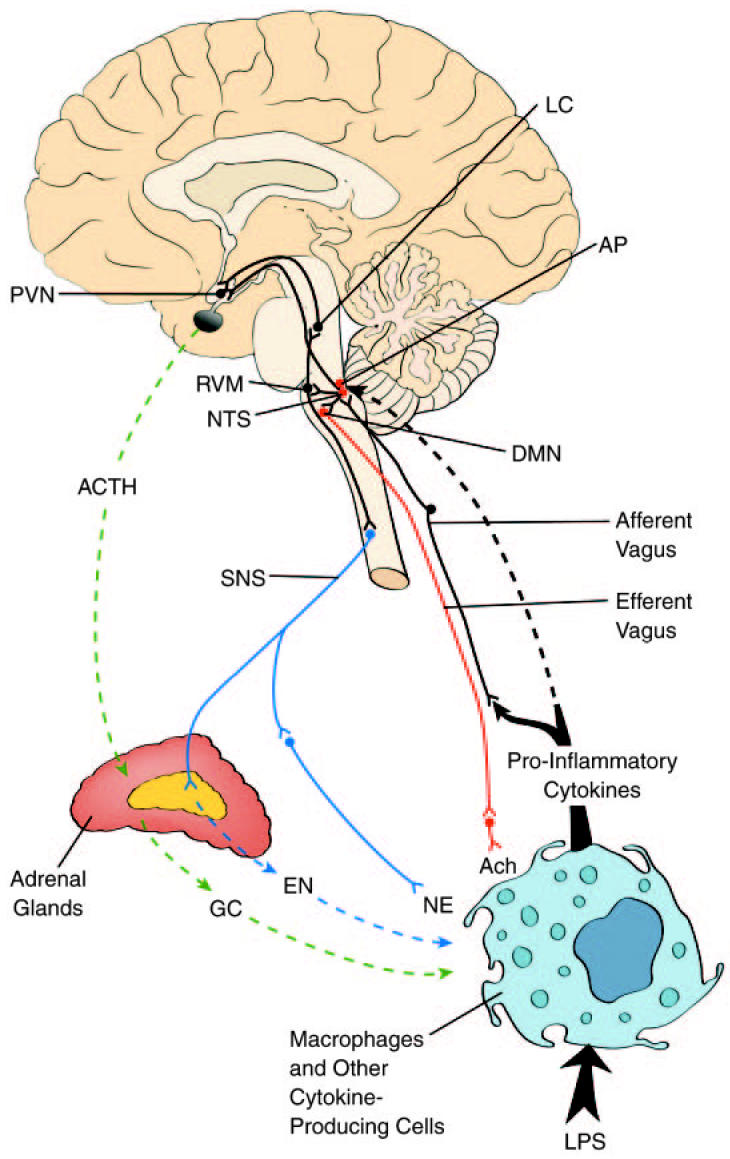
I happened to stumble on a paper that explored the possibility that the vagus nerve might also play a role in mediating communication of the immune system and the brain – and thus provide a mechanism for “#12- Enhances the immune system” Here’s a quote from the article entitled, “Neural concomitants of immunity—Focus on the vagus nerve” [doi:10.1016/j.neuroimage.2009.05.058] by Drs. Julian F. Thayer and Esther M. Sternberg (Ohio State University and National Institute of Mental Health).

By the nature of its “wandering” route through the body the vagus nerve may be uniquely structured to provide an effective early warning system for the detection of pathogens as well as a source of negative feedback to the immune system after the pathogens have been cleared. … Taken together these parasympathetic pathways form what has been termed “the cholinergic anti-inflammatory pathway

The scientists then investigate the evidence and possible mechanisms by which the vagus nerve sends immunological signals from the body to the brain and also back out to the immune system.  Its not a topic that is well understood, but the article describes several lines of evidence implicating the vagus nerve in immunological health.

So bend, twist, inhale and exhale deeply.  Stimulate your vagus nerve and, as cold and flu season arrives, awaken the serpent within!

Enhanced by Zemanta

Read Full Post »

Let go

“Holding on to anything is like holding on to your breath. You will suffocate. The only way to get anything in the physical universe is by letting go of it. Let go & it will be yours forever.”


Read Full Post »

Image representing Twitter as depicted in Crun...
Image via CrunchBase

Yoga instructors will sometimes speak loosely of a wider and greater consciousness that exists beyond our own limited mental world – a consciousness that we all belong to.

I know its a stretch, but I wondered how Twitter and other social media might reflect a existing (and searchable) sort-of shared consciousness.  I had some fun exploring Twitter and how folks think (and tweet) about yoga … just a few glimpses using PeopleBrowsr and Trendistic and other tools.  I don’t think Patanjali would have been impressed by the shared sentiments that are tweeted and re-re-re-re-tweeted etc.

For the past 30 days there were 44,614 per day mentions of “yoga” on Blogger, 254/day on Facebook, 64/day on MySpace and 5,791/day on Twitter.

Here are the most common words that flank the word “yoga” in these various mentions:

15,602 love
15,383 make
14,148 music
11,125 hate
11,066 shopping
10,873 eating
10,579 class
10,446 books
9,643 good
9,449 #yoga

Natural language processing software can distinguish between positive and negative sounding sentiments and both TweetSentiments and Twitter TipTop suggest that there is a 2:1 positive bias for yoga tweets (check out the negative tweets here – they’re usually not really dissing yoga).

Lastly, for the past 6 months, the word yoga is mentioned pretty regularly, but with occasional spikes in popular stories involving yoga.  The spike in yoga tweets back in May was from a story of how yoga eases sleep problems in cancer survivors and around Oct 7th there was a story on yoga and Christianity which I recall zipped around a lot in the blogosphere/twitterverse.

Read Full Post »

tadasana feet

Read Full Post »

Mat meditation

Read Full Post »

Telomere
Image via Wikipedia

This is a cross post from my other “science & self-exploration” blog about mindfulness and the mind-body connection (yoga).

In 2009, Elizabeth Blackburn received the Nobel Prize in Physiology or Medicine for her work on the biology of so-called telomeres – the DNA sequences found at the end of our chromosomes (actually just a repeating sequence of TTAGGG). The very cool thing about telomeres is that the overall length of these sequences (number of repeating units of TTAGGG) correlates with life-span. This is because as cells in your body are born, they go through a number of cell divisions (each time the cell divides, the telomeres shorten) until they go kaput (replicative senescence). Amazingly, regular cells like these (that normally die after several cell divisions) can be induced to live far longer by simply – lengthening their telomeres (increasing the amount of a telomere lengthening enzyme known as telomerase) – which is why some think of telomeres as the key to cellular immortality.

Imagine your own longevity if all your cells lived twice as long.

With this in mind, it was awesome to read a paper by Dr. Blackburn and colleagues entitled, “Can Meditation Slow Rate of Cellular Aging? Cognitive Stress, Mindfulness, and Telomeres” [doi: 10.1111/j.1749-6632.2009.04414.x]. The authors carefully ponder – but do not definitively assert – a connection between meditative practices and telomere length (and therefore, lifespan). The main thrust of the article is that there are causal links between cellular stress and telomere length AND causal links between physiological stress and meditative practices. Might there, then, be a connection between meditative practices and telomere length?

Above we have reviewed data linking stress arousal and oxidative stress to telomere shortness. Meditative practices appear to improve the endocrine balance toward positive arousal (high DHEA, lower cortisol) and decrease oxidative stress. Thus, meditation practices may promote mitotic cell longevity both through decreasing stress hormones and oxidative stress and increasing hormones that may protect the telomere.

Given that eastern meditative practices are thousands of years old, its strange to say, but these are early days in beginning to understand HOW – in terms of molecular processes – these practices might influence health.

Still, I think I’ll send some thoughts to my telomeres next meditation session!

Enhanced by Zemanta

Read Full Post »

Modified drawing of the neural circuitry of th...
Image via Wikipedia

You already know this, but when you are stressed out (chronic stress), your brain doesn’t work very wellThat’s right – just when you need it most – your brain has a way of letting you down!

Here are a few things that happen to the very cells (in the hippocampus) that you rely on:

reorganization within mossy fiber terminals
loss of excitatory glutamatergic synapses
reduction in the surface area of postsynaptic densities
marked retraction of thorny excrescences
alterations in the lengths of the terminal dendritic segments of pyramidal cells
reduction of the dorsal anterior CA1 area volume

Thanks brain!  Thanks neurons for abandoning me when I need you most!  According to this article, these cellular changes lead to, “impaired hippocampal involvement in episodic, declarative, contextual and spatial memory – likely to debilitate an individual’s ability to process information in new situations and to make decisions about how to deal with new challenges.” UGH!

Are our cells making these changes for a reason?  Might it be better for cells to remodel temporarily rather than suffer permanent, life-long damage?  Perhaps.  Perhaps there are molecular pathways that can lead the reversal of these allostatic stress adaptations?

Check out this recent paper: “A negative regulator of MAP kinase causes depressive behavior” [doi 10.1038/nm.2219]  the authors have identified a gene – MKP-1 – a phosphatase that normally dephosphorylates various MAP kinases involved in cellular growth, that, when inactivated in mice, produces animals that are resistant to chronic unpredictable stress.  Although its known that MKP-1 is needed to limit immune responses associated with multi-organ failure during bacterial infections, the authors suggest:

“pharmacological blockade of MKP-1 would produce a resilient of anti-depressant response to stress”

Hmmm … so Mother Nature is using the same gene to regulate the immune response (turn it off so that it doesn’t damage the rest of the body) and to regulate synaptic growth (turn it off – which is something we DON’T want to do when we’re trying to recover from chronic stress)?  Mother Nature gives us MKP-1 so I can survive an infection, but the same gene prevents us from recovering (finding happiness) from stress?

Of course, we do not need to rely only on pharmacological solutions.  Exercise & social integration are cited by these authors as the top 2 non-medication strategies.

Enhanced by Zemanta

Read Full Post »

The quote is from Charles Baudelaire, and the weirdness of yoga is a great example of a strange, inescapable attractive force.

Read Full Post »

Yogic wisdom from kids?  Maybe.  Check out the upcoming lecture series at the Rubin Museum of Art: “Talk about Nothing” (literally, discussions on what “nothing” means) given by, among many others, developmental psychologist Alison Gopnik and scottish actor Brian Cox.

Alison Gopnik argues that the minds of children could help us understand deep philosophical questions. A father of a new family of two, acclaimed British Shakespearean Brian Cox explains how he divests himself of his own personality (no-self) before assuming another for the stage.

Professor Gopnik has some great books and online interviews (here, here, here) on this topic already!

From her new book, The Philosophical Baby:

This new science holds answers to some of the deepest and oldest questions about what it means to be human. A new baby’s captivated gaze at her mother’s face lays the foundations for love and morality. A toddler’s unstoppable explorations of his playpen hold the key to scientific discovery. A three-year-old’s wild make-believe explains how we can imagine the future, write novels, and invent new technologies. Alison Gopnik—a leading psychologist and philosopher, as well as a mother—explains the groundbreaking new psychological, neuroscientific, and philosophical developments in our understanding of very young children, transforming our understanding of how babies see the world, and in turn promoting a deeper appreciation for the role of parents.

Enhanced by Zemanta

Read Full Post »

Amazing urban yogi

Read Full Post »

Read Full Post »