 As a big fan of black and white photography, I’m intrigued by the concept of “Splitting” or so-called “black and white” thinking. It’s something we all do to different degrees … when we avoid dealing with the “shades of gray” and group things in our life into “all good” or “all bad” groups.
Psychologists have considered this cognitive tendency to be a normal part of cognitive development (eg. good guys vs. bad guys), a response to stress, and also a part of various psychopathologies (funny, how psychiatrists have a tendency to group us into the “normal” and “abnormal”, huh?).
Is there anything wrong with seeing the world in black and white? Perhaps, if you label mildly annoying people as “bad”, you’ll soon have no friends … but otherwise, I’m not sure. Simplicity can be soothing.
I mean, our brains have a strong tendency to work at the extremes … for example, when it comes to cognition and movement. We’re wired with so-called striatonigral (Go) and striatopallidal (NoGo) neural pathways that are engaged when cognition is transduced into action. In the primal world of our ancestors, we didn’t survive very long if we danced around fretfully pondering the costs and benefits of running, or not running, from saber tooth tigers! So, it’s no surprise, that we’re inherently uncomfortable in the wishy-washy, indecisive, muddling middle ground when making a decision. We want to “go” or “freeze”, “do it” or “don’t”, “good” or “bad” … just make a f**king decision already.
Here’s a link to some current research on the “Go” and “NoGo” brain systems … and their genetic underpinnings (eg. the DRD2 protein is active when we are flummoxed with uncertainty which keeps us lingering in the NoGo state). Hey, our genome got us here … in one piece … it helped us stay alive … that’s not necessarily a bad thing.
thanks for the pic amadeus

![Reblog this post [with Zemanta]](https://i0.wp.com/img.zemanta.com/reblog_c.png)


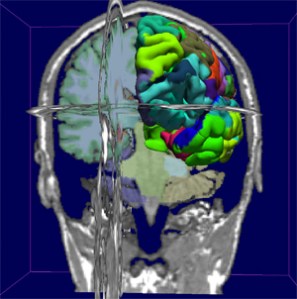 The brain is a wonderfully weird and strange organ to behold. Its twists and folds, magnificent, in and of themselves, are even moreso when we contemplate that the very emotional experience of such beauty is carried out within the very folds. Now consider the possibility of integrating these beauteous structure/function relationships with human history – via the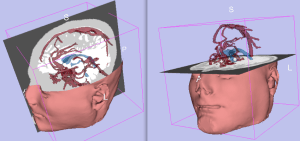

![Reblog this post [with Zemanta]](https://i0.wp.com/img.zemanta.com/reblog_e.png)


 Genes 2 Brains 2 Mind 2 Me