Feeds:
Posts
Comments

Archive for the ‘Uncategorized’ Category

Richard Westall, The Sword of Damocles, (Briti...
Image via Wikipedia

Just having some fun with SNPedia’s new release of Promethase (0.1.66) which now has a superfast analysis option ($2 via a link to your Amazon.com account) as well as the usual free regular speed option.  I had some fun comparing my 23andMe profile to my wife’s using the experimental “breeding” tool and – 214 seconds later – had a glimpse of the genetic probabilities that now hang like the Sword of Damocles over my children. A few SNPpets include:
rs1726866(T;T) – unable to taste bitter 80% likely to be unable to taste bitter
rs10246939(T;T) – unable to taste bitter
rs11200638(A;A) – ~10x increased risk of wet age related macular degeneration
rs7754840(C;C) – 1.3x increased risk for type-2 diabetes
rs324650(T;T) – higher IQ The rs324650(T;T) genotype boosts intelligence
rs2802288(A;A) – longer lifespan
rs1815739(C;C) – possibly increased sprint/power performance

Although I won’t be around to vouch for the longer lifespan, I can vouch for the insensitivity to bitter taste (both kids love broccoli) and our torn up furniture must confirm the tendency to sprint muscles … as for the others, I guess we’ll see in time.  Thanks SNPedia!

(+2 points for mixing references to 2 Greek myths in 1 blog post)

Reblog this post [with Zemanta]

Read Full Post »

homebrew comics 6

Monetary vs. fiscal policy. Oh crap.

Read Full Post »

homebrew comics 5

fanny and freddy ponder macroeconomic doom

Read Full Post »

Ashoka tree
Image by dinesh_valke via Flickr

from the Ashoka website … Ashoka’s Changemakers and the Robert Wood Johnson Foundation have launched a global search for “nudges” – innovative little pushes that help people make better decisions for their own health and the health of others.

2 finalists are working in the area of mental health:

Congratulations to Depression “nudge” and Room makeover

You can vote for a winner among the 10 finalists!

Reblog this post [with Zemanta]

Read Full Post »

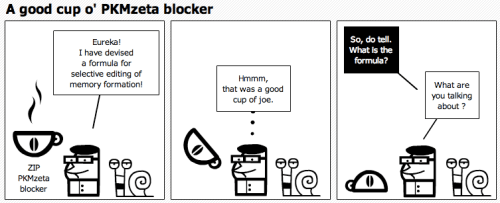
homebrew comics 4

Brain freeze

Read Full Post »

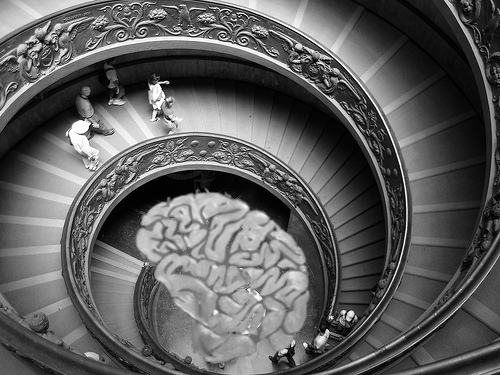
brain_helix_stairs

Thanks, de3ug & RH

Read Full Post »

whcc europe 2008 021
Image by Lloyd Davis via Flickr

Just enjoyed Uwe Reinhardt’s lecture on the current and future economics of healthcare in the U.S. and was very much struck by his emphasis on evidence-based medicine (predicts a potential 30% savings in Medicare spending) as a means to rid the current system of overspending.  A must-see, is the telling graphic showing how the northwest has vastly lower costs/enrollee than the rest of the country – this, he suggests, is where the Obama administration will focus their reform efforts.  Seems like basic science (which is oft blamed for raising the cost of healthcare) may yet be deployed to improve outcomes and keep costs in-line.

Reblog this post [with Zemanta]

Read Full Post »

Rhesus Monkeys
Image by Ginger Me via Flickr

As I and many other 23andMe participants begin to confront our genetic innards, we will likely ask whether any of the information is predictive.  Can we expect to read-off our genomic information and say, “I have risk for this, this, and this, and so I’ll change my life to compensate ?”  Certainly, in the area of mental health, there are genetic variants that confer bits of risk toward anxiety, depression, cognitive decline etc., but does the raw genomic information – alone – form a basis for diagnosis and proscriptive change?  In most cases, NO.  Rather, the genome is not unlike a plant seed, that will produce full leafy greens in rich soil, but merely a few buds in poor soil.

A great example of this can be seen in the recent paper, “What is an “Adverse” Environment? Interactions of Rearing Experiences and MAOA Genotype in Rhesus Monkeys” by Karere er al. [doi: 10.1016/j.biopsych.2008.11.004].  In this paper, they compared the emotional development of rhesus monkey infants (n=473) who carry different versions of an MAOA promoter polymorphism – so-called ‘low’ vs. ‘high’ transcriptional level alleles – and also who were reared in different social contexts.  Some of the existing literature on MAOA-environment interactions suggests that abuse or neglect during childhood predisposes individuals who carry the ‘low’ allele (this allele leads to less MAOA protein and less catabolism of 5HT and DA).  In this study, the environment was varied according to numbers of social companions and physical size of the neighborhood – (i) a field enclosure with up to 150 mixed adults & children, (ii) corncrib enclosure with 1 adult male, 2-5 females and various child playmates, (iii) mother-only small enclosure, and (iv) no-mother nursury rearing.

Which environment led to the emotional reactivity (anxiety, aggression etc.) that has been previously associated with the MAOA ‘low’ allele?  Interestingly, it was not the wild & wooly ‘field enclosure’ where infants can interact in a rich, species-typical manner.  Rather, it was the MAOA ‘low’ genotypic infants raised in the smaller groups who showed more signs of emotional reactivity, with cage-mother-only-rearing being the most extreme group.  The authors note that this finding may alter our expectations about what type of environment is optimal vs. adverse and suggest that in the smaller enclosures, the relative isolation underlies the development of anxiety.

From a more general perspective, this study raises questions about how we – humans – should interpret our genomic information.  What environmental conditions enhance or protect us from the potential genetic risk we carry?  How did my early rearing interact with my MAOA allele?  Something to discuss on Mother’s Day.

Reblog this post [with Zemanta]

Read Full Post »

Jennifer Miller's Circus Amok
Image via Wikipedia

Just reblogging this sentiment published today in “Medical News Today”.

I’m not sure if I’d go so far to say the tests are “harmful”, since many patients and families are usually pretty enthusiastic to know more and learn more about the biological aspects of mental illness.  Certainly, genetic information has value, but its not yet clear how to extract and realize the value as an outcome improvement.  Some value might be realized in the short-term in the area of stigma-busting where the deep biological roots of the disorders are emphasized.

Nevertheless, patients and families should be wary of genetic fraudsters.

Reblog this post [with Zemanta]

Read Full Post »

Genetic Data
Image by giumaiolini via Flickr

As the personal genomics era dawns, it becomes clear that the new genetic information will lead to more new questions than answers.  Consider a well-intentioned parent who finds any number of suspicious risk factors in the genome of their child.  Perhaps a genetic risk variant for mental illness – an anxiety disorder perhaps?  What can be done?  What, if anything, should be done?

Of course there is no simple answer to this question.  Nevertheless, the technology itself may create strong demand for answers in the near future.  If it were me, I certainly would want to know – something, anything – to help.  Furthermore, there are already examples of willful misinformation in the consumer genetic marketplace that seem to prey on anxieties of parents, and which could ultimately heighten the need for reliable, evidence-based guidance.

To this end, the recent research article entitled, “A Genetically Informed Study of the Association Between Childhood Separation Anxiety, Sensitivity to CO2, Panic Disorder, and the Effect of Childhood Parental Loss“[Arch Gen Psychiatry. 2009;66(1):64-71], caught my attention. In this article, the authors consider Panic Disorder, a condition which can lead to the disruption of a healthy personal and professional life.  Genetic studies have shown that specific genes can contribute to the risk of the disorder, but also that these genes interact with early life and adult life experience.  What might these genes be doing in early life – and if we knew – then might we intervene early on to prevent the onset of the disorder later in life?

Again, there are more questions than answers here, but the research team of Battaglia et al., show – using 712 young adult twins – that a common genetic factor underlies childhood separation anxiety and the adult onset of panic disorder.  Thus, it may be the case that the sames genes that contribute to the risk of panic disorder, also may contribute to a form of childhood anxiety.  Having found evidence for a particular form of developmental continuity, the research team is one step closer to learning how a genomically-guided child-based early intervention might be structured.

Because there are many pathways that can lead to mental illness and many ways in which the genome interacts with the environment – it will be complex, if not impossible, to design early interventions that prevent the onset of mental illness.  In most cases, it is rather likely that most children who carry risk for mental illness, will – due to the probablistic nature of gene-gene and gene-environment interactions – just develop typically and not develop mental illness.  Neverthess, some will and its worth learning more.

Reblog this post [with Zemanta]

Read Full Post »

homebrew comics 3

picture-1

Read Full Post »

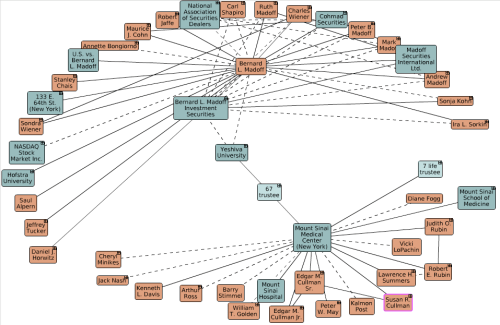
With a number of research institutes succumbing to the Madoff fraud, I wondered whether my own host, Mount Sinai School of Medicine, might be exposed to financial losses.  While I have no way of really knowing (I wonder if the trustees do), I stumbled onto this neat relationship tracking tool @ Muckety.com.  When I search “Mount Sinai School of Medicine” and “Bernard Madoff“, I find a rather non-overlapping, unlinked set of social networks, with only 1 connection – a Mr. David S. Gottesman who apparently serves as a trustee and generous patron for both MSSM and Yeshiva University (YU reported a loss $110M invested in Madoff Securities).   What’s your institute’s exposure ?

linkstomadoff_muckety1

Reblog this post [with Zemanta]

Read Full Post »

homebrew comics 2

Genes and the financial debacle

Read Full Post »

Just echoing this article in Wired on the construction of the human version of the Allen Brain Atlas (mouse genome).  I happened to participate in the early rounds of market research on this … very exciting to see it coming online!

Read Full Post »

Just stumbled onto this great educational resource ….

From an article that describes NERVE:

We’ve Got NERVE: A Call to Arms for Neuroscience Education
Kyle J. Frantz, Colleen D. McNerney and Nicholas C. Spitzer
“Are we neuroscientists doing our part to help revive science education, to stimulate teachers’ ingenuity, and diversify the intellectual capital among the next generation of scientists? Certainly we support progressive initiatives, including a major international Brain Awareness Campaign, local chapter grants for Society for Neuroscience (SfN) members, and activist committees for media relations, but are we doing enough? To enable neuroscientists worldwide to step out of the laboratory or office periodically to visit nontraditional neuroscience education venues, the Society for Neuroscience Public Education and Communication Committee has launched NERVE, the Neuroscience Education Resources Virtual Encycloportal (Fig. 1). This web-based compendium of teaching materials went live in September 2008 and has already received >10,000 visits from >100 countries around the globe. NERVE’s offerings are many: videos to stimulate discussion at town hall meetings, lesson plans for visits to local schools, and hands-on activities to break up long lectures, just to name a few. Regardless of the topic or venue, NERVE aims to meet our neuroscience education needs.”

The Journal of Neuroscience, March 18, 2009, 29(11):3337-3339; doi:10.1523/JNEUROSCI.0001-09.2009

Read Full Post »

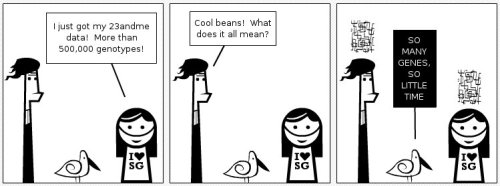
homebrew comic strip

comic

Read Full Post »

Computer Monkeys
Image by ChrisL_AK via Flickr

How many “facebook friends” do you have?   Well, of course, this depends on many things – perhaps just a matter of how much time you spend “on” facebook.  We all know of a few super facebookers with +300 friends and super-duper profligate facebook whales with +1000 friends, but it turns out that across facebook, the average number of friends per person is about 150.  Hmmm, I have been at this level for several months now, even while acknowledging  a pathetic tendency to procrastinate away the afternoon clicking around on facebook.  Like many people, I’ve hit a comfortable level at about 150 “friends” with folks that I know via childhood, school, work, family etc.  Few, if any, token friends.  Why 150? Might there be a reason for this?  A mathematical reason? A biological reason? An evolutionary reason?  All of the above?  None of the above?

According to Robin Dunbar,  professor at the Human Evolutionary Biology Research Group at University College London, “the size of a species’ neocortex is set by the range of group size required by the habitat(s) in which it typically lives, [but also] sets a limit on the number of relationships that it can maintain through time, and hence limits the maximum size of its group.”  Loosely translated, there may be a relationship between a larger neocortex that may provide more brain power to manage larger streams of “he said, she said, she did what? Oh No he DiDiNT!” information, among primates that live in differing group sizes.

A test of this “social brain hypothesis” would be to use the “relationship [of cortex size vs. group size] in reverse to predict group sizes for living species”. In his research article, “Co-evolution of Neocortex Size, Group Size and Language in Humans“, Dunbar asks the question, “what group size would we predict for anatomically modern humans, given our current neocortex size?”.  With a neocortex volume of 1006.5 cc and a total brain volume of 1251.8 cc, Dunbar places this information into an existing relationship between neocortex ratio and mean group size for a sample of 36 primate genera and extrapolates a value of 147 (with a wide confidence window of 100-231).  Neat man, very neat indeed!

Keeping in mind that this correlation between brain size and social group size does NOT PROVE causation, and that the magic number of 150 is likely just a coincidence (or is it? – just ask the Military, Gore-Tex, or Krippendorf’s tribe), it remains an interesting question to study further.  Better yet, perhaps this will motivate me to sign off of facebook and do something more productive!

Reblog this post [with Zemanta]

Read Full Post »

Day 184 - Halfway!
Image by John Carleton via Flickr

I’ve heard of mind reading – yes, some folks have actually figured out (here, here, here) how to decode the fMRI signal to literally know what you’re thinking – but am now beginning to wonder where it all ends. In their new paper, “Transcription MRI: A New View of the Living Brain”, by Liu and colleagues [doi: 10.1177/1073858407309746], they describe the use of short oligonucleotides that can hybridize to mRNA transcripts and, due to the presence of a paramagnetic linker on the oligo, also be visualized in the MR scanner.  This is a new technique and the paper runs it alongside more traditional reporter-gene methods (requiring post-mortem tissue however) to validate the specificity and precision of the approach.  Presently, the method is not safe for humans, so only mice need worry about who is looking at their deepest gene expressions.

Reblog this post [with Zemanta]

Read Full Post »

John Maynard Keynes {{ru|Джон Мейнард Кейнс}} ...
Image via Wikipedia

Many folks would agree that money is not the route to happiness.  But, lets be honest, when some of your money is taken from you and just given to someone else – well now, that sure enough, has a way of pissing you off !  Such is a common refrain today, as taxpayer funds (your money) are used by Congress to bail out large banks and corporations, not to mention any number of people who irresponsibly bought mc-mansions they could not afford.  Increasingly, there is a disconnect between what people “feel” and policy recommendations based on the cold, hard, complex, econometric, quantitative financial models used to justify these so-called bailouts.  “It just feels wrong, but the experts tell us its for the best“.  Strong medicine ? Hmmm.

John Maynard Keynes (pictured here) used the term ‘animal spirits’ to describe shifts in human mood that could have unpredictable effects on market behavior.  In his recent podcast/lecture from the London School of Economics, Professor Robert Shiller opines further on these types of disconnects – those that exist between cold and dry economic models and real-life warm and fuzzy humans who inhabit a world constrained by these models that do not buffer against boom & bust cycles.  Notably, Shiller, who is now highly in demand, was widely ignored during the last great disconnect – the one where people felt so good while the stock market and housing market inflated to levels that defied sound economic models (interestingly, he remains puzzled by our new Treasury Secretary, Timothy Geithner, who also never conceded that anything might be wrong with the financial system during the pre-bust years at the Federal Reserve Bank of New York – how could he miss it ?).  Perhaps if we improved the economic models, then we could smooth-out the booming & busting ?

Shiller argues for a more flexible and sophisticated financial system that can better account for some of the emotional and social biases that make homo economicus such a greedy, panicky and yet often selfless and generous creature.  Rather than static, fixed contracts, he suggests products that can function to hedge against what he calls, “psychological contagion”.  Presently, he has created a number of such helpful products including securities which can hedge against the movement of house prices (via his Case-Shiller index) and newer securities (in development) that carry no counter-party risk and are somewhat less bubble-prone.  He also advocates more research to connect financial engineering with behavioral finance which should help develop more advanced economic models that account and quantify discrete types of social and emotional biases that arise in the marketplace.

In any case, it is clear from listening to Shiller, and from his previous books, that financial engineering is best used as a tool to help everyday folks manage the inherent uncertainties of life over the long run (in contrast to financial engineering for the purposes of creating illusory wealth bubbles).  I’m certainly a fan of Robert Shiller and wonder how basic brain science and behavioral finance might help his already groundbreaking work on the construction of financial instruments that factor-in the innate behavioral (sometimes irrational) biases that people have in assessing risk and making decisions based on long-term rather than short term outcomes.  There must be many – and even some that are influenced by genetic factors.  The new fields of neuroeconomics and its synthesis with behavioral genetics might, one day, even allow me to hedge against my own genetic risk (I carry 2 copies of the DRD4 7-repeat VNTR which, apparently, is associated with a 25-50% increase in risk taking).

My parents intuitively understood this somehow – they wisely gave me an allowance.

Reblog this post [with Zemanta]

Read Full Post »

Steven Pinker on Open Source
Image by greeley via Flickr

A great article (here in the NYTimes magazine) on one psychologist’s reaction to his genome and the new consumer genomics.

Reblog this post [with Zemanta]

Read Full Post »

« Newer Posts - Older Posts »