Feeds:
Posts
Comments
whcc europe 2008 021
Image by Lloyd Davis via Flickr

Just enjoyed Uwe Reinhardt’s lecture on the current and future economics of healthcare in the U.S. and was very much struck by his emphasis on evidence-based medicine (predicts a potential 30% savings in Medicare spending) as a means to rid the current system of overspending.  A must-see, is the telling graphic showing how the northwest has vastly lower costs/enrollee than the rest of the country – this, he suggests, is where the Obama administration will focus their reform efforts.  Seems like basic science (which is oft blamed for raising the cost of healthcare) may yet be deployed to improve outcomes and keep costs in-line.

Reblog this post [with Zemanta]
A grandmother with her granddaughter
Image via Wikipedia

Among mammalian species, moms can have it rough. THEY do the foraging and the child rearing usually without the help of dad who may or may not be prancing about defending his territory or doing who knows what.  The biological systems that manage such a predicament for the female would, not surprisingly, be highly regulated and, I imagine, a major target of natural selection.  For example, conflicts between what’s best for the offspring and what’s best for mom could drive the evolution of genetic and epigenetic mechanisms that counter-balance the tendency of moms to conserve resources and for offspring to use resources.  One such epigenetic mechamism that has been implicated in parent-offspring conflict is so-called genomic imprinting – wherein certain epigenetic marks (methylation of C*pG’s in many cases) leads to the expression of genes a parent-of-origin-type manner (eg. the gene inherited from mom might be expressed while the gene inherited from dad would be transcriptionally repressed).

With this link between epigenetics and maternal investment in mind (and with Mother’s Day around the corner) I enjoyed the recent paper, “Lasting Epigenetic Influence of Early-Life Adversity on the BDNF Gene” by Roth and colleagues [doi: 10.1016/j.biopsych.2008.11.028] where they measured the relationship between BDNF expression and methylation as a function of maternal behavior (in stressful and non-stressful) conditions.  Like many other neuronally-expressed genes, stress seems to lead to more methylation, which can – sometimes – interfere with transcription.  In the Roth et al., paper, BDNF seems to show this pattern as well since BDNF was downregulated about 50% in the prefrontal cortex of rat pups who were reared under stressful conditions.  Concomitant increases in methylation in the pups (which was blocked with methyltransferase inhibitors) was examined as a possible reason for the BDNF downregulation.  Most interestingly, the female pups who were raised by stressed moms – were themselves lousy moms (demonstrated poor licking and grooming behavior) and gave birth to pups (granddaughters) who also bore similar epigenetic marks on BDNF.

Is this maternal-care/epigenetics phenomena related to parent-offspring conflict?  Perhaps so, or perhaps just a spandrel or an unintended consequence of other levels of regulation.  It will be fun to explore this further.  Until then – be sure to thank your GRANDmother on Mother’s Day! – or not, if your are poorly groomed.

Reblog this post [with Zemanta]
Rhesus Monkeys
Image by Ginger Me via Flickr

As I and many other 23andMe participants begin to confront our genetic innards, we will likely ask whether any of the information is predictive.  Can we expect to read-off our genomic information and say, “I have risk for this, this, and this, and so I’ll change my life to compensate ?”  Certainly, in the area of mental health, there are genetic variants that confer bits of risk toward anxiety, depression, cognitive decline etc., but does the raw genomic information – alone – form a basis for diagnosis and proscriptive change?  In most cases, NO.  Rather, the genome is not unlike a plant seed, that will produce full leafy greens in rich soil, but merely a few buds in poor soil.

A great example of this can be seen in the recent paper, “What is an “Adverse” Environment? Interactions of Rearing Experiences and MAOA Genotype in Rhesus Monkeys” by Karere er al. [doi: 10.1016/j.biopsych.2008.11.004].  In this paper, they compared the emotional development of rhesus monkey infants (n=473) who carry different versions of an MAOA promoter polymorphism – so-called ‘low’ vs. ‘high’ transcriptional level alleles – and also who were reared in different social contexts.  Some of the existing literature on MAOA-environment interactions suggests that abuse or neglect during childhood predisposes individuals who carry the ‘low’ allele (this allele leads to less MAOA protein and less catabolism of 5HT and DA).  In this study, the environment was varied according to numbers of social companions and physical size of the neighborhood – (i) a field enclosure with up to 150 mixed adults & children, (ii) corncrib enclosure with 1 adult male, 2-5 females and various child playmates, (iii) mother-only small enclosure, and (iv) no-mother nursury rearing.

Which environment led to the emotional reactivity (anxiety, aggression etc.) that has been previously associated with the MAOA ‘low’ allele?  Interestingly, it was not the wild & wooly ‘field enclosure’ where infants can interact in a rich, species-typical manner.  Rather, it was the MAOA ‘low’ genotypic infants raised in the smaller groups who showed more signs of emotional reactivity, with cage-mother-only-rearing being the most extreme group.  The authors note that this finding may alter our expectations about what type of environment is optimal vs. adverse and suggest that in the smaller enclosures, the relative isolation underlies the development of anxiety.

From a more general perspective, this study raises questions about how we – humans – should interpret our genomic information.  What environmental conditions enhance or protect us from the potential genetic risk we carry?  How did my early rearing interact with my MAOA allele?  Something to discuss on Mother’s Day.

Reblog this post [with Zemanta]
Mother and Child
Image via Wikipedia

The roles of nature and nurture in child development have never been easy to disentangle.  Parents, in particular, seem to know this all too well, when it comes to their own children.  For example, when one of my children throws a tantrum, my wife can be mercilessly quick to point out that “those are your genes at work “.  I for one, can’t help but admire Mother Nature’s sense of justice (or is it humor?) as I’m forced to grapple with an unreconcilable 5-year old.  What can I do?  How can I get some type of optimal gene-by-environment (parenting style) going here?  Afterall, they are MY genes (expressed in said unreconcilable 5-year old) right?  Can I break out of the infinitely recurrent loop of me (my genes) trying to positively interact with my child (also my genes).  What’s a stubborn parent of a stubborn child to do?

In thinking about this, it was great to read a recent article by Lee and colleagues entitled, “Association of maternal dopamine transporter genotype with negative parenting: evidence for gene x environment interaction with child disruptive behavior” [doi: 10.1038/mp.2008.102].  In this article, the team examined how children (4 to 7 years old)  interacted with their mothers during a session where they were induced to cooperate in tasks involving free play with specific toys, tasks involving organizing items in a room and several pencil and paper tasks.  A set of observations were made (through 1-way glass) on aspects of parenting (negative feedback or contact, positive feedback and encouragement, and, total number of maternal commands).

In principle, the complexities of whose genes & behavior is influencing whose in such a situation are vast.  The authors point out that such interactions can be divided into passive GxE wherein children with certain genes (lets say genes for stubborness) may have inherited those genes from parents who exhibit a stubborn (negative) parenting style – hence leading to correlations in child genotype and parenting style.  Alternatively, such correlations can occur when a child (perhaps a stubborn child) evokes negative parenting response from a parent who did not (as my wife claims) transmit said stubborness genes – an example of an evocative GxE interaction.  In this study, the team examined the mother’s genotype at a 40-bp repeat polymorphism in the 3’UTR of the dopamine transporter (DAT) gene.  This is an apt candidate gene, since animal models of DAT loss-of-function show disrupted maternal behavior.

As an initial step, the team evaluated whether maternal genotype was correlated with maternal parenting style.  They found that the 10-repeat allele of the DAT gene was associated with more of a negative style of parenting.  However, the association of the 10-repeat allele of DAT was rather stronger in mothers whose children were categorized as disruptive than among mothers whose children were categorized as compliant – an example of an interaction of the mother’s genotype with her child’s disruptive behavior (which itself may be due to genes inherited by her – and so on – and so on).

Hard to pin down the genetic blame somewhere here.  Maddening actually.  Maddening enough to make dealing with my unreconcilable 5-year old seem a simple and welcoming task.

Reblog this post [with Zemanta]
This is a modified version of a file from Wiki...
Image via Wikipedia

Just a salute to Carol L. Thompson and her colleagues at the Allen Institute for Brain Science (Seattle, WA) on their paper entitled,  “Genomic Anatomy of the Hippocampus” [doi: 10.1016/j.neuron.2008.12.008] or (email the corresponding author for a copy).

This paper (and much of the work from the Allen Institute) could be filed under the lonstanding cry heard among grad students, “if every neuron is connected to every neuron, how will we ever make sense of the brain?”  The present paper is an excellent example of how cells within a particular structure – in this case the hippocampus – can be specialized in terms of their structure and connectivity.  Not surprisingly, the differences in structure and connectivity are driven, in part, by differential gene expression, which this group has ably made sense of.  There are a number of great figures that tell the story, but for me, the $$ shot is Figure 3 showing that their “statistical reduction” analysis of 20,000 unique transcripts in the mouse brain led to the identification and 3D-reconstruction of 9 discrete zones of gene expression within the hippocampus.  Further analysis of cell adhesion genes (cadherins, collagens, IgG superfamily) and axon guidance genes (ephrins, slits, robos, semaphorins) showed that these 9 regions differ in their combinatorial expression of these molecules.  Thus, the 9 regions of the hippocampus may reflect different zones in incoming (afferent) and outgoing (efferent) neural transmission (they confirm this for CA3 projections to the lateral septum using retrograde labeling).

At some point in the future, as genetic associations with memory and other hippocampal functions are identified, it may be possible to use this type of atlas (there is a human Allen Brain Atlas atlas in the works) to better understand what functional subdivisions and therefore, what type of circuitry is involved in individual differences in hippocampal function.  A possibility I hope I’ll not soon forget.

Reblog this post [with Zemanta]
Jennifer Miller's Circus Amok
Image via Wikipedia

Just reblogging this sentiment published today in “Medical News Today”.

I’m not sure if I’d go so far to say the tests are “harmful”, since many patients and families are usually pretty enthusiastic to know more and learn more about the biological aspects of mental illness.  Certainly, genetic information has value, but its not yet clear how to extract and realize the value as an outcome improvement.  Some value might be realized in the short-term in the area of stigma-busting where the deep biological roots of the disorders are emphasized.

Nevertheless, patients and families should be wary of genetic fraudsters.

Reblog this post [with Zemanta]
Genetic Data
Image by giumaiolini via Flickr

As the personal genomics era dawns, it becomes clear that the new genetic information will lead to more new questions than answers.  Consider a well-intentioned parent who finds any number of suspicious risk factors in the genome of their child.  Perhaps a genetic risk variant for mental illness – an anxiety disorder perhaps?  What can be done?  What, if anything, should be done?

Of course there is no simple answer to this question.  Nevertheless, the technology itself may create strong demand for answers in the near future.  If it were me, I certainly would want to know – something, anything – to help.  Furthermore, there are already examples of willful misinformation in the consumer genetic marketplace that seem to prey on anxieties of parents, and which could ultimately heighten the need for reliable, evidence-based guidance.

To this end, the recent research article entitled, “A Genetically Informed Study of the Association Between Childhood Separation Anxiety, Sensitivity to CO2, Panic Disorder, and the Effect of Childhood Parental Loss“[Arch Gen Psychiatry. 2009;66(1):64-71], caught my attention. In this article, the authors consider Panic Disorder, a condition which can lead to the disruption of a healthy personal and professional life.  Genetic studies have shown that specific genes can contribute to the risk of the disorder, but also that these genes interact with early life and adult life experience.  What might these genes be doing in early life – and if we knew – then might we intervene early on to prevent the onset of the disorder later in life?

Again, there are more questions than answers here, but the research team of Battaglia et al., show – using 712 young adult twins – that a common genetic factor underlies childhood separation anxiety and the adult onset of panic disorder.  Thus, it may be the case that the sames genes that contribute to the risk of panic disorder, also may contribute to a form of childhood anxiety.  Having found evidence for a particular form of developmental continuity, the research team is one step closer to learning how a genomically-guided child-based early intervention might be structured.

Because there are many pathways that can lead to mental illness and many ways in which the genome interacts with the environment – it will be complex, if not impossible, to design early interventions that prevent the onset of mental illness.  In most cases, it is rather likely that most children who carry risk for mental illness, will – due to the probablistic nature of gene-gene and gene-environment interactions – just develop typically and not develop mental illness.  Neverthess, some will and its worth learning more.

Reblog this post [with Zemanta]

homebrew comics 3

picture-1

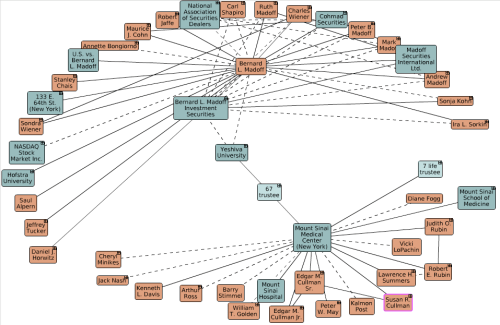
With a number of research institutes succumbing to the Madoff fraud, I wondered whether my own host, Mount Sinai School of Medicine, might be exposed to financial losses.  While I have no way of really knowing (I wonder if the trustees do), I stumbled onto this neat relationship tracking tool @ Muckety.com.  When I search “Mount Sinai School of Medicine” and “Bernard Madoff“, I find a rather non-overlapping, unlinked set of social networks, with only 1 connection – a Mr. David S. Gottesman who apparently serves as a trustee and generous patron for both MSSM and Yeshiva University (YU reported a loss $110M invested in Madoff Securities).   What’s your institute’s exposure ?

linkstomadoff_muckety1

Reblog this post [with Zemanta]
Binocular Smile
Image by cobalt123 via Flickr

Is the human brain a blank slate? or a pre-programmed machine that is ready to take the S.A.T.s right out of the box? Obviously neither, or both as it were. Some have gingerly waded into the nature vs. nuture debate and suggested that the human brain comes pre-wired to receive certain experiences – experience expectant – and thus acknowledge the importance of natural selection in shaping an organism via heritable factors but also the need to be able to use the brain to learn from experience and adapt on the fly.

In their paper entitled, “Nature versus Nurture in Ventral Visual Cortex: A Functional Magnetic Resonance Imaging Study of Twins [DOI:10.1523/JNEUROSCI.4001-07.2007] Thad Polk and colleagues provide a wonderful example of this.  The team suggested that the brain (visual system) should be somewhat innately (genomically if you will) prepared to process visual stimuli such as faces and objects, but not so for stimuli such as pseudo words.  They proposed to test the role of the genome by comparing patterns of brain activity in identical vs. fraternal twins.  If the brain activity patterns were very similar for identical twins, and less so for fraternal twins, then it is likely that the genome plays some role in the generation of brain (at least with respect to blood flow) responses to such stimuli. The team used fMRI to assess 13 pairs of identical twins and 11 pairs of fraternal twins for their brain responses to pictures of faces, houses, chairs and non-word strings on letters as well as control “scrambled” images that were comparable in visuo-spatial frequency.

Interestingly, the team found that for faces and houses, there were significant identical vs. fraternal differences in the “activation maps” of the twins but no such differences for chairs and pseudowords.  Thus it seems that the genome plays a role in the way the brain processes faces and houses (or perhaps faces and places in general), but not so much for items that are not found (or weren’t found by our evolutionary ancestors) in a natural setting.

I’m surprised by the chair result … although perhaps being a couch potato is something evolution does not select for.

Reblog this post [with Zemanta]

homebrew comics 2

Genes and the financial debacle

Just echoing this article in Wired on the construction of the human version of the Allen Brain Atlas (mouse genome).  I happened to participate in the early rounds of market research on this … very exciting to see it coming online!

They’ve got NERVE

Just stumbled onto this great educational resource ….

From an article that describes NERVE:

We’ve Got NERVE: A Call to Arms for Neuroscience Education
Kyle J. Frantz, Colleen D. McNerney and Nicholas C. Spitzer
“Are we neuroscientists doing our part to help revive science education, to stimulate teachers’ ingenuity, and diversify the intellectual capital among the next generation of scientists? Certainly we support progressive initiatives, including a major international Brain Awareness Campaign, local chapter grants for Society for Neuroscience (SfN) members, and activist committees for media relations, but are we doing enough? To enable neuroscientists worldwide to step out of the laboratory or office periodically to visit nontraditional neuroscience education venues, the Society for Neuroscience Public Education and Communication Committee has launched NERVE, the Neuroscience Education Resources Virtual Encycloportal (Fig. 1). This web-based compendium of teaching materials went live in September 2008 and has already received >10,000 visits from >100 countries around the globe. NERVE’s offerings are many: videos to stimulate discussion at town hall meetings, lesson plans for visits to local schools, and hands-on activities to break up long lectures, just to name a few. Regardless of the topic or venue, NERVE aims to meet our neuroscience education needs.”

The Journal of Neuroscience, March 18, 2009, 29(11):3337-3339; doi:10.1523/JNEUROSCI.0001-09.2009

facial expressions
Image by ibiscus27 via Flickr

One of the difficulties in understanding mental illness is that so many aspects of mental life can go awry – and its a challenge to understand what abnormalities are directly linked to causes and what abnormalities might be consequences or later ripples in a chain reaction of neural breakdown.  Ideally, one would prefer to treat the fundamental cause, rather than only offer palliative measures for symptoms that arise from tertiary neural inefficiencies. In their research article entitled, “Evidence That Altered Amygdala Activity in Schizophrenia Is Related to Clinical State and Not Genetic Risk“, [doi: 10.1176/appi.ajp.2008.08020261] (audio link) Rasetti and colleagues explore this issue.

Specifically, they focus on the function of the amygdala and its role in responding to, and processing, social and emotional information.  In schizophrenia, it has been found that this brain region can be somewhat unresponsive when viewing faces displaying fearful expressions – and so, the authors ask whether the response of the amygdala to fearful faces is, itself, an aspect of the disorder that can be linked to underlying genetic risk (a type of core, fundamental cause).

To do this, the research team assembled 3 groups of participants: 34 patients, 29 of their unaffected siblings and 20 demographically and ethnically matched control subjects.  The rationale was that if a trait – such as amygdala response – was similar for the patient/sibling comparison and dissimilar for the patient/control comparison, then one can conclude that the similarity is underlain by the similarity or shared genetic background of the patients and their siblings.  When the research team colected brain activity data in response to a facial expression matching task performed in an MRI scanner, they found that the patient/sibling comparison was not-similar, but rather the siblings were more similar to healthy controls instead of their siblings.  This suggests that the trait (amygdala response) is not likely to be directly related to core genetic risk factor(s) of schizophrenia, but rather related to apsects of the disorder that are consequences, or the state, of having the disorder.

A follow-up study using a different trait (prefrontal cortex activity during a working memory task) showed that this trait was similar for the patient/sibling contrast, but dissimilar for the patient/control contrast – suggesting that prefrontal cortex function IS somewhat linked to core genetic risk.  Congratulations to the authors on this very informative study!

Reblog this post [with Zemanta]

homebrew comic strip

comic

Turn and Cry
Image by allthewhile via Flickr

It is commonly known that some of us handle stress better than others.  Some can calmly accept the dire economic news of an impending layoff while others may fret incessantly day-in-and-out and endure many a sleepless night.  Why ?  What are some of the brain systems that mediate the effects of accute and chronic stress ? What genetic and environmental differences might influence the development of these systems ?

In an ongoing set of experiments, Professor Michael Meaney’s laboratory has focused on the role of the glucocorticoid receptor (GR) and its role as a feedback modulator in the so-called hypothalamic-pituitary-adrenal (HPA) axis.  A number of experiments have shown that upregulation of the GR is somewhat beneficial insofar as it dampens the deleterious rise of circulating corticosteroids during stress.  Therefore, any mechanism that downregulates or blocks the expression of GR may make it harder for a person to cope with the typical physiologic responses (increases in corticosteroids) to stressful experiences (news of a layoff).

What Professor Meaney’s lab has shown so convincingly over the past several years is that individual differences in the reactivity of the HPA system are heavily influenced by maternal and early life experience.  That is, offspring (often rat or mouse pups) who have attentive mothers who keep them warm and well groomed, have more responsive HPA systems that more readily dampen the deleterious rise of corticosteroids in response to steroids.  In some cases, the level of maternal care is enough to modify the level of CpG methylation in the promoter region of the glucocorticoid receptor.  This type of “epigenetic” form of gene regulation is a way in which the promoter region can be altered in a long-term manner given a particular early-life experience.  Unfortunately, this type of epigenetic mark, can lead to life-long difficulty in managing stress.

Their recent paper, “Epigenetic regulation of the glucocorticoid receptor in human brain associates with child abuse” [doi 10.1038/nn.2270]  explores the extent of CpG methylation in post-mortem tissue (hippocampus) from 24 individuals who tragically passed away in completion of suicide.  The research team compared the levels of methylation (via bisulfite mapping) in the GR promoter region and found that there was significantly more methylation in (n=12) individuals who had a recorded history of childhood abuse (sexual contact, severe physical abuse and/or severe neglect) as compared to (n=12) individuals with no history of abuse (their CpG levels were not distinguishable from control tissue).  Thus (as confirmed by qRT-PCR) it seems as if epigenetic marks were visible in the genomes of hippocampal cell nuclei – which may have very well been written during early childhood trauma – and may have exacerbated the difficulties these individuals may have had in coping with psychosocial stress.

Further studies conducted by the team evaluate the possibility that the sites of abuse-induced-CpG methylation have the effect of blocking the binding of the EGR1 transcription factor which provides an additional mechanistic part in a larger complex of proteins that transduce the effects of experience into long-lasting behavioral predispositions.

For more on the exciting rise of epigenetics and its role in nature-meets-nuture and cognitive development click here.

Reblog this post [with Zemanta]
English: Visualization of a DTI measurement of...
Image via Wikipedia

Have you ever had your butt kicked by a 12-year old girl?  OK, maybe when you were an 8-year old boy perhaps – but I mean as a grown up.  Its a humbling experience.  I know.  For once back in college, I sat for a math contest and was amazed by a young girl who was able to answer each question more quickly and accurately than anyone else (other college students) in the room.

How did she do it?  What was different about her brain than mine (illicit substances aside)?  Now, as a parent of children who will, themselves, soon start sitting for exams and contests – wouldn’t I like to know.  Might I perchance endow my children with brain power?  Not likely I imagine, but what is brain power anyway? and what is it about the brain that makes some people perform better in general intelligence assessments?  In their new research article, Genetics of Brain Fiber Architecture and Intellectual Performance [doi: 10.1523/jneurosci.4184-08.2009], Paul Thompson’s team of neurobiologists explore this longstanding question.

In this article, the team asks whether the white matter of the brain (the glial cells that ensheath neuronal axons) might be both heritable and correlated with measures of intelligence.  To measure white matter integrity, the team uses an imaging method known as diffusion tensor imaging (DTI).  It has been shown previously that measures of intelligence are correlated with white matter integrity – presumably because white matter serves as a kind of insulation that speeds up the transmission of action potentials  and thus facilitates interhemispheric communication and other long-range forms of neural network processing.  The team found that white matter integrity was correlated with performance on intelligence assessments in brain regions such as the cingulum, callosal isthmus, corona radiata, internal capsule and other regions.  By imaging 23 pairs of identical and 23 pairs of fraternal twins, the team also found many regions in the brain where white matter integrity was under more than 50% genetic control – particularly in the parietal lobe.  Lastly, the team found that in many of these regions, the correlation between white matter integrity and intelligence could be explained by the same genes.

Amazing research findings indeed, that points to where in the brain and what type of physiological processes are related to efficient brain function.

Reblog this post [with Zemanta]
Computer Monkeys
Image by ChrisL_AK via Flickr

How many “facebook friends” do you have?   Well, of course, this depends on many things – perhaps just a matter of how much time you spend “on” facebook.  We all know of a few super facebookers with +300 friends and super-duper profligate facebook whales with +1000 friends, but it turns out that across facebook, the average number of friends per person is about 150.  Hmmm, I have been at this level for several months now, even while acknowledging  a pathetic tendency to procrastinate away the afternoon clicking around on facebook.  Like many people, I’ve hit a comfortable level at about 150 “friends” with folks that I know via childhood, school, work, family etc.  Few, if any, token friends.  Why 150? Might there be a reason for this?  A mathematical reason? A biological reason? An evolutionary reason?  All of the above?  None of the above?

According to Robin Dunbar,  professor at the Human Evolutionary Biology Research Group at University College London, “the size of a species’ neocortex is set by the range of group size required by the habitat(s) in which it typically lives, [but also] sets a limit on the number of relationships that it can maintain through time, and hence limits the maximum size of its group.”  Loosely translated, there may be a relationship between a larger neocortex that may provide more brain power to manage larger streams of “he said, she said, she did what? Oh No he DiDiNT!” information, among primates that live in differing group sizes.

A test of this “social brain hypothesis” would be to use the “relationship [of cortex size vs. group size] in reverse to predict group sizes for living species”. In his research article, “Co-evolution of Neocortex Size, Group Size and Language in Humans“, Dunbar asks the question, “what group size would we predict for anatomically modern humans, given our current neocortex size?”.  With a neocortex volume of 1006.5 cc and a total brain volume of 1251.8 cc, Dunbar places this information into an existing relationship between neocortex ratio and mean group size for a sample of 36 primate genera and extrapolates a value of 147 (with a wide confidence window of 100-231).  Neat man, very neat indeed!

Keeping in mind that this correlation between brain size and social group size does NOT PROVE causation, and that the magic number of 150 is likely just a coincidence (or is it? – just ask the Military, Gore-Tex, or Krippendorf’s tribe), it remains an interesting question to study further.  Better yet, perhaps this will motivate me to sign off of facebook and do something more productive!

Reblog this post [with Zemanta]

Few may pause on February 12 to note the 200 year anniversary of the birth of Charles Darwin and 150 years since the publication of  “On the Origin of Species” (click here to download).  To some extent, this may be expected since much of the controversy  (creator vs. autonomous biochemical processes) seems to have abated – NOT.  Politically, the issues are still red hot – in Kansas – and elsewhere across the globe.

But what about the science ?  Do we accept the basic tenets of evolution by way of genetic variation and natural selection ?  For goodness sake, I mean, we’ve just about (or soon will have) sequenced every living organsim-on-the-planet’s genome.  Surely there is no doubt about the validity of the so-called neo-Darwinian synthesis of basic/population genetics and the theory of evolution by natural selection.   Is there ?  Perhaps you can’t blame folks for trying to poke holes (as covered extensively by Sandwalk), especially on the big 200th anniversary.

One place where I am hearing some buzz on the teetering of neo-Darwinism and the Modern Synthesis lately is in the area of epigenetics.   Consider the paper by Arai et al., entitled, “Transgenerational rescue of a genetic defect in long-term potentiation and memory formation by juvenile enrichment” [doi: 10.1523/jneurosci.5057-08.2009].  In this paper, the researchers measured a trait known as long-term potentiation (LTP), wherein a synapse fires in a longer and stronger fashion.  This type of potentiation is thought to be a basic mechanism that neural networks use in learning and memory formation.  In their paper, the team found that certain synapses in the hippocampus were potentiated when animals were exposed to an “enriched” environment (normally mice are caged in empty bins lined with woodchips, but an enriched environment is one filled with tunnels, hidden passages, toys, ropes to climb & other stuff to discover and learn about).  The team shows that, in response to an enriched environment, the mice acquire the LTP trait.

The next thing the team found was that the offspring of female (but not male) mice that had acquired the LTP trait – did also show the LTP trait – even when they, themselves, did not experience the enriched environment.  Thus, the so-called acquired trait (LTP) was inherited by the offspring.  Hmmmm – sounds a bit Lamarckian to me, or, as the authors of this research article suggest, “Lamarckian-like”.  Is this a case that violates core tenets of the modern synthesis ?  Does it besmirch Darwin on his 200th birthday ?

No.  Here’s why in a nutshell.  The LTP trait is not passaged via the female germ line.  That is, the physiological and genetic (gene expression) changes that lead to LTP in the mothers are not encoded in the genome of her eggs.  Indeed, her haploid egg cells were set aside long, long before she ever experienced the enriched environment and acquired the LTP trait.  Rather the effect is one that seems to be dependent on her uterine environment and ability to transfer information from unterine milieu to developing offspring – whose developing brains seem to be endowed with the molecular components needed to facilitate LTP.  Figure 4c of the paper shows that the LTP trait was lost in the F2 generation – therefore the effect is not stably transmitted via the germline (as plain vanilla DNA mutations are).

For an overview of the complexities of incorporating the Central Dogma of Molecular Biology into the Theory of Evolution by Natural Selection, read chapter 4 (p76) Weismann, Lamarck and The Central Dogma of John Maynard Smith‘s book “The Theory of Evolution“.  Maynard Smith credits August Weismann’s germ plasm theory as a key factor in the modern synthesis since – by sequestering the germ line very early in development – acquired characteristics cannot be inherited via egg & sperm.  Hence, Lamarckian evolution is (in principle) not possible.  This seems to be the case here with the LTP trait.  In this spirit, the authors do a great job of reviewing other similar examples of how a mother’s uterine environment can lead to epigenetic modifications (click here for review article and here for a PLoS paper on the topic) – such as the viable yellow locus in the mouse [PMID: 18673496] and the effects of endocrine disruptors on methylation of germ cells [PMID: 16973726].

Well, it is amazing indeed how Darwin’s work continues to inspire us.  Happy 200th Birthday !

Reblog this post [with Zemanta]
A graphical representation of the normal human...
Image via Wikipedia

One of the mental functions many of us take for granted is memory – that is – until we’re at the grocery store.  If you’re like me, you dart out of the house confident that you don’t need a list since you’re just going to “pick up a few things” – only to return home and discover (hours later when you’re comfortably ensconced on the couch) that you forgot the ice cream.  Damn, why can’t I have a more efficient working memory system ?  What’s the matter with my lateral frontal cortex ?  Can I (should I) blame it on my genes ? What genes specifically ?

One group recently reported the use of the so-called BOLD-response (blood oxygen level dependent) as a means to sift through the human genome and identify genes that mediate the level of brain activity in the lateral frontal cortex that occur during a working memory task – somewhat akin to remembering a list of groceries.  Steven Potkin and associates in their paper, “Gene discovery through imaging-genetics: identification of two novel genes associated with schizophrenia” [doi: 10.1038/mp.2008.127] examine the level of brain activity in 28 patients with schizophrenia (a disorder where mental function in the lateral frontal cortex is disrupted) and correlate this brain activity (difference between short and long list) with genetic differences at 100,000 snps spread across the autosomes.

They identify 2 genes (that pass an additional series of statistical hurdles designed to weed-out false positive results) RSRC1 and ARHGAP18, heretofore, never having been connected to mental function.  Although neither protein is neuron or brain-specific in its expression, ARHGAP18 is a member of the Rho/Rac/Cdc42-like GTPase activating (RhoGAP) gene family which are well known regulators of the actin cytoskeleton (perhaps  a role in synaptic plasticity ?) and RSRC1 is reported to bind to actin homologs. Also, RSRC1 may play a role in forebrain development since it is expressed in cdc34+ stem cells that migrate under the control of TGF-alpha (As an aside, yours truly co-published a paper showing that TGF-alpha is regulated by early maternal care – possible connection ? Hmm).  A last possibility is a role in RNA splicing which many SR-proteins like RSRC1 function in – which also could be important for synaptic function as many mRNA’s are stored in synaptic terminals.

The authors’ method is completely novel and they seem to have discovered 2 new points from which to further explore the genetic basis of mental disability.  It will be of great interest to see where the research leads next.

Reblog this post [with Zemanta]