Feeds:
Posts
Comments
Still the patterning of consciousness! The Yog...
Image via Wikipedia

The yoga sutras are a lot of fun to read – especially the super-natural ones.  I try not to take them too literally, as you never know what might have been warped in translation, or perhaps included merely to inspire yogis to go the extra mile in their practices.

Occasionally, I come across articles in the science literature that reveal how truly weird and wild the human brain can be – and it strikes me – that maybe the ancient yogis were more in tune with the human mind than we “modern science” folks give them credit for.  Here’s a weird and wild sutra:

III.55 –  tarakam sarvavisayam sarvathavisayam akramam ca iti vivekajam jnanam – The essential characteristic of the yogi’s exalted knowledge is that he grasps instantly, clearly and wholly, the aims of all objects without going into the sequence of time of change.

How can we know things instantly?  and without respect to time (ie. never having had prior experience)?

Admittedly, Patanjali may be referring to things that take place in emotional, subconscious or cosmic realms that I’m not familiar with, so I won’t quibble with the text.  Besides, it sounds like an AWESOME state of mind to attain, and well worth the effort – even if we concede it is knowingly unobtainable.  But is it unobtainable?

Might there be states of mind that make it seem obtainable?  Here’s a fascinating science article that appeared in Science Magazine this past week.  Paradoxical False Memory for Objects After Brain Damage [doi: 10.1126/science.1194780] describing the effects of damage in the perirhinal cortex (in rats) that led the animals to demonstrate a peculiar form of false memory – wherein the animals treated never-before seen objects as being familiar. Hmmm.  An altered form of brain activity where unfamiliar and novel things seem very familiar.  Sounds sort of  like “instantaneous knowing without respect to time” to me.

Given the tremendous similarity in brain circuits and memory systems across all mammals, I wonder if humans (perhaps in deep meditative states or with various forms of hallucinogenic or damaged states) could experience this? Sutra III.55 seems strange, but not, perhaps unobtainable.

Enhanced by Zemanta

Your brain is a beautiful universe!  Enjoy it via meditation. Love it & spend time getting to know it.  Its a wonderful place!


I feel so I can see

from ॐ // vintage psychedelics


Sole reveals the soul

from Narkissa

Gita Chapter 11:32
Image via Wikipedia

This post was graciously hosted @ Yoga Gypsy several weeks ago.

In Chapter 8 of B. K. S. Iyengar‘s Light on Pranayama, he quotes the Bhagavad Gita (VI 17) saying, “Yoga destroys all pain and sorrow”.   Nice! and this is just one of dozens of poetic and inspiring sentiments that are woven into the otherwise detailed and rigorous methods described by Iyengar for the training of the lungs, diaphragm and intercostal muscles.  Although I know the training is extensive and will surely take many years to master,  I can’t help wonder how much pain and sorrow,  realistically,  might be alleviated by the mastery of something as basic as – you know – breathing?

How might this work?  I mean, pain is something that happens in your body and in your mind.  How might mastery of deep and controlled breathing alleviate pain?

It turns out that there is a scientific research journal – Pain – that is dedicated to these types of questions.  A recent article, “The effects of slow breathing on affective responses to pain stimuli: An experimental study”  [doi:10.1016/j.pain.2009.10.001]  by Alex Zautra and colleagues investigates the role of breathing in relief from chronic pain.  The authors base their research on a specific neuroanatomical model of emotion and pain regulation:

The homeostatic neuroanatomical model of emotion proposes that the left forebrain is associated predominantly with parasympathetic activity, and thus with nourishment, safety, positive affect, approach (appetitive) behavior, and group-oriented (affiliative) emotions, while the right forebrain is associated predominantly with sympathetic activity, and thus with arousal, danger, negative affect, withdrawal (aversive) behavior, and individual-oriented (survival) emotions. …  The homeostatic neuroanatomical model of emotion suggests that central sensitization of pain in FM patients results in part from a relative deficit of activity in the parasympathetic branch of the ANS required for down-regulation of negative emotion and pain experience.

In basic terms, the researchers suggest that if one can increase activity of the parasympathetic nervous system, then one will experience relief from pain.  So they want to evaluate whether deep breathing increases activity of the parasympathetic nervous system?  In Chapter 4 of Light on Pranayama (Pranayama and the Respiratory System), Iyengar provides many detailed anatomical drawings of the musculature, skeletal and neural machinery related to breathing, but unfortunately no details on the role of parasympathetic vs. sympathetic nervous systems per se.  The authors however, point to a previous study that showed slow breathing increases activation of bronchiopulmonary vagal afferents and produces enhanced heart rate variability, which reflects increased parasympathetic tone – so the scientific evidence points in the right direction.

To test the notion themselves, the investigators asked a group of healthy adult females to wear a small thermal device on the thumb that could be heated and cooled to produce varying levels of moderate discomfort (pain).  By asking the volunteers to experience the thermal discomfort when breathing normally vs. breathing in a slower, deeper manner, the investigators could begin to assess whether the experience of pain (a self-reported value between 1 and 11) was different between the two breathing conditions.

The results showed that the volunteers self-reported less pain (given the same amount of thermal stimulation) when performing deep, slow breathing.

Very neat.  Perhaps not a surprise to yogis 3,000 years ago nor experienced yogis today, but very exciting to see how the practice of Pranayama can engage a neuroanatomical system for the relief of suffering.  In a previous post on the neural stimulation of this system – and its relation to Kundalini – it has become even more clear how potent this system can be!

Enhanced by Zemanta

musing on mindfulness

Pommes Et Serviette. Painting.
Image via Wikipedia

(click here for posts on mindfulness)

From an essay written in 2005 by HH the 14th Dalai Lama of Tibet:

“The radical advances that took place in neuroscience and particularly in genetics towards the end of the twentieth century have led to a new era in human history. Our knowledge of the human brain and body at the cellular and genetic level, with the consequent technological possibilities offered for genetic manipulation, has reached such a stage that the ethical challenges of these scientific advances are enormous.”

Even while a great many heritability studies (some covered here) show that the brain and the mind are greatly influenced by genes, the data show that the firing of each and every neuron in the brain is also heavily influenced by one’s expectations and experiences. Even while this blog covers certain aspects of genetic biology that seem somewhat deterministic, we know that the genome does not determine one’s thought processes per se, but rather may influence the the way the brain’s neural systems interact with the environment.

One of the main purposes of this blog is to build a resource that supports the development of so-called P4 medicine” (Predictive, Preventive, Personalized, and Participatory) in the area of mental health. It has been a joy to use my genetic data as a mere starting point to reflect (ie. participate) inwardly on my own mental life – my own expectations, thought processes and emotions etc.. As I’ve noted in many posts, my genome doesn’t tell me anything definitive, but rather just prompts me to look more closely at how I think and feel and how I might be similar or different to others.

As a means to improve this ability to look inwardly, I have been practicing yoga, meditation and other types of activities that help me relax and pay attention to my thought processes. So far it has been a lot of fun and I’ve met many great folks at my yoga shala and meditation group. I think the methods used in these practices are helping a lot, but, certainly, one can develop an inward looking awareness via many, many other activities where one simply makes an effort to pay attention to the present moment. For instance, the great painter Paul Cezanne once suggested that, “Right now a moment of time is passing by! We must become that moment.” which echoes the ancient yoga sutras, “Study of the silent moments between rising and restraining subliminal impressions is the transformation of consciousness towards restraint” (III.9). So, with this personal effort underway, I hope to explore the basic biology – and perhaps even genetics – of these self-reflective forms of activity in the blog.

To follow this theme, just click on the lower right margin “TOPICS” mindfulness. These posts address the basic biology of meditation and various mental states associated with inward awareness and relaxation. Again, this is just a means to facilitate a bit of inward self-exploration. Meditating on genes and the role of genes in meditation, etc., etc.!

Enhanced by Zemanta

Great commentary by neuroscientist Dorothy Bishop on the limits of personal genomics …

Cover of "The New Medicine"
Cover of The New Medicine

Check out part 1 of the PBS documentary “The New Medicine” – on the “new” efforts in modern medicine to harness the connection between mind and body to optimize health and healing.  In the video, several physicians demonstrate the way in which various mindfulness-ish practices are now a part of the standard drug & surgical treatment process.  They are not practicing yoga per se, but the similarities are obvious (perhaps even less potent than traditional yogic body and breath control training).

In a surprising twist, one interviewee, Deborah Schwab, RN, NP, MSN of Blue Shield of California noted how a study of so-called “guided imagery” (patients are given a CD with various guided imagery meditations) was associated with shorter hospital stays, and lower medication costs to the tune of $2,000 per patient.

“Folks who thought this type of stuff was too flaky or too California found that it didn’t turn out to be that way at all!”

Imagine that … one day offsetting the cost of yoga sessions with a health insurance deduction?  Just unroll your mat and swipe your Blue Cross insurance card?

Another interviewee is Dr. Richard Davidson:

In our culture, we have not given the training of the mind – in particular the training of emotions – sufficient credence.  … Imagine someone who spends as much time training their mind as someone in our culture spends practicing golf!

In one of Davidson’s studies, it turned out that even folks who practice just a “meager” amount of meditation showed a more dramatic immune response to flu vaccination.  When one of Davidson’s research volunteers, Buddhist monk Barry Kerzin/Tenzin Choerab was asked what he gets from his meditation practice, he replied:

Tears of joy.

Enhanced by Zemanta

cold outside warm inside

Art vs. science

“An intellectual says a simple thing in a hard way.

An artist says a hard thing in a simple way.”

Charles Bukowski

Synaptic Gasp
Image by ocean.flynn via Flickr

Am really enjoying Antonio Damasio‘s latest book, “Self Comes to Mind” covering underlying brain/body mechanisms of consciousness.  Here’s a quote from Chapter 1 that I thought resonates with this blog:

Placing the construction of conscious minds in the history of biology and culture opens the way to reconciling traditional humanism and modern science, so that when neuroscience explores human experience into the strange worlds of brain physiology and genetics, human dignity is not only retained but reaffirmed.

The main gist of this blog (I hope) is to understand how our genomes may provide each of us with assistance in our inward-looking self-explorations.  Hopefully this inward-looking journey ends not with a list of “risk-for-this”, “risk-for-that” but a greater sense of connection to other human beings, the environment and human evolutionary history.

Enhanced by Zemanta
Hatha Yoga Video - Revolving Lunge Pose
Image by myyogaonline via Flickr

Does yoga feel good?  Do you feel good during the practice – moving your body through the bending, twisting, inverting etc.?  Be honest. I mean, since you’re probably sore as hell the next morning … if you don’t feel good during the practice, why would you bother at all?

Now that I have a tad of strength in my arms and shoulders, I think I can say that, “yes” I do feel good and enjoy the practice … but usually just for the first 20 minutes or so before I start playing the frantic “just keep up with the instructor and hope for a break” game.

Some say that their good feelings come from the relaxed meditative state that yoga puts them in.  Some folks just like to move their bodies and are attracted to the strange and exotic beauty of the postures.  I always enjoy the music.

But where do these good feelings come from?   Aren’t they just in my head?  Do I really need to move my body to feel good?  Why not just sit and breathe?

It turns out that there is a scientific theory on this topic.  The so-called Somatic markers hypothesis that suggests that afferent feedback from the body to the brain is necessary for generating our feelings.  For example, stimulation of the vagus nerve (aka Kundalini serpent) makes us feel good, while individuals with spinal cord damage who lack afferent input from the body reportedly have blunted emotions.

In his research review article, Human feelings: why are some more aware than others? [doi:10.1016/j.tics.2004.04.004] Dr. Bud Craig from the Barrow Neurological Institute reviews the science of this topic and lays out the neural circuitry that goes from body to brain and is necessary for us to FEEL.

These feelings represent ‘the material me’, and so this broader concept of interoception converges with the so-called somatic-marker hypothesis of consciousness proposed by Damasio. In this proposal, the afferent sensory representation of the homeostatic condition of the body is the basis for the mental representation of the sentient self.  Recursive meta-representations of homeostatic feelings allow the brain to distinguish the inner world from the outer world. Most strikingly, degrees of conscious awareness are related to successive upgrades in the cortex (a target of visceral afferent activity), supplementary motor cortex (involved in manual responses), and bilateral insular cortices. This pattern supports the general view that a network of inter-related forebrain regions is involved in interoceptive attention and emotional feelings.

Amazingly, it seems that humans have evolved several unique adaptations that make us able to convert bodily sensation into self-awareness.

For instance, a novel cell type, the so-called spindle cell, is exclusively located in these regions of the human brain. Recent evidence indicates a trenchant phylogenetic correlation, in that spindle cells are most numerous in aged humans, but progressively less numerous in children, gorillas, bonobos and chimpanzees, and nonexistent in macaque monkeys. Notably, this phylogenetic progression also parallels the results of the mirror test for self-awareness.

The rapid development of right Anterior Insula within a brief evolutionary timescale suggests that nested interoceptive re-representations could be directly related to the advantages of advanced social interaction.

So it seems that we human beings rely on bodily awareness to attain emotional awareness.  This sounds very yogic and something the yoga practice helps to develop.  Feel your body –> feel your emotions!


Enhanced by Zemanta
Telomere caps he:תמונה:Telomere caps.gif
Image via Wikipedia

A startling article that appears today in the science journal Nature, shows that reactivation and restoration of DNA telomeres was sufficient to reverse the aging process! From the article:

Telomerase reactivation reverses tissue degeneration in aged telomerase-deficient mice.

Accumulating evidence implicating telomere damage as a driver of age-associated organ decline and disease risk1, 3 and the marked reversal of systemic degenerative phenotypes in adult mice observed here support the development of regenerative strategies designed to restore telomere integrity.

Love yourself, love your DNA – especially the telomeres ! For more on this topic, see a few weeks back, when I covered a research article by Nobel Prize winning scientist Elizabeth Blackburn on meditation, telomeres and longevity.

Enhanced by Zemanta
Stick model of NAD + , based on x-ray diffract...
Image via Wikipedia

Yogis are by far the healthiest eaters I have ever met.  If you’re reading this blog, you’re probably one of them – faithful in the observance of your Yamas and Niyamas – leaving me  reluctant to confess my own (pre-yoga) pizza-scarfing, soda-swilling ways.  Please don’t hold it against me.  I’ve changed, really.

Here – as plain as I can make it – is the scientific reason why eating a low-calorie vegetarian diet is a good thing.  Good, as in living longer and cancer-free.

All you need to know is that when you eat less, your levels of Nicotinamide adenine dinucleotide (NAD – the contorted, yogic-looking molecule shown at left) are HIGH – and this increases the activity of the “longevity gene” SIR2. The amazing life-extending effects of the NAD-dependent SIR2 genes are described in detail on Leonard Guarente’s website at M.I.T.:

The discovery that Sir2p requires NAD for its activity immediately suggested a link between SIR2 activity and caloric restriction. This link was strengthened by the observation that life span extension by caloric restriction requires Sir2 protein. Caloric restriction is likely to reduce the carbon flow through glycolysis and result in more free cytoplasmic NAD. SIR2 could act as a sensor of NAD levels within the nucleus. Under conditions of caloric restriction, NAD levels are high, SIR2 is activated, and the rate of aging is decreased.

The hard science link between cancer and NAD is more recent – this week in fact – with the release of a study entitled, “Transcriptional regulation of BRCA1 expression by a metabolic switch” [doi:10.1038/nsmb.1941].  Here the researchers found that NAD/NADH levels via binding to CTBP1 can regulate the anti-tumor properties of BRCA1.  In a nutshell, a high-calorie diet leads to LOW levels of NAD which has the net effect (via CTBP1) of turning OFF the anti-tumor gene BRCA1 (a bad thing).  From the article:

The elevated expression of estrogen in the context of higher levels of NADH or lower NAD+/NADH ratios due to high caloric intake and/or obesity could establish a state in which the pro-proliferative effects of estrogen are not completely balanced by the protective functions of BRCA1 that would normally restrain estrogen-induced proliferation and heighten genome surveillance.

I realize that most yoga folks need no such hard science to convince them of the merits of a low-calorie, healthy diet.  In the science-world however, empirical evidence can take decades to gather, so its an important milestone to now have established causal links between caloric intake, longevity and cancer risk.

For (former) junk food junkies like myself, there is no room to debate or side-step the issue.  Eat less, eat healthy – live longer and cancer-free.  More on yoga and aging (here, here, here).  Now, off to the shala for NADasana pose!

Enhanced by Zemanta
Myelin Repair Foundation Logo
Image by Myelin Repair Foundation via Flickr

from Ye et al., 2009:

HDAC1/2 genes encode proteins that modify the epigenome (make it less accessible for gene expression).

When HDAC1/2 functions around the HES5 and ID2/4 (repressors of white matter development) genes, the epigenetic changes (less acetylation of chromatin) helps to repress the repressors.

This type of epigenetic repression of gene expression (genes that repress white matter development) is essential for white matter development.

Enhanced by Zemanta

Calm foot, stressed foot

No left turn
Image via Wikipedia

A fellow blogger from our shala explored an interesting question a few weeks back, “In practicing asana, why do we frequently start on the right side, not the left?

As a newbie, I’m usually too worn out, sweaty and befuddled to notice, except when the instructor barks out (about once per class), “your other left john – turn the other way!

Does it really matter?  I mean we’re going to do both sides anyway – right? or was it left? ugh!

I don’t know, but came across an interesting science article today entitled, “Forebrain emotional asymmetry: a neuroanatomical basis?” [doi:10.1016/j.tics.2005.10.005] by Bud Craig from the Barrow Neurological Institute in Phoenix, AZ.

Dr. Craig reviews ample evidence showing how the nervous system in the BODY (peripheral nervous system) is very different on the LEFT vs. the RIGHT sides …

The peripheral nerves of the autonomic nervous system are the only major nerves of the body that are asymmetric.

and that these bodily asymmetries lead to asymmetries in the brain …

The confluence of these strikingly parallel asymmetries suggests a homeostatic neuroanatomical model of emotional asymmetry, in which the left forebrain is associated predominantly with parasympathetic activity, and thus with nourishment, safety, positive affect, approach (appetitive) behavior, and group-oriented (affiliative) emotions, while the right forebrain is associated predominantly with sympathetic activity, and thus with arousal, danger, negative affect, withdrawal (aversive) behavior, and individual-oriented (survival) emotions.

This model instantiates neurobiologically the psychological proposal that a hypothetical ‘calm and connection system’ opposes the arousal/stress system.

In a nutshell, information sent up to the left brain stem – mainly via the vagus (a.k.a – the living Kundalini serpent in your body) – makes you feel really calm and connected.  Yoga, with its myriad forms of breathing, twisting, inverting etc. seems to have perfected the art of engaging the vagus “Kundalini” nerve and generating maximum amounts of parasympathetic nervous system activity.  This is a gooood thing indeed!

So, if the LEFT side of the brain stem and brain receive information that make you feel calm and connected, why the RIGHT FOOT? … because, in our cerebral cortex, the the left half of the brain controls the right side (foot included!) of the body.

Does anyone really know for sure?  Perhaps I’d do best not to worry about why, and just focus on feelin’ good during practice.

Enhanced by Zemanta

Richard Freeman

A young woman and man embracing while outdoors.
Image via Wikipedia

Please forgive the absurd title here … its just a play on words from a flabby, middle-aged science geek who is as alluring to “the ladies” as an old leather boot.

Like a lot of males (with active fantasy lives I suppose), my interest was piqued by the recent headline, “What Do Women Really Want? Oxytocin” – based on a recent lecture at this years Society for Neuroscience annual conference.

Oxytocin is a small hormone that also modulates brain activity.  Many have referred it as the “Love Hormone” because it is released into the female brain during breastfeeding (where moms report feeling inextricably drawn to their infants), orgasm and other trust-building and social bonding experiences.  So, the premise of the title (from the male point of view), is a fairly simplistic – but futile – effort to circumvent the whole “social interaction thing” and reduce dating down to handy ways of raising oxytocin levels in females (voila! happier females more prone to social (ahem) bonding).

Of course, Mother Nature is not stupid.  Unless you are an infant, there is no “increase in oxytocin” without a prior “social bonding or shared social experience”.  Mother Nature has the upper hand here … no physical bonding without social binding first!

So, what the heck does this have to do with yoga?  Yes, its true that yoga studios are packed with friendly, health conscious females, but, the practice is mainly a solitary endeavor.  Aside from the chatter before and after class, and the small amount of oxytocin that is released during exercise, there is no social bonding going on that would release the so-called “love hormone”.  Thus, even though “women want yoga”, yoga class may not be the ideal location to “score with chicks”.

However, there may be one aspect of yoga practice that can facilitate social bonding (and hence oxytocin release).  One benefit of a yoga practice (as covered here, here) is an increased ability to “be present” – an improved ability to pay closer attention to your own thoughts and feelings, and also, the thoughts and feelings of another person.

The scientific literature is fairly rich in research showing a close relationship between attention, shared- or joint-attention, trust and oxytocin, and the idea is pretty obvious.  If you are really paying attention to the other person, and paying attention to your shared experience in the moment, the social bond will be stronger, more enjoyable and longer-lasting.  Right?

Soooo – if you want the oxytocin to flow – look your partner in the eye, listen to their thoughts, listen to your own reactions, listen to, and feel their breath as it intermingles with your own, feel their feelings and your own, slow-down and enjoy the minute details of the whole experience and be “right there, right now” with them.  Even if you’ve been with the same person for 40 years, each moment will be new and interesting.

Yoga will teach you how to do this.

Enhanced by Zemanta

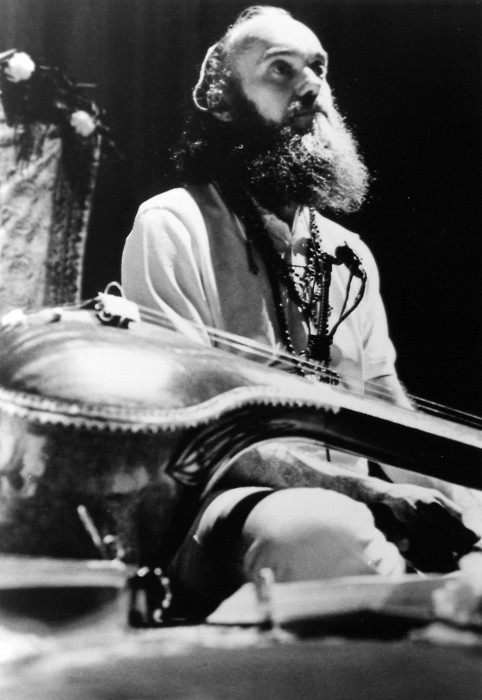
In his new movie, former Harvard psychology professor turned spiritual teacher Ram Dass (Dr. Richard Alpert), hails us to, “love everybody and tell the truth”.

Tell the truth.  Not only a great rule to live by, but one of the things that I’ve always loved about science … its a way to discover and face the objective “truth” as separate from our subjective wants and wishes.

Take the latest scientific data on happiness.  I mean, from a – scientific point of view – what really makes us happy? Daniel Gilbert (another) Harvard psychology professor has published a research article entitled, “A Wandering Mind Is an Unhappy Mind” [doi:10.1126/science.1192439].  The researchers used a cool mobile web application trackyourhappiness.org to collect:

an unusually large database of real-time reports of thoughts, feelings, and actions of a broad range of people as they went about their daily activities. …  The database currently contains nearly a quarter of a million samples from about 5000 people from 83 different countries who range in age from 18 to 88 and who collectively represent every one of 86 major occupational categories. … what people were thinking was a better predictor of their happiness than was what they were doing. …  The ability to think about what is not happening is a cognitive achievement that comes at an emotional cost. (the figure from the paper shows the happiness scores of mind wandering vs. not wandering)

As covered very nicely in the NY Times, it turns out that when folks’ minds were engaged in focused activities, they were happier as compared to when their minds were wandering.  So, it seems that scientific data support the ancient teachings (and Dass’ 1971 book) to Be Here Now!

Here’s the new movie clip found on RamDass.org:

Enhanced by Zemanta

Have you ever seen the list “100 Benefits of Meditation“?  Of course, many of these benefits are psychological. You know, things like: helps control own thoughts (#39) and helps with focus & concentration (#40).  But many of the 100 benefits are rather physical, bodily, physiological, immunological and even biochemical benefits (such as #16- reduction of free radicals, less tissue damage).

These are awesome claims, and I’ve certainly found that mediation helps me feel more emotionally balanced and physically relaxed,  but I’m wondering – from a hard science point of view – how legit some of these claims might be.  For example, “#12 Enhances the immune system – REALLY?  How might yoga and mediation enhance my immune system?

In a previous post on the amazing vagus nerve – the only nerve in your body that, like the ancient Kundalini serpent, rises from the root of your gut to the brain – AND – a nerve that is a key to the cure of treatment resistant depression – it was suggested that much of the alleviation of suffering that comes from yoga comes from the stimulation of this amazing nerve during postures and breathing.

Somehow, the ancient yogis really got it right when they came up with the notion of Kundalini serpent – so strange, but so cool!

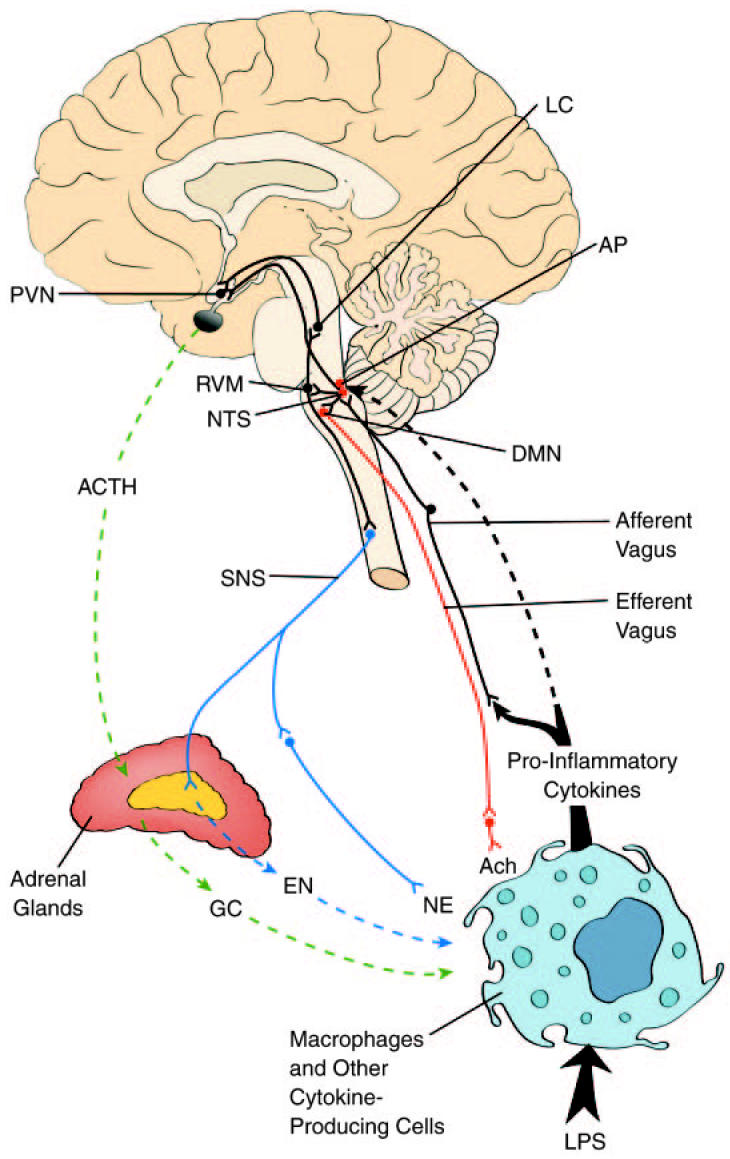
I happened to stumble on a paper that explored the possibility that the vagus nerve might also play a role in mediating communication of the immune system and the brain – and thus provide a mechanism for “#12- Enhances the immune system” Here’s a quote from the article entitled, “Neural concomitants of immunity—Focus on the vagus nerve” [doi:10.1016/j.neuroimage.2009.05.058] by Drs. Julian F. Thayer and Esther M. Sternberg (Ohio State University and National Institute of Mental Health).

By the nature of its “wandering” route through the body the vagus nerve may be uniquely structured to provide an effective early warning system for the detection of pathogens as well as a source of negative feedback to the immune system after the pathogens have been cleared. … Taken together these parasympathetic pathways form what has been termed “the cholinergic anti-inflammatory pathway

The scientists then investigate the evidence and possible mechanisms by which the vagus nerve sends immunological signals from the body to the brain and also back out to the immune system.  Its not a topic that is well understood, but the article describes several lines of evidence implicating the vagus nerve in immunological health.

So bend, twist, inhale and exhale deeply.  Stimulate your vagus nerve and, as cold and flu season arrives, awaken the serpent within!

Enhanced by Zemanta