“A man needs a name” and that man is Riccardo Sabatini. Serious games of -omes happening at Human Longevity.
Posted in Uncategorized | Tagged faces, Machine learning | Leave a Comment »

That carriers of the rs1049353 G allele located in the cannabinoid receptor (CNR1) gene, were found to exhibit, ahem, blunted, limbic and striatal activation to happy faces in imaging studies.
Posted in CNR1 | Tagged cannabinoid, Cannabis | Leave a Comment »
Her: Why haven’t you asked me to try that one thing that you really want to try, but haven’t tried yet?
Him: It’s not something you can just “do” Honey. It takes time to learn. You know how I always overestimate how difficult it will be to learn something new? and then my prefrontal cortex – hippocampal connections go and mediate a rapid-fire one shot kind of learning?
Her: Awwww, don’t be embarrassed Dear. I am glad you are an ZNF804A rs1344706 heterozygote. If I had to choose between too quickly or going on and on for hours … well, let’s just say, my favorite part is always the hugging afterwards. Mmmmkay?
Posted in Uncategorized, ZNF804A | Tagged 23andMe | Leave a Comment »

Don’t worry about your general cognitive ability genes. Otherwise, check out this study led by Drs. Joe Trampush and Anil Malhotra from the Feinstein Institute showing that the less frequent and non-ancestral (A) alelle of rs1906252 was associated with higher Spearman’s General Intelligence (g-factor) scores. This SNP sits 700 kilobases upstream of a putative ubiquitin ligase subunit (FBXL4) connected to severe psychomotor retardation. Loss-of-function in other ubiquitin ligase subunits have also been implicated in mental retardation.
Posted in Uncategorized | Tagged 23andMe, Cognition, GWAS, Intelligence | Leave a Comment »
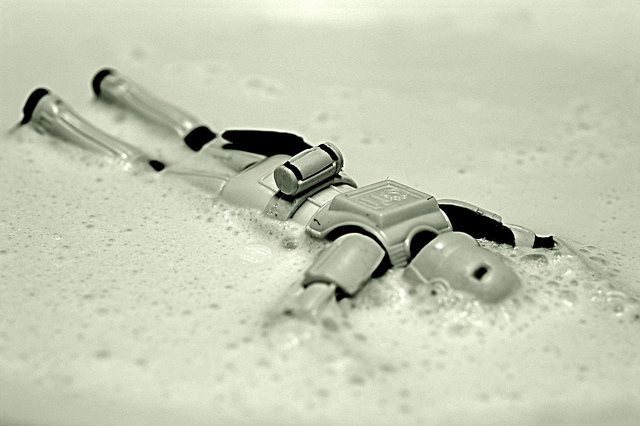
A genetic predisposition to develop a drinking problem when exposed to beer is not, however, that reason.
From: Genetics and Genomics of Alcohol Sensitivity (2014)
However, with the exception of the large effects contributed by variation at ADH1B and ALDH2 in Asian populations (Edenberg 2007; Hurley and Edenberg 2012), there is little consistency across studies. Nevertheless, one gene encoding cadherin 13 (CDH13) was replicated in four independent studies among all SNPs that were significant at a nominal P value (Johnson et al. 2006; Liu et al. 2006b; Treutlein et al. 2009; Lind et al. 2010).
If you’re going to make a clone army, you might want to avoid the CDH13 rs11640875 A alleles. Also keep in mind that there are some 100 different types of cadherin molecules expressed in the brain and they mediate all manner of cell-to-cell contact and signalling processes. Not surprisingly, this class of cell adhesion molecules are widely associated with mental disorders.
Posted in CDH13 | Tagged 23andMe, Addiction, Alcohol | Leave a Comment »

It’s summer people. We live in the genome age. Check your rs309375 genotype.
Posted in Uncategorized | Leave a Comment »
They say information wants to be free, but maybe it’s more that people want to be free and crave information that helps them acquire freedom. So maybe there is a simple test to apply to any subsequent blog posts here.
Does this post contain information that might help someone on their quest toward personal freedom or self-determination?
Posted in Uncategorized | Leave a Comment »

The genetics of economics and economics of genetics are really freaky topics.
On the one hand, we spend most of our lives making economic decisions … how to spend time? money? affection? You know, “He’s cute, but has a lame job” and, “I feel like I’m getting a better deal at Five Guys because they give away the peanuts for free.” Genetic research seems to be “worth it” because variation in genetic data might underpin variation in economic behavior (particularly in the healthcare marketplace).
On the other hand, genetic data seems to have little or no economic face value. I mean, they are practically giving the data away at $100 for your SNP-ome and $1,000 for your full genome.
So it seems that consumers are now part of an experiment where they may freely access their personal genetic information and try to figure out how to use it in some sort of economically advantageous way. Meanwhile scientists can (with consent) meta-analytically track the genotypes of these consumers and discover what genotypes are associated with good economic decisions. It’s freaky. It’s fascinating. It’s big data. Whatever.
The downside to “consumer as guinea pig” is that the free marketplace is full of liars and exploiters, and will soon be awash in every sort of hokey “geno-” this and “geno-” and “g’s” fused with all sorts of words that begin with “en”. I mean, have you ever not been paralyzed in the salad dressing aisle? Do we really need “specially formulated for rs1234567 AA” geno-dressings?
Which is why I really think anyone who describes himself as a genoeconomist and founder of a gentrepreneurship consortium, really needs to take it down a couple of notches. This type of self-branding is what the liars and exploiters do.
Hundreds of millions of people are desperately looking for work. The liars and exploiters have wrecked the global economy for decades to come. People are suffering. The publication of meta-analytic studies that show that self-employment, while somewhat heritable, is a complex polygenic trait (um, no shit) feels to me like an insensitive slap in the face to people who are unemployed through no fault of their own.
Rant over.
Posted in Uncategorized | Tagged economics, entrepreneurship, global economic conditions | Leave a Comment »


Posted in Uncategorized | Tagged 23andMe, economics | Leave a Comment »


The “T” allele of rs1378810 in your DNAJC13 gene has been associated with a slight benefit (less than 0.4% variance) in general cognitive ability. You can check your 23andMe profile.* What? You’re a TT? Ooooh … nobody is impressed. But let’s not make light of our DNAJ genes just yet.
Consider the critical role of DNAJC5, a so-called cysteine-string protein (because it encodes a protein with an array of cysteine residues). This protein helps synaptic vesicles fuse and un-fuse so that your neurons can release and re-cycle tiny packets of neurotransmitters – which is how neurons send signals to one another. Yeah, vesicle fusion is really important … and is happening like a quadriillion times right now in your brain.
Mutations in the cysteine string of DNAJC5 have been associated with Huntington’s disease.
*Interpreting 23andMe data here can be confusing because 23andMe lists an A or T as possible alleles but one isn’t always sure which strand the research literature refers to and if that strand is the same strand that 23andMe is reading from. Luckily SNPedia points out that an rs1378810 TT is in tight linkage disequilibrium with rs2133692 TT (T or C alleles) so you can check this genotype on 23andMe to infer your rs1378810 genotype. My 23andMe profile says AA at rs1378810 and TT at rs2133692, so I think I have the slightly beneficial TT genotype … but I’m really not sure. Confused? Me too. But like the research suggests, this genotype really doesn’t add much to one’s general cognitive ability.
Posted in DNAJC, Uncategorized | Tagged 23andMe, chaperone, Intelligence, linkage disequilibrium, neurodegeneration, neurotransmitter, vesicles | Leave a Comment »

Mo’ Jessica ALBA, mo’ muscle? Actually no. “Serum albumin demonstrated modest and inconsistent trends with loss of muscle mass and function. Low serum albumin within the normal range is not a risk factor for this process among elderly men.” More on your ALBA gene here.
Posted in Uncategorized | Tagged meme-gene, silly | Leave a Comment »
Head injury is a topic of much concern among football players from ages 8-80. My 7 and 9-year old sons have started playing football (tackling in our town starts at age 8) and so I was eager to see the new documentary film The United States of Football that tracks an ongoing discussion of chronic traumatic encephalopathy (CTE) among current & former NFL players as well as NFL league officials and youth football coaches. It is a frightening topic, but I am grateful to the filmmakers for informing me about this very serious issue.
In the days since viewing the film, my sons and I have been talking about what it feels like to get a “ding” and, if they experience white flashes of light, why it is important for them to notify the coach and me so that they can sit out for the rest of the game. We also have been practicing proper heads up tackling technique and the importance of NOT hitting another child in the head. Given that they are typical rambunctious young fellows, who, if not padded up on the football field, are climbing (and falling from) trees, riding (and crashing) bikes or playing chase (and colliding with other kids) in our neighborhood, we feel that their relative risk of serious head injury on the youth football field is acceptable.
I also checked my 23andMe results for my Apolipoprotein E4 genotype status. Luckily it is negative. I checked my genotype because there is some evidence that this one particular genotype is associated with the development of CTE.
The development of chronic traumatic encephalopathy has also been linked to the ε4 genotype. Having the same Apolipoprotein E ε4 genotype also predisposes the individual to incurring significantly more severe chronic traumatic encephalopathy compared to those without the ε4 genotype, given the same degree of chronic TBI.
My wife still needs to upgrade to the new 23andMe genotyping platform to get her E4 status. If she is positive, our plan is to have both of our children tested and, if they are carriers, we will discourage them from playing any sports where head injury is common. Conversely, we also understand that a negative Apolipoprtein E4 status is not a green light for head bashing.
Regardless of genotype, the plan is to carefully monitor how much “contact” they are experiencing (estimated about 700 hits per season in high school), and be quick to protectively withdraw them if it becomes too intense (about 1 “ding” per 250 hits for adults). Helmet sensors (linear accelerometers)? Perhaps not (an ideal system should measure both linear and rotational acceleration).
Football fans? Yes. But reading books, creative writing, drawing, playing music … and playing sports for fun … shall remain the low-impact mainstay of their childhood.
Posted in APOE | Tagged chronic traumatic encephalopathy, concussion, CTE, football, head injury | Leave a Comment »

Have you read The Sports Gene? Maybe you are wondering if your child might be the next Lionel Messi? Or maybe you’re wondering why you were always picked last for kickball? Was it the genes? the practice? or a combination of the two?
We all know kids who seem to have been born with a baseball bat or tennis racquet in their hands. Tall kids, strong kids, fast kids and kids with great hand-eye-coordination. As far back as 1978, the German Tennis Federation had identified 9-year old Steffi Graf as a top recruit based upon her lung capacity, ability to sustain concentration, running speed and her competitive desire. Other kids discover late in life that they have a genetic gift. On a whim, Donald Thomas leaped for his first EVER high jump in 2006 and promptly won the World Championships in 2007. Chrissie Wellington (world tri-athelete champion) also accidentally discovered her genetic gift late in life (outpacing sherpas on her bicycle while vacationing in Nepal).
As described by David Epstein, the 1996 Olympic games in Atlanta, saw 7 women out of the 3,387 competitors carrying the Y-chromosome-linked SRY gene. 21-hydroxylase deficiency also causes the overproduction of testosterone and is over-represented among top female athletes. The GIANT research consortium has discovered hundreds of “sports genes”, such the rs9930506 SNP in the FTO gene, that contribute to body shape and size. Even more numerous are the complex genetics of height where each genetic variant adds a mere 2-6 millimeters toward NBA stardom. Elite sprinters are more likely to carry 2 functional variants of the fast-muscle-twitch ACTN3 gene. Lastly, an extended network of genes associated with muscle development can – when artificially overexpressed – induce muscle growth: insulin-like growth factor-I (IGF-I), growth hormone (GH), erythropoietin, vascular endothelial growth factor (VEGF), fibroblast growth factor (FGF) and myostatin blockers, such as follistatin.
Sports genes. Few of us are born with them (I was luckily born with the non-obese TT genotype at rs9930506 in the FTO gene, but alas, this allele is associated with a lower response to exercise). Fewer still might be intent upon purchasing a genetic endowment via the taboo art of sports gene doping, especially if they carry the right UGT2B17, CYP17 and PDE7B genotypes. Most of us, however, would just like to maximize our paltry genetic endowments the old fashioned way.
Practice.
Justin Durant of the Sports Science Institute of South Africa is quoted, “I’ve never seen a boy who was slow become fast” but how about late-blooming middle distance runner Jim Ryun whose practice regimen carried him from 21rst on his Wichita East track squad (in 10th grade) to an Olympian and 1-mile world record holder just a single year later? Epstein explores how each of us has an inherent genetic endowment for “trainability” ie. the extent to which our bodies and abilities respond to training. And yes, here too, molecular genetics researchers have identified more “sports genes” in a so-called training responsive transcriptome consisting of genes, including RUNX1, SOX9 and PAX3 whose expression is associated with exercise-dependent muscle growth and CREB1 whose expression is associated with improvements in heart rate and blood pressure.
Sports crazed parents should take note. Your child is probably totally average. Probably like self-described “totally average guy” Dan McLaughlin, who has slogged some 5,500+ hours into his personal experimental journey of “deliberate practice” hoping to land a spot on the PGA tournament by the time he reaches his 10,000th hour of practice. Will he make it? Or will he discover the oft-misconstrued “10,000 hour rule” is more like 4,000 for some and 40,000 hours for others. We wish Dan the best of luck on his quest, but also wish parents to use their children’s precious 10,000 hours for reading, writing, mathing and playing sports for fun rather than trying to attain an NCAA scholarship through mastery of a niche sport.
Will genetic counselors soon be found in pro sport locker rooms or at your local fantasy league draft party? Doubtful, but in 2005, according to Epstein, the Manly Sea Eagles of Australia’s National Rugby League became the first pro sports team to admit that it was genotyping players at ACTN3 and training them differently based on their genotypes.
I loved reading The Sports Gene! Have you ever noticed that NOBODY wants to read a blog or talk about genetics and medical illness, while EVERYBODY loves to talk about sports? Find me a graduate student who can understand (and stay awake while reading) medical GxE research and I will find 1,000 parents who are obsessed with finding the perfect sporting niche and coach for their child.
Whether it be medical treatment or athletic training, a good doctor/coach will seek to optimally match the patient/player’s genetic endowment with treatment/training. The Sports Gene by David Epstein is thus a wonderfully fun and timely playground for readers to explore the complexities of personal genomes and GxE interactions!
Posted in ACTN3, Uncategorized | Tagged Gene-Environment, sports, sports genes, the sports gene | Leave a Comment »


Sign on the window reads, “10% off for rs1800497 TT“ … on account of the way their DRD2 receptors seem to be less responsive … which, naturally, makes them prone to needing to drink (buy) more to feel the same pleasure as CC people. It’s just the free market at work right?
Posted in DRD2 | Tagged economics, price discrimination | Leave a Comment »

Have you ever read the DSM and thought you had EVERYTHING? Me too.
And that, sort of, has always been a big problem … that it is really hard to separate the normal experience of anguish and suffering as part of our everyday mental and emotional lives from what is labelled a “disorder”. At the same time, however, patients, doctors and payors need some type of common reference so as to keep the diagnosis and treatment of mental suffering in-line with the way other medical illnesses are handled. So, everyone (in psychiatry, at least) knows the DSM will always be highly flawed and yet also highly necessary … so, you know, just try and live with it … but don’t expect, for a moment, to search for and find discrete genetic variants that correspond to DSM categories of mental disorders. No … because the DSM categories do not correspond well to the underlying biology of the CNS … the DSM does not “cut nature at its joints” so to speak.
Russ Poldrack provides a glimpse into what the future of diagnosing mental illness might look like using slightly more objective, quantifiable and biologically relevant measures of the brain’s physiological processes.
Also, I stumbled onto an awesome read about the creation of DSM-5 entitled, The Book of Woe
The overall thrust of the manual [DSM-5], the BPS complained, was to identify the source of psychological suffering “as located within individuals” rather than in their “relational context,” and to overlook the “undeniable social causation of many such problems.” The APA could hardly deny any of this. As Regier had told the consumer groups on the conference call, the manual’s new organizational structure was designed to reflect “what we’ve learned about the brain, behavior, and genetics during the past two decades.” It doesn’t get much more “within the individual” and outside the “relational context” than that. (p. 239)
“Dereification is just as dumb as reinfication,” he [Allen Frances] told me. “A construct is just a construct – not to be worshiped and not to be denigrated.” Psychiatry, he was saying, has to live in the tension between the desire for certainty about the nature of our suffering and the impossibility of understanding it (or ourselves) completely. A DSM that tries to end this tension by turning itself into a living document was bound to collapse into chaos; that was the cardinal error of the incompetent DSM-5 regime. (p. 279)
“What [Dr. Thomas] Insel [Director of NIMH] heard “over and over again” on his tour was that psychiatrists were tired of being trapped by the DSM. “We are so embedded in this structure,” he told me. He and his colleagues had spent so much time diagnosing mental disorders that “we actually believe they are real. But there’s no reality. These are just constructs. There’s no reality to schizophrenia and depression.” Indeed, Insel said, “we might have to stop using terms like depression and schizophrenia, because they are getting in our way, confusing things.” Thirty years after Spitzer burned down DSM-II and built the DSM-III in its ashes, psychiatry might once again have to “just sort of start over.”” (p.340)
Yikes! after reading The Book of Woe, DSM-5 sounds, um, totally wack … if not a tool flagrantly designed to further commodify human suffering for the benefit of a medico-industrial complex. NIMH Director Thomas Insel’s recent announcement that, “NIMH will be re-orienting its research away from DSM categories.” suggests a future where diagnosis will based on biological measures and treatments are directed toward specific circuits.
Treatment for specific circuit dynamics sounds very promising. However, I thought Dr. Allen Frances, as quoted in The Book of Woe made a great point (p.346) that, “The trick is to develop a healing relationship, to care for the person not just the disorder, to diagnose and treat cautiously, and to see the healthy part of the person not just the sick.”
* Maybe that is the hope of this blog also … to take out and explore the intricate biological & molecular parts … but also to try and place them back into their original evolutionary, living, breathing, copulating (or more often the case of just thinking about copulating) “whole” human being.
Posted in Uncategorized | Tagged DSM, Mental disorder, Mental health, Psychiatry | Leave a Comment »

Studies on adopted children raised by parents in hostile marriages: show (obviously) that frustration and anger begets frustration and anger … irrespective of genes.
“Although there was no direct association between birth mother anger/frustration and toddler anger/frustration, as noted above, birth mother anger/frustration significantly moderated the relation between adoptive parent marital hostility and later toddler anger/frustration. This genetic moderation is consistent with the premise that children whose birth mothers report higher levels of anger/frustration inherit an emotional lability, making them more susceptible to the negative impact of marital hostility.”
But, for an unfortunate few … the doubly unfortunate experience of having an “inherited emotional lability” while being raised in an emotionally harsh environment, can mean a lifetime of emotional anguish, stress-related-physical suffering and falling through the cracks of society.
Posted in Uncategorized | Tagged adoption, Gene-Environment | Leave a Comment »
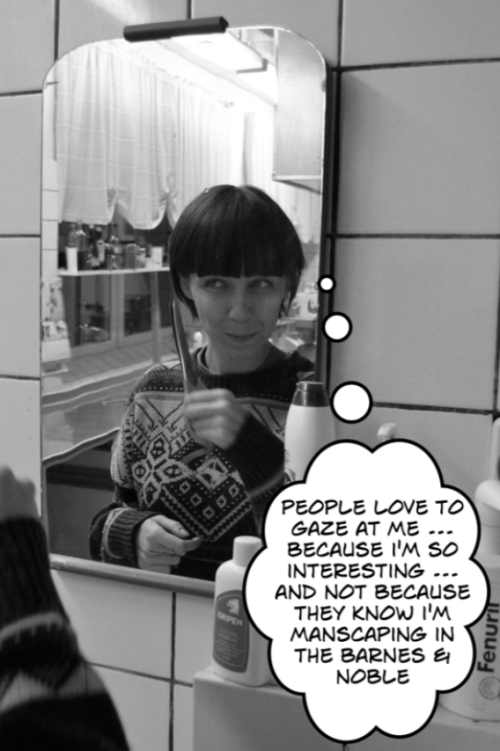
Learning to read emotions and faces is important for our well-being. For some of us, the act of gazing into another person’s eyes is innately rewarding … especially if they are smiling. New mothers and their infants can be found locked in each others smiling countenance … thus strengthening the developing neural pathways upon which the infant’s future social skills will grow.
One component of these neural pathways is the CNR1 gene expressed in the striatum and other brain regions that process rewarding and positively-reinforcing stimuli. For most of us, a happy smiling face is positively rewarding … moreso with certain CNR1 genotypes.
From Drs. Baron-Cohen and Chakrabarti:
“A comparison of these results with those from our earlier fMRI study reveals that for the SNP rs806377, the allelic group (CC) associated with the highest striatal response is also associated with the longest gaze duration for happy faces. For rs806380, the allelic group associated with the highest striatal response (GG) is also associated with the longest gaze duration for happy faces.”
My 23andMe profile shows both the long-gaze CC and GG genotypes for rs806377 and rs806380. Mmmmkay … I guess this would be a good time to apologize to all the girls I inappropriately stared at in the cafeteria back in college … even though you weren’t usually smiling back at me. I guess my CNR1 and striatum were pretty overactive.
Posted in CNR1, Uncategorized | Tagged Basal Ganglia, cannabinoid, Cannabis, Development, faces, learning, Perception, social | Leave a Comment »
Remarks
Re-Tweetin’
Tweets by genes2brains2meBlog Stats
- 187,331 clickitas
Posting since April 2007
General topics
23andMe Addiction Add new tag aging Anxiety Art Arts autism B. K. S. Iyengar Biology Brain Buddism Central nervous system Cognition comics Consciousness Depression Development DNA Dopamine dualism economics Emotion Empathy Epigenetics evolution fear Frontal lobe Functional magnetic resonance imaging Gene Gene expression Genetics Genetic testing GWAS Health Health care Health insurance Hippocampus History Intelligence Kundalini language Major depressive disorder medication Meditation meme-art Memory Mental disorder Mental health Mind Mutation Nervous system Neural network Neuron Pain parasympathetic nervous system Patañjali Personalized medicine philosophy placebo Psychology Reactive oxygen species Religion and Spirituality Rett Syndrome schizophrenia Social Sciences spirituality Stem cell Stress Suicide synaptogenesis Teachers and Centers Twin Yoga Yoga Sutras of PatanjaliSpecific Items
- 5HTT
- ABCB1
- acetylcholine
- Actin
- ACTN3
- ADH1C
- ADORA2A
- ADRA2A
- AKT
- AMPA receptor
- Amygdala
- Angular gyrus
- ANK3
- APOE
- ARHGAP18
- ASIC1a
- ASPM
- ATXN1
- AVPR1a
- BAF53b
- Basal Ganglia
- BDNF
- CABYR
- CACNA1C
- CACNA2D1
- Caudate nucleus
- CB1 receptor
- CDC34
- CDH13
- Cell adhesion molecules
- Cerebellum
- CHAT
- CHRM3
- CHRNA4
- CHRNA7
- Chromosome structural variants
- Cingulate cortex
- Circadian
- clinical trial
- CNR1
- CNTNAP2
- Collateral sulcus
- COMT
- Corpus callosum
- COX1
- CREB
- CRHR1
- DARPP32
- DAT
- default network
- DISC1
- DLPFC
- DNAJC
- DNMT
- Dopamine
- DPP4
- DRD2
- DRD4
- DTNBP1
- DYRK1A
- EDA2R
- EGR1
- Estrogen
- evolution
- FGF20
- FMR1
- FNBP1L
- FOXA2
- FOXP2
- Frontal cortex
- Frontal pole
- Fusiform gyrus
- G-protein
- GAB2
- GABA
- GABRA2
- GABRG1
- GATA4
- Glucocorticoid receptor
- Glutamate
- GPR6
- GRIA3
- GRIK2
- GTPase
- HDACs
- Hippocampus
- HOXB8
- HRK
- HTR2A
- Hypothalamus
- IL3
- immunity
- Inferior frontal gyrus
- Insula
- Intronic or repetitive sequences
- Kalirin
- KCNA2
- KCNH2
- KCNIP3
- KCNJ6
- Kinesin
- Lateral septum
- Lateral ventricle
- LDB1
- Leptin
- LIMK1
- Locus coeruleus
- MAOA
- MAPK
- MCPH1
- MCR1-4
- MDGA2
- MECP2
- meditation
- MET
- metabolism
- MHC loci
- microRNA
- Middle frontal gyrus
- middle occipital gyrus
- Middle temporal gyrus
- Mindfulness
- Mitochondria
- MKP-1
- Motor cortex
- Myelin
- Neural crest
- NEUROG1
- NLGN3/4
- Noradrenaline
- NPBWR1
- NPSR1
- NRG1
- NRXB1
- NTRK2
- Nucleus accumbens
- NURR1
- Olfactory bulb
- OPRM1
- Orbitofrontal cortex
- OTR
- OXTR
- Parahippocampal gyrus
- Parasympathetic NS
- Parietal cortex
- PARP-1
- PAX6
- PCLO
- PER1
- PINK1
- PLCB1
- Posterior parietal cortex
- PSD95
- Putamen
- quantum physics
- RARB
- RGS2
- RGS4
- Rho GTPase
- RLN
- ROR1
- RORB
- Rostral fronto-occipital fasciculus
- RSRC1
- SAPAP3
- self-awareness
- SEMA(1-7)
- SETDB1
- SEZ6
- SIRT1
- SLC1A1
- SLITRK1
- SNAP25
- SNORD115
- SNRPN
- SOD2
- Somatosensory cortex
- SRPX2
- Stria terminalis
- Striatum
- Substantia nigra
- Subthalamic nucleus
- Superior temporal cortex
- Suprachiasmatic nucleus
- Supramarginal gyrus
- SWI/SNF
- Sylvian fissure
- Telomere
- Temporal lobe
- TGF-alpha
- TH
- Thalamus
- Thap1
- THBS1
- THBS2
- TNF-alpha
- Torsin A
- TPH2
- UBE3A
- UGT2B17
- Uncategorized
- Vagus
- VEGF
- Ventral tegmental area
- VGF
- Visual cortex
- White matter
- Yoga and Meditation
- ZNF804A


 Genes 2 Brains 2 Mind 2 Me