Feeds:
Posts
Comments

Dr. Tal Yarkoni: “Functional MRI in Health Psychology and beyond: A call for caution

In practice, the modal fMRI sample size of 15 – 20 subjects often provides little power to detect anything but very large effects (Yarkoni, 2009). For example, a one-sample t test performed on 20 subjects at a statistical threshold of p < .001 (the modal threshold in the fMRI literature) has only 40% power to detect even a canonically ‘large’ effect of d = 0.8. For a correlational analysis, the same sample size provides only 12% power to detect an extremely large correlation of r = 0.5.

How many LOW and UNDER-powered imaging genetic studies (where genetic variation is merely one of many variables correlated with individual differences in task or baseline BOLD responses) have I have covered in this blog?  Eeeek!  I’d better not go there … I’ll go to ENIGMA instead.

[pic cred]
You mean these types of executives?  No … well, sort of, maybe.  Some people can control their thoughts and actions better than others.

Individuals vary widely in their abilities to control their own thoughts and actions. Some people seem ruled by impulses, while others manage successfully to regulate their behaviors. From the perspective of cognitive psychology, such variation reflects individual differences in executive functions, a collection of correlated but separable control processes that regulate lower-level cognitive processes to shape complex performance.

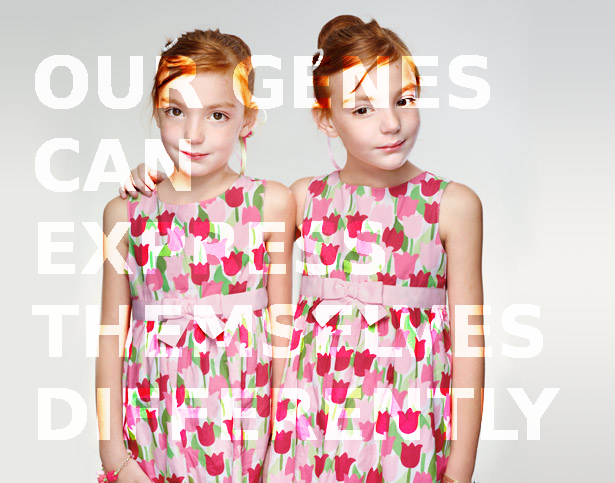
Results indicated that executive functions are correlated because they are influenced by a highly heritable (99%) common factor that goes beyond general intelligence or perceptual speed, and they are separable because of additional genetic influences unique to particular executive functions. This combination of general and specific genetic influences places executive functions among the most heritable psychological traits.

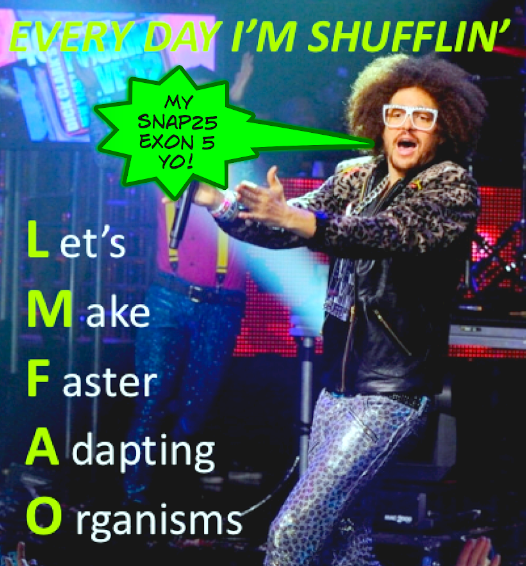
… but you knew that already.  Here’s an example of how a phenomenon known as exon shufflin’ can lead to evolutionary diversity (here involving SNAP25‘s exon 5a variant for early brain development while the exon 5b variant is used later in development) .  Perhaps we owe our awesome, ahem, “higher” cognitive abilities to this ancient exon duplication … video below notwithstanding.

Some call it “phantom heritability” while others call it “dark matter” … whatever … genes are definitely not “beans in a bag” that independently add up to influence development.  They interact in complex bio-physical-3D-proteo-ribonucleic-tertiary-etc.-etc. ways.

“Ultimately,” they concluded, “the most important goal for biomedical research is not explaining heritability — that is, predicting personalized patient risk — but understanding pathways underlying disease and using that knowledge to develop strategies for therapy and prevention.” [paper]

Note to self: Abandon any musings of future employment in the “predicting personalized patient risk” business … unless someone comes up with a useful model that helps best fit these interactions.

[article here]

hacked from animals talking in all caps 🙂

Here’s an excerpt from William Vollmann’s book Poor People … of an exchange between two men … one, a passerby, and the other, homeless “young, bearded, well-clad, his his bluejean legs sewn into pockets around his stumps“.

He expressed through his noninsistence my right not to give him anything, and the little that I did give was simply my recognition of him as he was.  The more I write about this moment, the more I degrade it; for making it significant cannot but seem a pretension to generosity or superiority on my part, or at least a magnification of his deformity.  But the significance was precisely in the insignificance.  We saw each other; I gave; he accepted; we forgot each other.

Man, Vollmann is such an awesome writer and I feel grateful for all the feelings of empathy, acceptance and forgiveness that his book book is stirring up in me.  Somewhere inside “me” is a part that is really inspired by Vollmann … that wants to speak with the same empathy, clarity and attention to human dignity and emotion.

Is this part of “me” – my favorite part of who I am – partially encoded in my genome?  Genes to facilitate a deep desire for social connection and acceptance? Genes for helping me see clearly and honestly through all my cognitive biases and filters?  Genes that underlie my sense of fairness and trust?  These would be my favorite genes … ones that I would study in depth.

Check out the Interpretome! developed by students and staff at Stanford University.

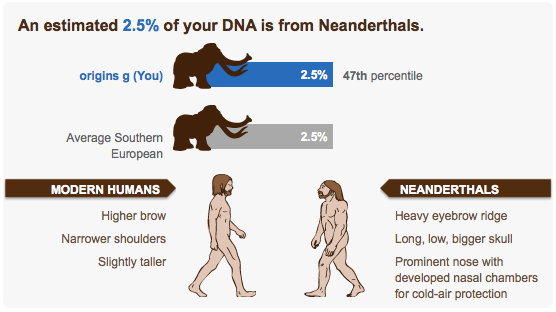
– I have 17 European alleles and 3 East Asian alleles … the genetic proof is in … white boys can’t jump.
– I have 17 out of 32 Type 2 Diabetes risk alleles … put down those carbs now … and 19 out of 30 Coronary Artery Disease risk alleles … and go for a jog.
– I have a combined Risk of Narcolepsy: 2.92 … but the score jumps to 85 with an issue of GENETICS in my hand.
– I’m not exactly on the leading edge of human evolution … a 72/110 of positive selection score.
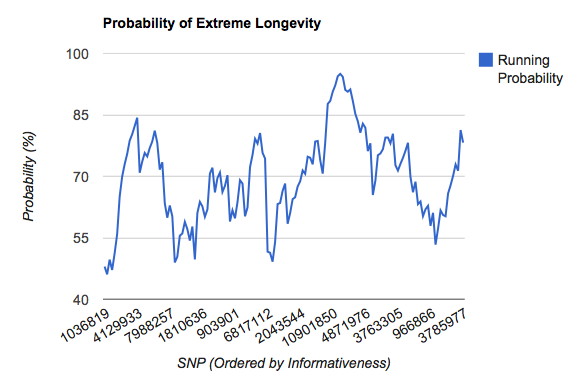
– I’d better start saving for a long-ass retirement … probability of extreme longevity: 78.2

More on the interpretome here, here and here!

Come to think of it, I was never very, um, choosy, back in my wanton late teens and early 20’s … apparently, it runs in the family.  News blurb.

Really enjoyed part 1 here … man’s co-evolving sense of self along with his technology … seems like brain & genome science are adding another layer on to “the Edifice” … so much fun to watch

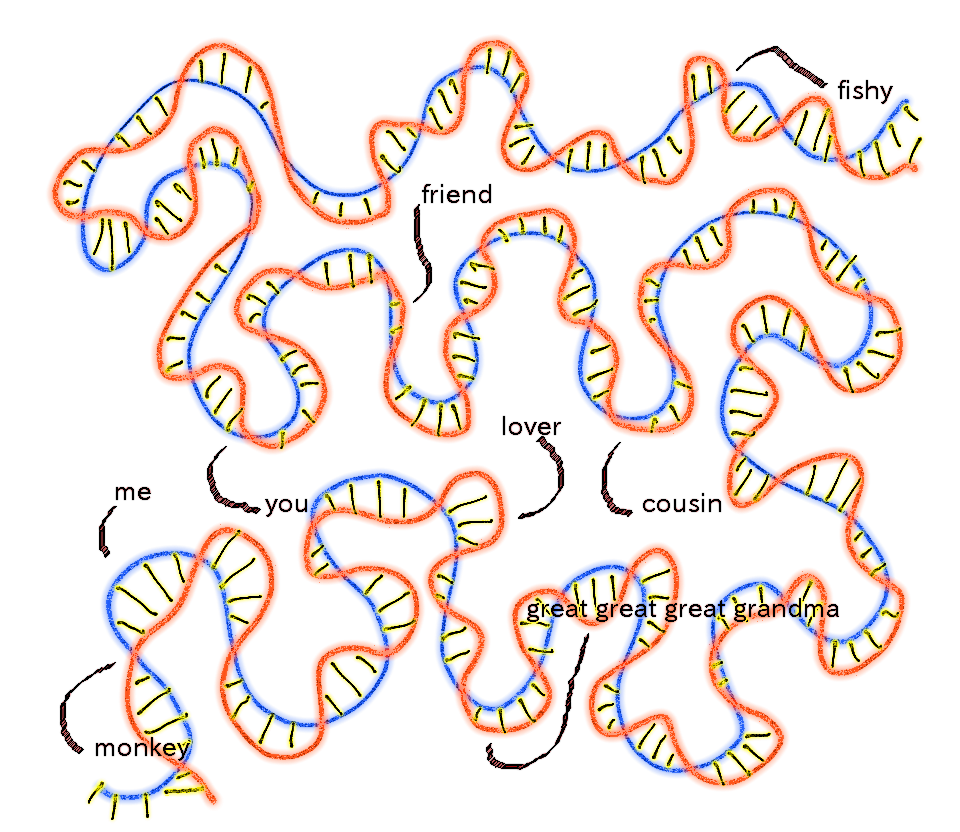
My genome is full of you

Sanity check

Here’s a pointer to a reality check on the scientific literature and genetics … especially when it comes to behavioral genetics.

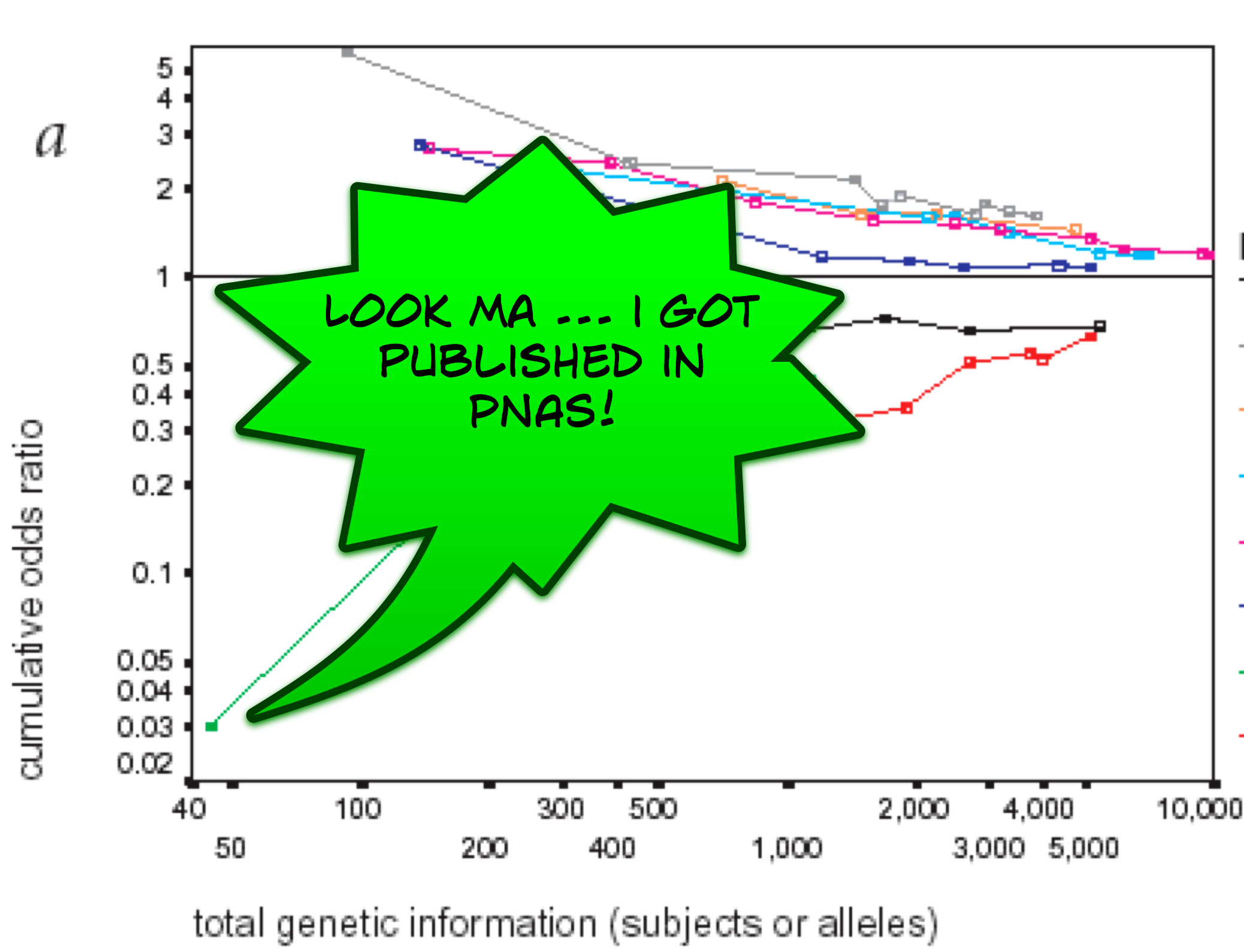
Finally, we extend a plea to science writers: before writing about any article claiming a genetic association, it’s worth doing some simple sanity checks. Is the sample large enough to capture the typically tiny effect sizes we expect to see for complex human traits?

I do … and will … try and keep this in mind.  The genome (and your brain) are very interesting places … but interesting ain’t necessarily the same thang as informative.

Embodied brain

Open letter to the DSM-5

An RNA editor

It’s nice to see this

Statistical pickles

Just a pointer to Dr. Ben Goldacre’s wonderful book and recent blog post on some widespread statistical flubs.  Readers of genetics and neuroscience media should be alert to conclusions of this ilk: “people with genotype AA respond differently to treatment (pre- vs. post-) than people with genotype aa (pre- vs. post-).”

You can say that there is a statistically significant effect for your chemical reducing the firing rate in the mutant cells. And you can say there is no such statistically significant effect in the normal cells. But you cannot say that mutant cells and mormal cells respond to the chemical differently.

Check it out!

October 30 – November 1, 2011, The Westin Boston Waterfront, Boston, MA, USA

The field of epigenetics has come to the fore in recent years, making its mark in both basic research and also fields relevant to human disease, such as stem cells and cancer. “Epigenetics” has become synonymous with modifications to DNA and associated molecules that influence whether genes are on or off. But are these epigenetic modifications self-propagating and inherited like DNA, the physical manifestation of Mendel’s gene? Given the great interest in the topic and huge public and private investment made in epigenetics, Cell Press has decided to tackle this and other aspects of epigenetics in a multi-day meeting. In addition to fostering critical discussions on the proposed mechanisms of epigenetic inheritance and the challenges that lay ahead in understanding these mechanisms, the meeting will focus on more well established epigenetic mechanisms and how they are implemented in cell and developmental biology, particularly the maintenance of cell states, such as occurs during X-inactivation and polycomb-mediated gene silencing. The scope will be broad, giving the interested attendee a glimpse of epigenetics at both the molecular as well as the organism level.

As the field of epigenetics gains momentum, this is the perfect time to take a breather, stand back, and take a critical look at the claims, the issues to be addressed, and how we move ahead.

Topic List:
– Transgenerational Epigenetic Inheritance
– Inheritance of cellular states: x-inactivation, imprinting, and lambda phage
– Replication of chromatin
– RNA and epigenetic inheritance
– Mechanisms of polycomb-mediated gene silencing

Enjoyed the August 2011 Neuropod(cast) on the topic of genetics and intelligence.  There is no mention of a major “intelligence gene”  (the author suggests there should be, rather, hundreds of very weak, small-effect genetic factors) but the author does point to their finding of a gene FNBP1L  that plays a role in the regulation of actin polymerization.  Why might the polymerization of actin matter?  The video below from Tom Bartol and colleagues shows just how wildly intertwined and elaborate synaptic connections can be.  The formation of this synaptic spaghetti is dependent on actin polymerization!  Mo’ spaghetti, mo’ smarts?

More on genes and intelligence here and here.


Placebo Effect from Ataide.tv on Vimeo.

more on the placebo effect here and here … a conversation with Professor Daniel Moerman here … a link to his paper on why we evolved a placebo response … and a great article on magical thinking.