pointer to: Al Fin’s recent post chock full of great links to educational videos. Incredible wealth of expertise just a few clicks away. Thanks Al Fin!!
Posts Tagged ‘Psychology’
echoblog: Educational resources for cognitive science
Posted in Uncategorized, tagged Cognitive science, Education, Psychology on January 4, 2010| Leave a Comment »
Recalling finch beaks using variable decision criteria to learn from whence we came
Posted in Uncategorized, tagged Charles Darwin, Development, episodic memory, evolution, Frontal lobe, Functional magnetic resonance imaging, Galápagos Islands, Genetics, individual differences, John Gould, Jonathan Weiner, Memory, Natural selection, Neuroimaging, Psychology on December 14, 2009| Leave a Comment »

- Image via Wikipedia

In his book, The Beak of the Finch, Jonathan Weiner describes the great diversity of finches on the Galapagos Islands – so much diversity – that Darwin himself initially thought the finch variants to be completely different birds (wrens, mockingbirds, blackbirds and “gross-bills”). It turns out that one of the pivotal events in Charles Darwin‘s life was his work in 1837 with the great ornithologist John Gould who advised that the birds were actually closely related finches and also specific to separate islands!
Fast-forward to 2009, and we are well on our way to understanding how closely related species can, via natural selection of genetic variation, diverge across space and time. The BMP4 and CaM genes, for example, have been associated with beak morphology in what are now known as Darwin’s Finches. Wonderful indeed, but now consider, for a moment, the variability – not of finch beaks – but of human cognition.
If you’ve ever been a part of a team or group project at work or school, you know that very few people THINK just like you. Indeed, variability in human cognition can be the source of a lot of frustration. Let’s face it, people have different experiences stored away (in a highly distributed fashion) in their memory banks, and each persons brain is extensively wired with trillions of synapses. Of course! nobody thinks like you. How could such a complex organ function exactly the same way in 2 separate individuals.
Perhaps then, if you were an alien visitor (as Darwin was to the Galapagos Islands) and you watched 5 separate individuals devise a plan to – oh lets just say, to improve healthcare accessibility and affordability – and you measured individuals based solely on their “thinking patterns” you might conclude (as Darwin did) that you were dealing with 5 separate “species”. Just flip the TV between FOX, CNN, CNBC, CSPAN and MSNBC if you’re not convinced!
However, if you were to take a more in-depth approach and crack open a current issue of a neuroimaging journal – you might come to the exact opposite conclusion. That’s right. If you looked at patterns of brain activity and other indirect measures of neural network dynamics (what I casually meant by “thinking patterns” ) you would mostly see conclusions drawn from studies where many individuals are pooled into large groups and then probed for forms of brain activity that are common rather than different. Most studies today show that humans use a common set of neural systems to perform mental operations (e.g., recalling events and information). Brain structures including the hippocampus, frontal cortex, thalamus, parietal cortex are all known to be involved in deciding whether or not you have seen something before. Thus, if you perform an fMRI brain scanning study on individuals and ask them to complete an episodic memory recall task (show them a list of words before scanning and then – when they are in the scanner – ask them to respond to words they remember seeing), you will likely observe that all or most individuals show some BOLD response activity in these structures.
OK great! But can you imagine where we would be if Charles Darwin returned home from his voyage and said, “Oh, just a bunch of birds out there … you know, the usual common stuff … beaks, wings, etc.” I’d rather not imagine.
Enter Professor Michael Miller and colleagues and their recent paper, “Unique and persistent individual patterns of brain activity across different memory retrieval tasks” [doi:10.1016/j.neuroimage.2009.06.033]. This paper looks – not just at the common stuff – but the individual differences in BOLD responses among individuals who perform a number of different memory tasks. The team reports that there are dramatic differences in the patterns of brain activity between individuals. This can be seen very clearly in Figure 1 which shows left hemisphere activity associated with memory recall. The group data (N=14) show nice clean frontal parietal activations – but when the data is broken down on an individual-by-individual basis, you might – without knowing that the all subjects were performing the same recall tasks – suspect that each person was doing or “thinking” something quite different. The research team then re-scanned each subject several months later and asked whether the individual differences were consistent from person to person. Indeed, the team shows that the 2nd brain scan is much more similar to the first (correlations were about 0.5) and that the scan-rescan data for an individual was more similar than the correlation between any single person and the rest of the group (about 0.25). Hence, as the authors state, “unique patterns of brain activity persist across different tasks”.
Vive la difference! Yes, the variability is – if you’re interested in using genetics to understand human history and cognitive development – the really exciting part! Of course, genetics is not the main reason for the stable individual-to-individual differences in brain activity. There are likely to be many factors that could alter the neural dynamics of broadly distributed neural networks used for memory recall. Environment, experience, gender are just a few factors that are known to influence the function of these networks. The authors reveal that individuals may also differ in the strategies and criteria they use to make decisions about whether they can recall or detect a previously viewed item. Some people will respond only when they are very certain (high criteria) and others will respond even if they feel only slightly sure they’ve seen an item before (low criteria). The authors show in Figure 5 that the folks who showed similar decision criteria are more likely to have similar patterns of brain activity.
Perhaps then, the genetic differences that (partially) underlie individual differences in brain activity might relate to personality or other aspects of decision making? I don’t have a clue, but I do know that this approach – of looking carefully at individual differences – is a step forward to doing what Darwin (and don’t forget John Gould!) is so well known for. Understand where the variation comes from, and you will understand where you come from!
I will follow this literature more closely in the months to come.
![Reblog this post [with Zemanta]](https://i0.wp.com/img.zemanta.com/reblog_e.png)
Insights on emotional attachment found in pain gene (OPRM1) – poets everywhere say, “I told you so”
Posted in OPRM1, tagged attachment, Development, Emotion, evolution, John Bowlby, Mental health, Morphine, Mu Opioid receptor, Pain, Pain management, Psychology, Social Sciences on December 8, 2009| 1 Comment »

- Image via Wikipedia

If you slam your hand in the car door and experience physical pain, medical science can offer you a “pain killer!“. Certainly morphine (via its activation of the mu opioid receptor (OPRM1)) will make you feel a whole lot better. However, if your boyfriend or girlfriend breaks up with you and you experience emotional pain, its not so clear whether medical science has, or should offer, such a treatment. Most parents and doctors would not offer a pain killer. Rather, it’s off to sulk in private, perhaps finding relief in the writings of countless poets who’ve attested to the acute pain that ensues when emotional bonds are broken.
Love hurts! But why should this be? Why does the loss of love hurt so much?
From a purely biological point of view, it seems obvious that during certain periods of life – childhood for instance – social bonds are important for survival. Perhaps anything that helped make the breaking of such bonds feel bad, might be selected for? Its a very complex evolutionary genetic problem to be sure. One way to begin to solve this question might be to study genes like OPRM1 and ask how and why they might be important for survival.
Such is the case for Christina Barr and colleagues, who, in their paper, “Variation at the mu-opioid receptor gene (OPRM1) influences attachment behavior in infant primates” [doi:10.1073/pnas.0710225105] examine relationships between emotional bonds and genetics in rhesus macaques. The team examines an amino acid substitution polymorphism in the N-terminus of the OPRM1 protein (C77G which leads to an Arginine to Proline change at position 26). This polymorphism is similar to the human polymorphism (covered here) A118G (which leads to an Asparagine to Aspartate change at position 40). Binding studies showed that both the 77G and 118G alleles have a higher affinity for beta-endorphin peptides.
Interestingly, Barr and colleagues find that the classical “pain gene” OPRM1 G-allele carrier macaques display higher levels of attachment to their mothers during a critical developmental phase (18-24 months of age). These G-allele carriers were also more prone to distress vocalizations when temporarily separated from their mothers and they also spent more time (than did CC controls) with their mothers when reunited. Hence, there ?may be? some preliminary credence to the notion that a gene involved in feeling pleasant/unpleasant might have been used during evolution to reinforce social interactions between mother and child. The authors place their results into a larger context of the work of John Bowlby who is known for developing a theory of attachment and the consequences of attachment style on later phases of emotional life.
Click here for a previous interview with Dr. Barr and a post on another related project of hers.
Video library of mental illness
Posted in Uncategorized, tagged Depression, Major depressive disorder, Mental disorder, Mental health, Psychology, schizophrenia, symptoms, videos on November 30, 2009| Leave a Comment »

- Image via Wikipedia

pointer to symptommedia.org – fantastic video resource of specific symptoms of mental illness.
“The intention of these clips are to be used in the classroom setting as visual compliments to the written description of symptoms for psychological phenomena found in the DSM handbook.”
Look deeply into my eyes and let me see your genes
Posted in OTR, OXTR, tagged altruism, autism, Emotion, Empathy, evolution, Functional magnetic resonance imaging, Gene expression, Genetics, genome sharing, group selection, Human genome, loneliness, Natural selection, oxytocin, Psychology, social psychology, Social Sciences on November 24, 2009| 1 Comment »
 *** PODCAST accompanies this post ***
Nowadays, it seems that genomics is spreading beyond the rarefied realm of science and academia into the general, consumer-based popular culture. Quelle surprise!? Yes, the era of the personal genome is close at hand, even as present technology provides – directly to the general consumer public – a genome-wide sampling of many hundreds of thousands of single nucleotide variants. As curious early adopters begin to surf their personal genomic information, one might wonder how they, and homo sapiens in general, will ultimately utilize their genome information. Interestingly, some have already adapted the personal genome to facilitate what homo sapiens loves to do most – that is, to interact with one another. They are at the vanguard of a new and hip form of social interaction known as “personal genome sharing”. People connecting in cyberspace – via haplotype or sequence alignment – initiating new social contacts with distant cousins (of which there may be many tens of thousands at 5th cousins and beyond). Sharing genes that regulate the social interaction of sharing genes, as it were.
A broader view of social genes, within the context of our neo-Darwinian synthesis, however, shows that the relationship between the genome and social behavior can be rather complex. When genes contribute directly to the fitness of an organism (eg. sharper tooth and claw), it is relatively straightforward to explain how novel fitness-conferring genetic variants increase in frequency from generation to generation. Even when genetic variants are selfish, that is, when they subvert the recombination or gamete production machinery, in some cases to the detriment of their individual host, they can still readily spread through populations. However, when a new genetic variant confers a fitness benefit to unrelated individuals by enhancing a cooperative or reciprocally-altruistic form of social interaction, it becomes more difficult to explain how such a novel genetic variant can take hold and spread in a large, randomly mating population. Debates on the feasibility natural selection acting “above the level of the individual” seem settled against this proposition. However, even in the face of such difficult population genetic conundrums, research on the psychology, biology and evolutionary genetics of social interactions continues unabated. Like our primate and other mammalian cousins, with whom homo sapiens shares some 90-99% genetic identity, we are an intensely social species as our literature, poetry, music, cinema, not to mention the more recent twittering, myspacing, facebooking and genome-sharing demonstrate.
Indeed, many of the most compelling examples of genetic research on social interactions are those that reveal the devastating impacts on psychological development and function when social interaction is restricted. In cases of maternal and/or peer-group social separation stress, the effects on gene expression in the brain are dramatic and lead to long-lasting consequences on human emotional function. Studies on loneliness by John Cacioppo and colleagues reveal that even the perception of loneliness is aversive enough to raise arousal levels which, may, have adaptive value. A number of specific genes have been shown to interact with a history of neglect or maltreatment in childhood and, subsequently, increase the risk of depression or emotional lability in adulthood. Clearly then, despite the difficulties in explaining how new “social genes” arise and take hold in populations, the human genome been shaped over evolutionary time to function optimally within the context of a social group.
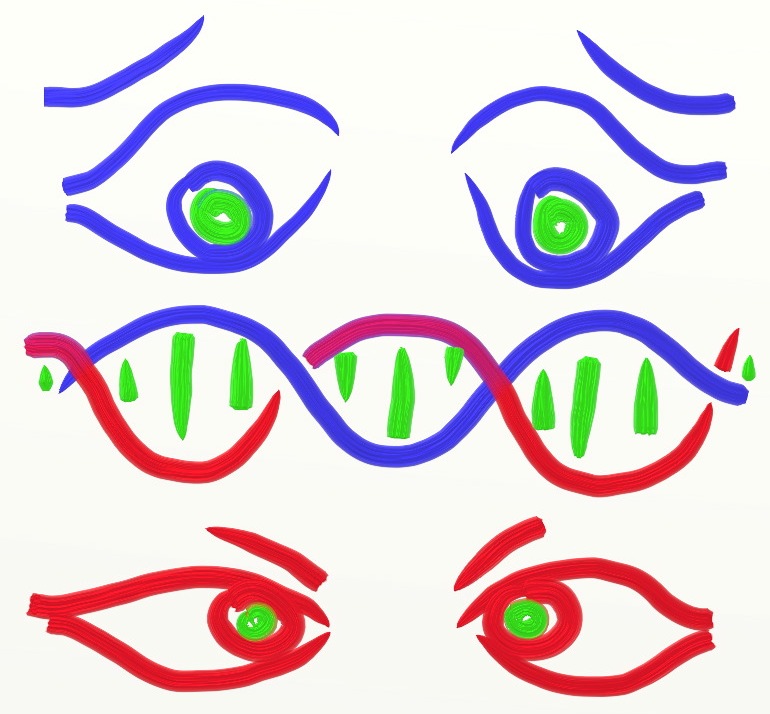
From this perspective, a new paper, “Oxytocin receptor genetic variation relates to empathy and stress reactivity in humans” by Sarina Rodrigues and colleagues [doi.org/10.1073/pnas.0909579106] may be of broad interest as a recent addition to a long-standing, but now very rapidly growing, flow of genetic research on genes and social interactions. The research team explored just a single genetic variant in the gene encoding the receptor for a small neuropeptide known as oxytocin, a protein with well-studied effects on human social interactions. Intra-nasal administration of oxytocin, for example, has been reported to enhance eye-gaze, trust, generosity and the ability to infer the emotional state of others. In the Rodrigues et al., study, a silent G to A change (rs53576) within exon 3 of the oxytocin receptor (OXTR) gene is used to subgroup an ethnically diverse population of 192 healthy college students who participated in assessments for pro-social traits such as the “Reading the Mind in the Eyes” (RMET) test of empathetic accuracy as well as measures of dispositional empathy. Although an appraisal of emotionality in others is not a cooperative behavior per se, it has been demonstrated to be essential for healthy social function. The Rodrigues et al., team find that the subgroup of students who carried the GG genotype were more accurate and able to discern the emotional state of others than students who carried the A-allele. Such molecular genetic results are an important branching point to further examine neural and cognitive mechanisms of empathy as well as long-standing population genetic concerns of how new genetic variants like the A-allele of rs53576 arose and managed to take-hold in human populations.
Regarding the latter, there are many avenues for inquiry, but oxytocin’s role in the regulation of the reproductive cycle and social behavior stands out as an ideal target for natural selection. Reproductive and behavioral-genetic factors that influence the ritualized interactions between males and females have been demonstrated to be targets of natural selection during the process of speciation. New variants can reduce the cross-mating of closely related species who might otherwise mate and produce sterile or inviable hybrid offspring. So-called pre-mating speciation mechanisms are an efficient means, therefore, to ensure that reproduction leads to fit and fertile offspring. In connection with this idea, reports of an eye-gaze assessment similar to the RMET test used by Rodrigues et al., revealed that women’s pupils dilate more widely to photos of men they were sexually attracted to during their period of the menstrual cycle of greatest fertility, thus demonstrating a viable link between social preference and reproductive biology. However, in the Rodrigues et al., study, it was the G-allele that was associated with superior social appraisal and this allele is not the novel allele, but rather the ancestral allele that is carried by chimpanzees, macaques and orangutans. Therefore, it does not seem that the novel A-allele would have been targeted by natural selection in this type of pre-mating social-interaction scenrio. Might other aspects of OXTR function provide more insight then? Rodrigues et al., explore the role of the gene beyond the social interaction dimension and note that OXTR is widely expressed in limbic circuitry and also plays a broader modulatory role in many emotional reactivity. For this reason, they sought to assess the stress responsivity of the participants via changes in heart-rate that are elicited by the unpredictable onset of an acoustic startle. The results show that the A-allele carriers showed greater stress reactivity and also greater scores on a 12-point scale of affective reactivity. Might greater emotional vigilance in the face of adversity confer a fitness advantage for A-allele carriers? Perhaps this could be further explored.
Regarding the neural and cognitive mechanisms of empathy and other pro-social traits, the Rodrigues et al., strategy demonstrates that when human psychological research includes genetic information it can more readily be informed by a wealth of non-human animal models. Comparisons of genotype-phenotype correlations at the behavioral, physiological, anatomical and cellular levels across different model systems is one general strategy for generating hypotheses about how a gene like OXTR mediates and moderates cognitive function and also why it (and human behavior) evolved. For example, mice that lack the OXTR gene show higher levels of aggression and deficits in social recognition memory. In humans, genetic associations of the A-allele with autism, and social loneliness form possible translational bridges. In other areas of human psychology such as in the areas of attention and inhibition, several genetic variants correlate with specific mental operations and areas of brain activation. The psychological construct of inhibition, once debated purely from a behavioral psychological perspective, is now better understood to be carried out by a collection of neural networks that function in the lateral frontal cortex as well as basal ganglia and frontal midline. Individual differences in the activation of these brain regions have been shown to relate to genetic differences in a number of dopaminergic genes, whose function in animal models is readily linked to the physiologic function of specific neural circuits and types of synapses. In the area of social psychology, where such types of neuroimaging-genetic studies are just getting underway, the use of “hyper-scanning”, a method that involves the simultaneous neuroimaging of two or more individuals playing a social game (prisoners dilemma) reveals a co-activation of dopamine-rich brain areas when players are able to make sound predictions of other participant’s choices. These types of social games can model specific aspects of reciprocal social interactions such as trust, punishment, policing, sanctions etc. that have been postulated to support the evolution of social behavior via reciprocal altruism. Similar imaging work showed that intra-nasal administration of oxytocin potently reduced amygdala activation and decreased amygdala coupling to brainstem regions implicated in autonomic and behavioural manifestations of fear. Such recent examples affirm the presence of a core neural circuitry involved in social interaction whose anatomical and physiological properties can be probed using genetic methods in human and non-human populations.
Although there will remain complexities in explaining how new “social genes” can arise and move through evolutionary space and time (let alone cyberspace!) the inter-flows of genetic data and social psychological function in homo sapiens will likely increase. The rising tide should inevitably force both psychologists and evolutionary biologists to break out of long-standing academic silos and work together to construct coherent models that are consistent with cognitive-genetic findings as well as population- genetic and phylogenetic data. Such efforts will heavily depend on a foundation of psychological research into “social genes” in a manner illustrated by Rodrigues et al.
*** PODCAST accompanies this post *** Thanks agian Dr. Rodrigues!!!
Which coisogenic mouse is more like Stuart Little?
Posted in Uncategorized, tagged Classical conditioning, Emotion, Empathy, mouse-model, Psychology, Public Library of Science, Social Sciences, Stuart Little on November 6, 2009| 1 Comment »

- Image via Wikipedia

** podcast interview accompanies this post ** Lab mice have it pretty good I suppose. Chow, water and mating ad libitum, fresh bedding, no predators. Back in grad school, I usually handled my little mouse subjects gently so as not to frighten them and always followed the guidelines for humane treatment. At the end of the day, however, I must confess that I didn’t actually care or empathize much with them. For the most part, my attitude was, “Hey, they’re just mice – its not like I have Stuart Little here!” I wonder.
As genetics and psychology are increasingly used to jointly explore the mechanisms of human cognition, more and more papers – particularly in the area of social and emotional systems – will make me question the, “hey, they’re just mice” assumption.
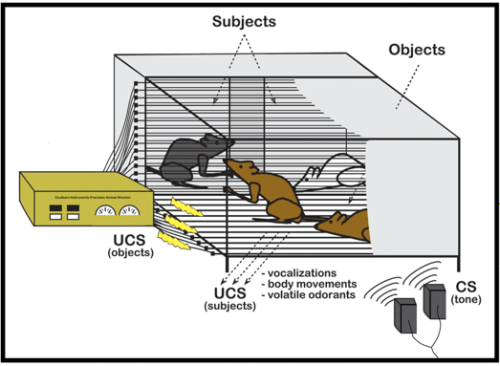
The free and open PLoS ONE paper, “Empathy Is Moderated by Genetic Background in Mice” is one of interest in this regard. The authors have devised an experimental paradigm to ask whether emotional distress (to a brief foot-shock) in one mouse can influence the emotional state of an observer. According to the authors, one of the inbred mouse strains, “acquired a classical conditioning (Pavlovian) association, which engendered a freezing response that was dependent upon the previous experience of distress in nearby conspecifics.”
Such a model – which to me, looks pretty humane, that is, in light of what they have learned about mice and empathy, and especially since human volunteers routinely participate in such mild wrist-shock paradigms – will likely be very useful for studies of specific genes where one can compare the “empathy” scores of inbred strains with and without the genetic modification.
![Reblog this post [with Zemanta]](https://i0.wp.com/img.zemanta.com/reblog_c.png)
Building and maintaining synapses
Posted in Uncategorized, tagged Brain, Chemical synapse, Development, Genetics, Human behavior, Neuron, Psychology, synapse, synaptic plasticity on October 17, 2009| 1 Comment »
 Phrenological thinking, a popular pseudoscientific practice in the 1800’s suggested that the structure of the head and underlying brain held the clues to understanding human behavior. Today, amidst the ongoing convergence of developmental science, molecular & biochemical science and systems-dynamical science (to name just a few), there is – of course – no single or agreed-upon level of analysis that can provide all the answers. Circuit dynamics are wonderfully correlated with behavior, but they can be regulated by synaptic weights. Also, while developmental studies reveal the far reaching beauty of neuronal circuitry, such elegant wiring is of little benefit without healthy and properly regulated synaptic connections. Genes too, can be associated with circuit dynamics and behavior, but what do these genes do? Perchance encode proteins that help to form and regulate synapses? Synapses, synapses, synapses. Perhaps there is a level of analysis – or a nexus – where all levels of analysis intersect? What do we know about synapses and how these essential aspects of brain function are formed and regulated?
With this in mind I’ve been exploring the nanosymposium, “Molecular Dynamics and Regulation at Synapses” to learn more about the latest findings in this important crossroads of neurobiology. If you’re like me, you sort of take synapses for granted and think of them as being very tiny and sort of generic. Delve a while into the material presented at this symposium and you may come to view the lowly synapse – a single synapse – as a much larger, more complex, ever changing biochemical world unto itself. The number of molecular players under scrutiny by the groups presenting in this one session is staggering. GTPase activating proteins, kinases, molecular motors, receptors, proteases, cell adhesive proteins, ion channels and many others must interact according to standard biochemical and thermodynamic laws. At this molecular-soup level, it seems rather miraculous that the core process of vessicle-to-cell membrane fusion can happen at all – let alone in the precise way needed to maintain the proper oscillatory timing needed for Hebbian plasticity and higher-level circuit properties associated with attention and memory.
For sure, this is one reason why the brain and behavior are hard to understand. Synapses are very complex!
Sharpening the cognitive-genetic scalpel
Posted in Angular gyrus, Middle frontal gyrus, Supramarginal gyrus, tagged Brain, Cognition, Frontal lobe, Functional magnetic resonance imaging, Magnetic resonance imaging, Prefrontal cortex, Psychology, Sigmund Freud, Twin on October 13, 2009| Leave a Comment »

- Image by bethd821 via Flickr
Whether you are a carpenter, plumber, mechanic, electrician, surgeon or chef, your livelihood depends on a set of sturdy, reliable, well-honed, precision tools. Similarly, neuroscientists depend on their electrodes, brain scanners, microscopes and more recently their genome sequencers. This is because they are not just trying to dissect the brain – the physical organ – but also the psychological one. As the billions of neurons connected by trillions of synapses process electrical impulses – a kind of neural information – it is the great endeavor of cognitive-molecular-neuro-psychology (or whatever you wish to call the art) to figure out how all of those neurons and connections come into being and how they process information in ways that lead to your personality, self-image, hopes, dreams, memories and the other wonderful aspects of your mental life. How and why does information flow through the brain in the way it does? and how and why does it do so in different ways for different people? Some, for instance, have informally related Sigmund Freud‘s models of mental structure to a kind of plumbing wherein psychic energy was routed (or misrouted) through different structural aspects of the mind (pipes as it were). Perhaps such a model was fitting for the great industrial era in which he lived – but perhaps not in today’s highly information-based, inter-connected and network-oriented era. If our understanding of mental life is a product of our tools, then perhaps we should be sure that our modern tools are up to the job.
One recent paper reminded me of how important it is to double check the accuracy and precision of one’s tools was the research article, “Quantifying the heritability of task-related brain activation and performance during the N-back working memory task: A twin fMRI study” [doi:10.1016/j.biopsycho.2008.03.006] by Blokland et al.. In this report, the team summarizes the results of measurments of the brain activity – not structure – but rather activity as measured by their chosen tool, the MRI scanner. This research team, based in UCLA and known as one of the best in the field, asks whether the so-called BOLD response (an indirect measure of neural activity) shows greater concordance in identical (monozygotic) vs. fraternal (dizygotic) twins. To generate brain activity, the research team asked the subjects to perform a task called an N-back workng memory task, which entails having to remember something that happend “N” times ago (click here for further explanation of N-back task or play it on your iphone). If you’ve done this, you’ll know that its hard – maddeningly so – and it requires a lot of concentration, which, the researchers were counting on to generate activity in the prefrontal cortex.
After looking at the brain activity patterns of some 29 MZ pairs and 31 DZ pairs, the team asked if the patterns of brain activity in the lateral frontal cortex were more similar in the MZ pairs vs. the DZ pairs. If so, then it would suggest that the scanning technology (measurement of the BOLD response) is sufficiently reliable and precise enough to detect the fraction of individual differences in brain activty that arise from additive genetic variation. If one actually had such super-precise tool, then one could begin to dissect and tease apart aspects of human cognition that are regulated by individual genetic variation – a very super-precise and amazing tool – that might allow us to understand mental life in biologically-based terms (and not Freud’s plumbingesque analogies). If only such a tool existed! Somewhat amazingly, the scanning tools did seem to be able to detect differences between the BOLD response correlations of MZ pairs vs. DZ pairs. The BOLD response correlations were greater for MZ vs. DZ in the middle frontal gyrus, angular gyrus, supramarginal gyrus when activity for the 2-back task was compared to the 0-back task. The team were cautious to extend these findings too far, since the standard deviations are large and the estimates of heritability for the BOLD response are rather low (11-36%), but, overall, the team suggests that the ability to use the fMRI methods in conjunction with genetic markers shows future promise.
Meanwhile, the literature of so-called “imaging-genetic” findings begins to grow in the literature. I hope the tools are reliable and trustworthy enough to justify conclusions and lessons about human genetic variation and its role in mental life. Will certainly keep this cautionary report in mind as I report on the cognitive genetics literature in the future.
Catecholaminergic genes may help my son hear things more clearly
Posted in ADRA2A, Frontal cortex, Noradrenaline, Parietal cortex, TH, tagged 23andMe, Brain, Dopamine, Electroencephalography, ERP, Frontal lobe, Genetic testing, ICA, Independent Component Analysis, Literacy, Noradrenaline, Perception, Psychology, Reading, Signal transduction, Single-nucleotide polymorphism on October 9, 2009| Leave a Comment »
[picapp src=”e/7/8/1/Children_Attend_Classes_9572.jpg?adImageId=4955179&imageId=1529412″ width=”380″ height=”253″ /]
This year, my 5 year-old son and I have passed many afternoons sitting on the living room rug learning to read. While he ever so gradually learns to decode words, eg. “C-A-T” sound by sound, letter by letter – I can’t help but marvel at the human brain and wonder what is going on inside. In case you have forgotten, learning to read is hard – damn hard. The act of linking sounds with letters and grouping letters into words and then words into meanings requires a lot of effort from the child (and the parent to keep discomfort-averse child in one place). Recently, I asked him if he could spell words in pairs such as “MOB & MOD”, “CAD & CAB”, “REB & RED” etc., and, as he slowly sounded out each sound/letter, he informed me that “they are the same daddy“. Hence, I realized that he was having trouble – not with the sound to letter correspondence, or the grouping of the letters, or the meaning, or handwriting – but rather – just hearing and discriminating the -B vs. -D sounds at the end of the word pairs. Wow, OK, this was a much more basic aspect of literacy – just being able to hear the sounds clearly. So this is the case, apparently, for many bright and enthusiastic children, who experience difficulty in learning to read. Without the basic perceptual tools to hear “ba” as different from “da” or “pa” or “ta” – the typical schoolday is for naught.
With this in mind, the recent article, “Genetic determinants of target and novelty-related event-related potentials in the auditory oddball response” [doi:10.1016/j.neuroimage.2009.02.045] caught my eye. The research team of Jingyu Liu and colleagues asked healthy volunteers just to listen to a soundtrack of meaningless beeps, tones, whistles etc. The participants typically would hear a long stretch of the same sound eg. “beep, beep, beep, beep” with a rare oddball “boop” interspersed at irregular intervals. The subjects were instructed to simply press a button each time they heard an oddball stimulus. Easy, right? Click here to listen to an example of an “auditory oddball paradigm” (though not one from the Liu et al., paper). Did you hear the oddball? What was your brain doing? and what genes might contribute to the development of this perceptual ability?
The researchers sought to answer this question by screening 41 volunteers at 384 single nucleotide polymorphisms (SNPs) in 222 genes selected for their metabolic function in the brain. The team used electroencephalogram recordings of brain activity to measure differences in activity for “boop” vs. “beep” type stimuli – specifically, at certain times before and after stimulus onset – described by the so-called N1, N2b, P3a, P3b component peaks in the event-related potentials waveforms. 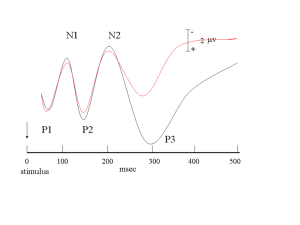 Genotype data (coded as 1,0,-1 for aa, aA, AA) and EEG data were plugged into the team’s home-grown parallel independent components analysis (ICA) pipeline (generously provided freely here) and several positives were then evaluated for their relationships in biochemical signal transduction pathways (using the Ingenuity Pathway Analysis toolkit. A very novel and sophisticated analytical method for certain!
The results showed that certain waveforms, localized to certain areas of the scalp were significantly associated with the perception of various oddball “boop”-like stimuli. For example, the early and late P3 ERP components, located over the frontal midline and parieto-occipital areas, respectively, were associated with the perception of oddball stimuli. Genetic analysis showed that several catecholaminergic SNPs such as rs1800545 and rs521674 (ADRA2A), rs6578993 and rs3842726 (TH) were associated with both the early and late P3 ERP component as well as other aspects of oddball detection.
Both of these genes are important in the synaptic function of noradrenergic and dopaminergic synapses. Tyrosine hydroxylase, in particular, is a rate-limiting enzyme in catecholamine synthesis. Thus, the team has identified some very specific molecular processes that contribute to individual differences in perceptual ability. In addition to the several other genes they identified, the team has provided a fantastic new method to begin to crack open the synaptic complexities of attention and learning. See, I told you learning to read was hard!
echoblog: Science and art interweave at Salk Institute Conference
Posted in Uncategorized, tagged Art, Arts, Cave painting, Evolutionary Psychology, Psychology, Social Sciences on September 24, 2009| Leave a Comment »

- Image by Mike Licht, NotionsCapital.com via Flickr
pointer to: Amazing conference exploring Evolutionary Origins of Art and Aesthetics.
No genetics talks (this time ’round) but plenty of brain science pertaining to art and human nature.
echoblog: Personality patternizer
Posted in Uncategorized, tagged Brain, Emotion, Health, Mental health, personality, Psychology, Social Sciences on September 17, 2009| Leave a Comment »
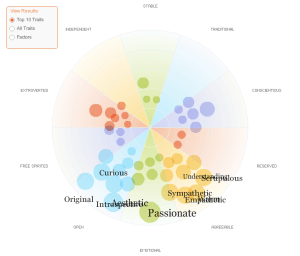 With more and more genes being directly associated with personality or as moderators of correlations between personality and brain structure/function (here, here, here, here) it was fun to try out the latest online “big-5 personality profiler“.
10 mins of self-reflective fun. My profile displayed at left.
Remarks
Re-Tweetin’
Tweets by genes2brains2meBlog Stats
- 192,076 clickitas
Posting since April 2007
General topics
23andMe Addiction Add new tag aging Anxiety Art Arts autism B. K. S. Iyengar Biology Brain Buddism Central nervous system Cognition comics Consciousness Depression Development DNA Dopamine dualism economics Emotion Empathy Epigenetics evolution fear Frontal lobe Functional magnetic resonance imaging Gene Gene expression Genetics Genetic testing GWAS Health Health care Health insurance Hippocampus History Intelligence Kundalini language Major depressive disorder medication Meditation meme-art Memory Mental disorder Mental health Mind Mutation Nervous system Neural network Neuron Pain parasympathetic nervous system Patañjali Personalized medicine philosophy placebo Psychology Reactive oxygen species Religion and Spirituality Rett Syndrome schizophrenia Social Sciences spirituality Stem cell Stress Suicide synaptogenesis Teachers and Centers Twin Yoga Yoga Sutras of PatanjaliSpecific Items
- 5HTT
- ABCB1
- acetylcholine
- Actin
- ACTN3
- ADH1C
- ADORA2A
- ADRA2A
- AKT
- AMPA receptor
- Amygdala
- Angular gyrus
- ANK3
- APOE
- ARHGAP18
- ASIC1a
- ASPM
- ATXN1
- AVPR1a
- BAF53b
- Basal Ganglia
- BDNF
- CABYR
- CACNA1C
- CACNA2D1
- Caudate nucleus
- CB1 receptor
- CDC34
- CDH13
- Cell adhesion molecules
- Cerebellum
- CHAT
- CHRM3
- CHRNA4
- CHRNA7
- Chromosome structural variants
- Cingulate cortex
- Circadian
- clinical trial
- CNR1
- CNTNAP2
- Collateral sulcus
- COMT
- Corpus callosum
- COX1
- CREB
- CRHR1
- DARPP32
- DAT
- default network
- DISC1
- DLPFC
- DNAJC
- DNMT
- Dopamine
- DPP4
- DRD2
- DRD4
- DTNBP1
- DYRK1A
- EDA2R
- EGR1
- Estrogen
- evolution
- FGF20
- FMR1
- FNBP1L
- FOXA2
- FOXP2
- Frontal cortex
- Frontal pole
- Fusiform gyrus
- G-protein
- GAB2
- GABA
- GABRA2
- GABRG1
- GATA4
- Glucocorticoid receptor
- Glutamate
- GPR6
- GRIA3
- GRIK2
- GTPase
- HDACs
- Hippocampus
- HOXB8
- HRK
- HTR2A
- Hypothalamus
- IL3
- immunity
- Inferior frontal gyrus
- Insula
- Intronic or repetitive sequences
- Kalirin
- KCNA2
- KCNH2
- KCNIP3
- KCNJ6
- Kinesin
- Lateral septum
- Lateral ventricle
- LDB1
- Leptin
- LIMK1
- Locus coeruleus
- MAOA
- MAPK
- MCPH1
- MCR1-4
- MDGA2
- MECP2
- meditation
- MET
- metabolism
- MHC loci
- microRNA
- Middle frontal gyrus
- middle occipital gyrus
- Middle temporal gyrus
- Mindfulness
- Mitochondria
- MKP-1
- Motor cortex
- Myelin
- Neural crest
- NEUROG1
- NLGN3/4
- Noradrenaline
- NPBWR1
- NPSR1
- NRG1
- NRXB1
- NTRK2
- Nucleus accumbens
- NURR1
- Olfactory bulb
- OPRM1
- Orbitofrontal cortex
- OTR
- OXTR
- Parahippocampal gyrus
- Parasympathetic NS
- Parietal cortex
- PARP-1
- PAX6
- PCLO
- PER1
- PINK1
- PLCB1
- Posterior parietal cortex
- PSD95
- Putamen
- quantum physics
- RARB
- RGS2
- RGS4
- Rho GTPase
- RLN
- ROR1
- RORB
- Rostral fronto-occipital fasciculus
- RSRC1
- SAPAP3
- self-awareness
- SEMA(1-7)
- SETDB1
- SEZ6
- SIRT1
- SLC1A1
- SLITRK1
- SNAP25
- SNORD115
- SNRPN
- SOD2
- Somatosensory cortex
- SRPX2
- Stria terminalis
- Striatum
- Substantia nigra
- Subthalamic nucleus
- Superior temporal cortex
- Suprachiasmatic nucleus
- Supramarginal gyrus
- SWI/SNF
- Sylvian fissure
- Telomere
- Temporal lobe
- TGF-alpha
- TH
- Thalamus
- Thap1
- THBS1
- THBS2
- TNF-alpha
- Torsin A
- TPH2
- UBE3A
- UGT2B17
- Uncategorized
- Vagus
- VEGF
- Ventral tegmental area
- VGF
- Visual cortex
- White matter
- Yoga and Meditation
- ZNF804A


 Genes 2 Brains 2 Mind 2 Me