
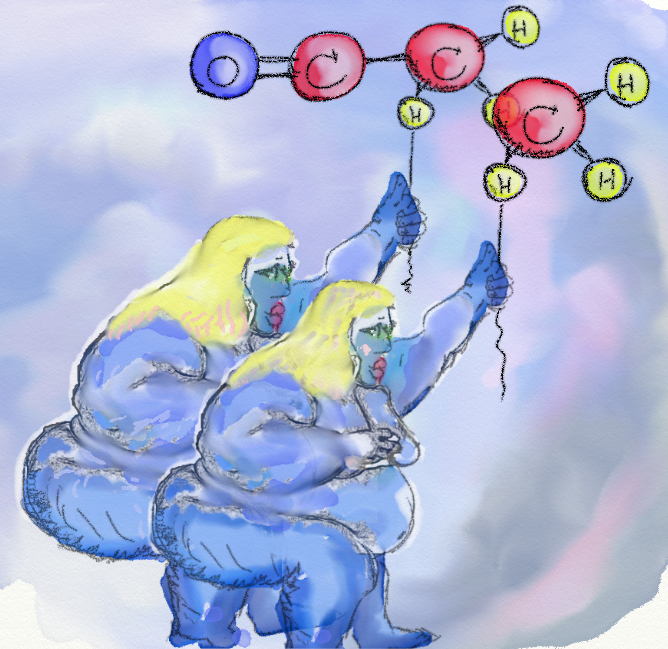
 Last year I dug a bit into the area of epigenetics (indexed here) and learned that the methylation (CH3) and acetylation (OCCH3) of genomic DNA & histones, respectively, can have dramatic effects on the structure of DNA and its accessibility to transcription factors – and hence – gene expression. Many of the papers I covered suggested that the environment can influence the degree to which these so-called “epigenetic marks” are covalently bonded onto the genome during early development. Thus, the thinking goes, the early environment can modulate gene expression in ways that are long-lasting – even transgenerational. The idea is a powerful one to be sure. And a scary one as well, as parents who read this literature, may fret that their children (and grandchildren) can be epigenetically scarred by early nutritional, physical and/or psycho-social stress. I must admit that, as a parent of young children myself, I began to wonder if I might be negatively influencing the epigenome of my children.
I’m wondering how much physical and/or social stress is enough to cause changes in the epigenome? Does the concern about epigenetics only apply to exposure to severe stress? or run of the mill forms of stress? How much do we know about this?
This year, I hope to explore this line of inquiry further. For starters, I came across a fantastic paper by Fraga et al., entitled, “Epigenetic differences arise during the lifetime of monozygotic twins” [doi:10.1073/pnas.0500398102]. The group carries out a remarkably straightforward and time honored approach – a twin study – to ask how much identical twins differ at the epigenetic level. Since identical twins have the same genome sequence, any differences in their physiology, behavior etc. are, strictly speaking, due to the way in which the environment (from the uterus to adulthood) shapes their development. Hence, the team of Fraga et al., can compare the amount and location of methyl (CH3) and acetyl (OCCH3) groups to see whether the environment has differentially shaped the epigenome.
An analysis of some 40 identical twin pairs from ages 3-74 years old showed that – YES – the environment, over time, does seem to shape the epigenome (in this case of lymphocytes). The most compelling evidence for me was seen in Figure 4 where the team used a method known as Restriction Landmark Genomic Scanning (RLGS) to compare patterns of methylation in a genome-wide manner. Using this analysis, the team found that older twin pairs had about 2.5 times as many differences as did the epigenomes of the youngest twin pairs. These methylation differences also correlated with gene expression differences (older pairs also had more gene expression differences) and they found that the individual who showed the lowest levels of methylation also had the highest levels of gene expression. Furthermore, the team finds that twin pairs who lived apart and had more differences in life history were more likely to have epigenetic differences. Finally, measures of histone acetylation seemed consistent with the gradient of epigenetic change over time and life-history distance.
Thus it seems that, as everyday life progresses, the epigenome changes too. So, perhaps, one does not need extreme forms of stress to leave long-lasting epigenetic marks on the genome? Is this true during early life (where the team did not see many differences between pairs)? and in the brain (the team focused mainly on lymphocytes)? Are the differences between twins due to the creation of new environmentally-mediated marks or the faulty passage of existing marks from dividing cell-to-cell over time? Will be fun to seek out information on this.
![Reblog this post [with Zemanta]](https://i0.wp.com/img.zemanta.com/reblog_c.png)
Posted in Uncategorized | Tagged aging, Development, DNA, DNA methylation, Epigenetics, Gene, Gene expression, Genetic testing, histone, histone acetylation, Transcription factor, Twin | 3 Comments »
pointer to: Al Fin’s recent post chock full of great links to educational videos. Incredible wealth of expertise just a few clicks away. Thanks Al Fin!!
Posted in Uncategorized | Tagged Cognitive science, Education, Psychology | Leave a Comment »


Santa brought me ArtRage 3 … lots of fun!



Posted in Uncategorized | Tagged Art, meme-art | Leave a Comment »


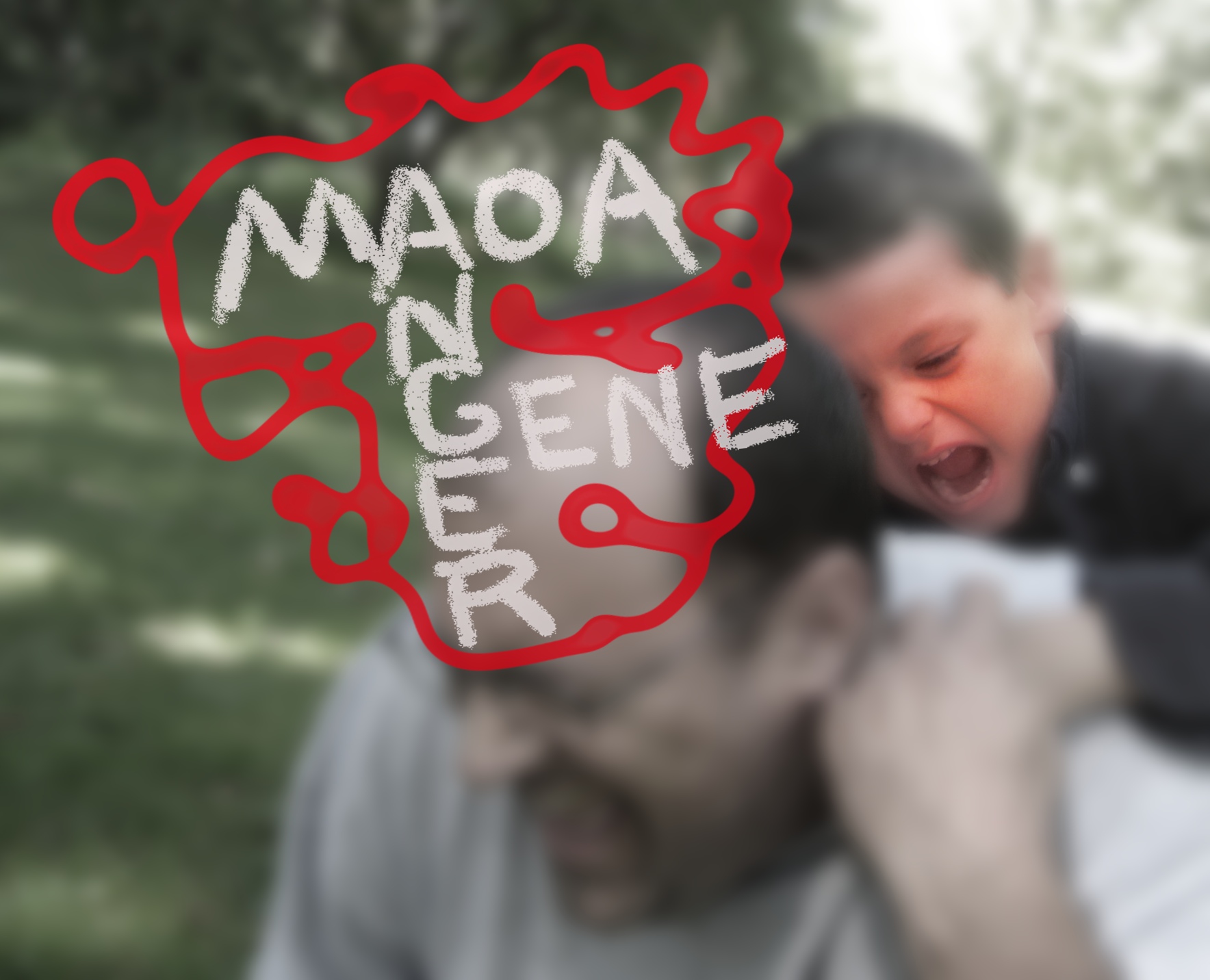
Some quick sketches that might help put the fast-growing epigenetics and cognitive development literature into context. Visit the University of Utah’s Epigenetics training site for more background!
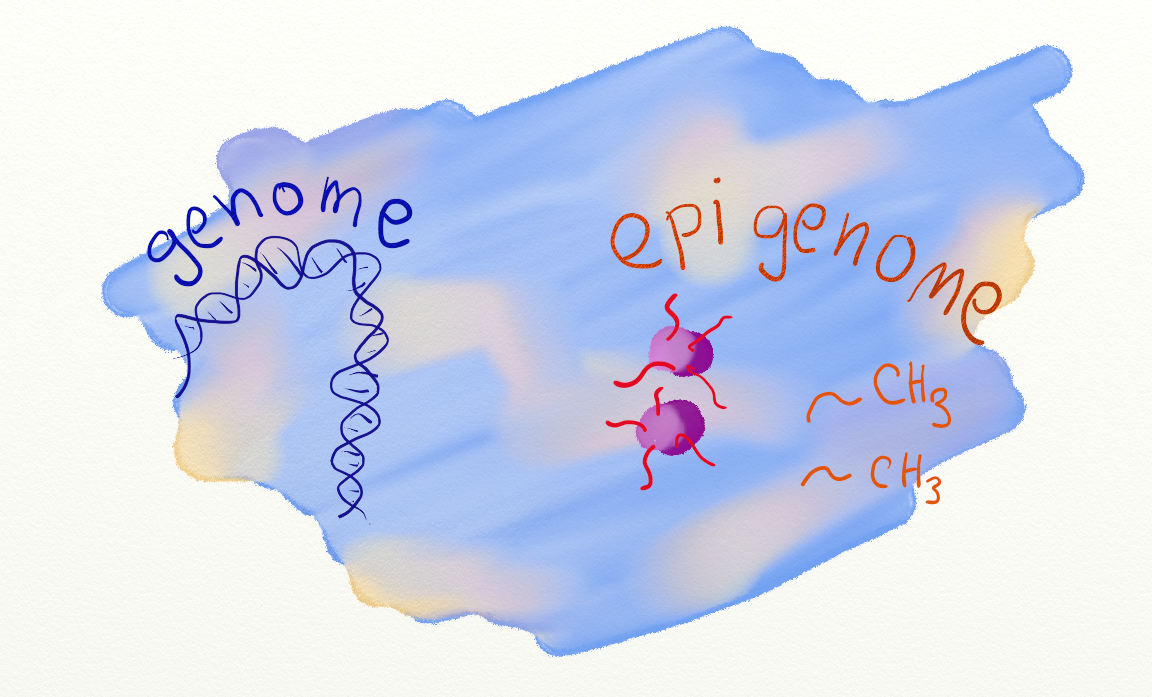
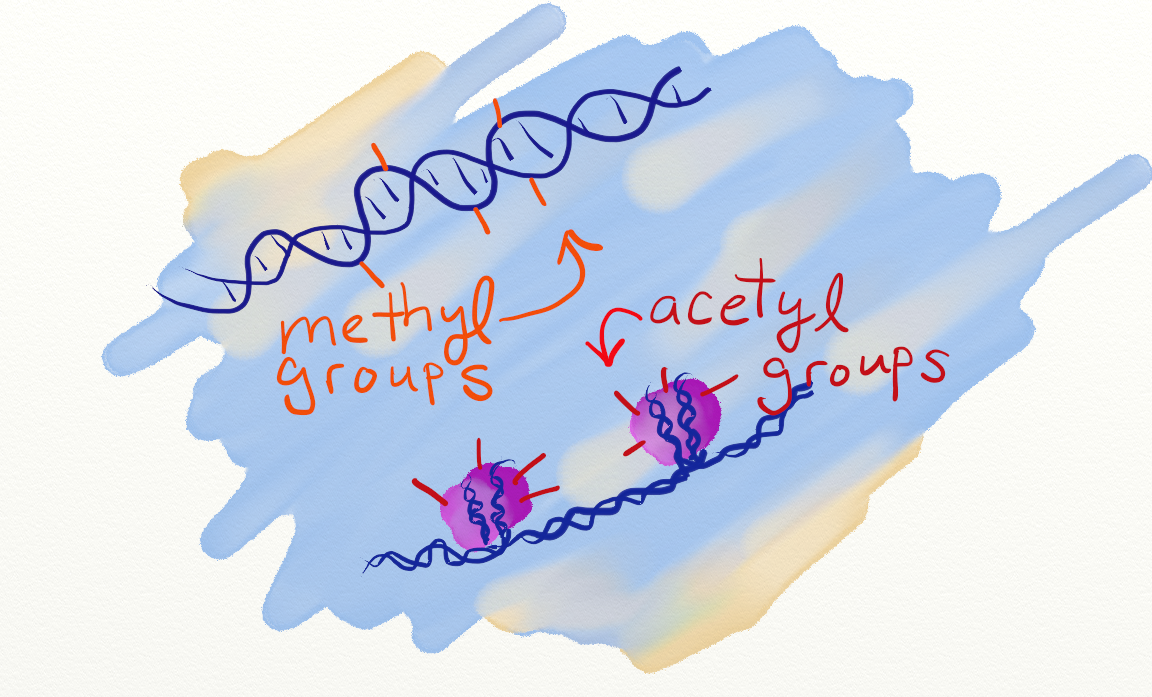
The genome is just the A,G,T,C bases that encode proteins and other mRNA molecules. The “epi”genome are various modification to the DNA – such as methylation (at C residues) – and acetylation of histone proteins. These changes help the DNA form various secondary and tertiary structures that can facilitate or block the interaction of DNA with the transcriptional machinery.
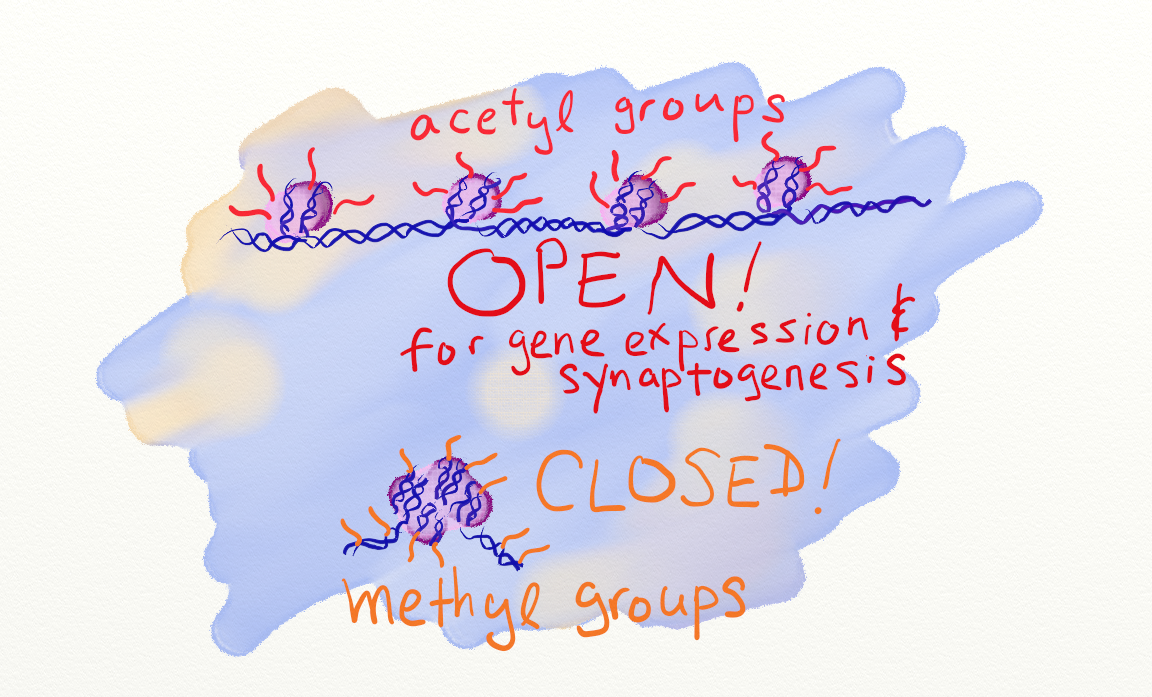
When DNA is highly methylated, it generally is less accessible for transcription and hence gene expression is reduced. When histone proteins (purple blobs that help DNA coil into a compact shape) are acetylated, the DNA is much more accessible and gene expression goes up.
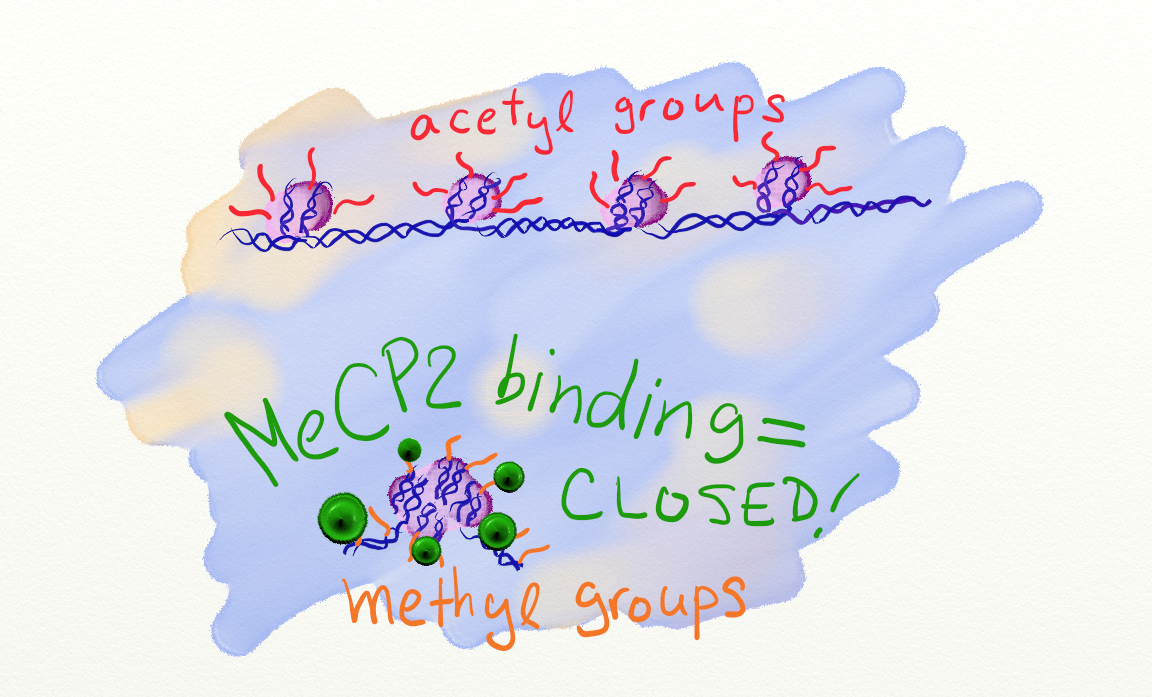
We know that proper epigenetic regulation is critical for cognitive development because mutations in MeCP2 – a protein that binds to methylated C residues – leads to Rett syndrome. MeCP2 is normally responsible for binding to methylated DNA and recruiting histone de-acetylases (HDACs) to help DNA coil and condense into a closed form that is inaccessible for gene expression (related post here).
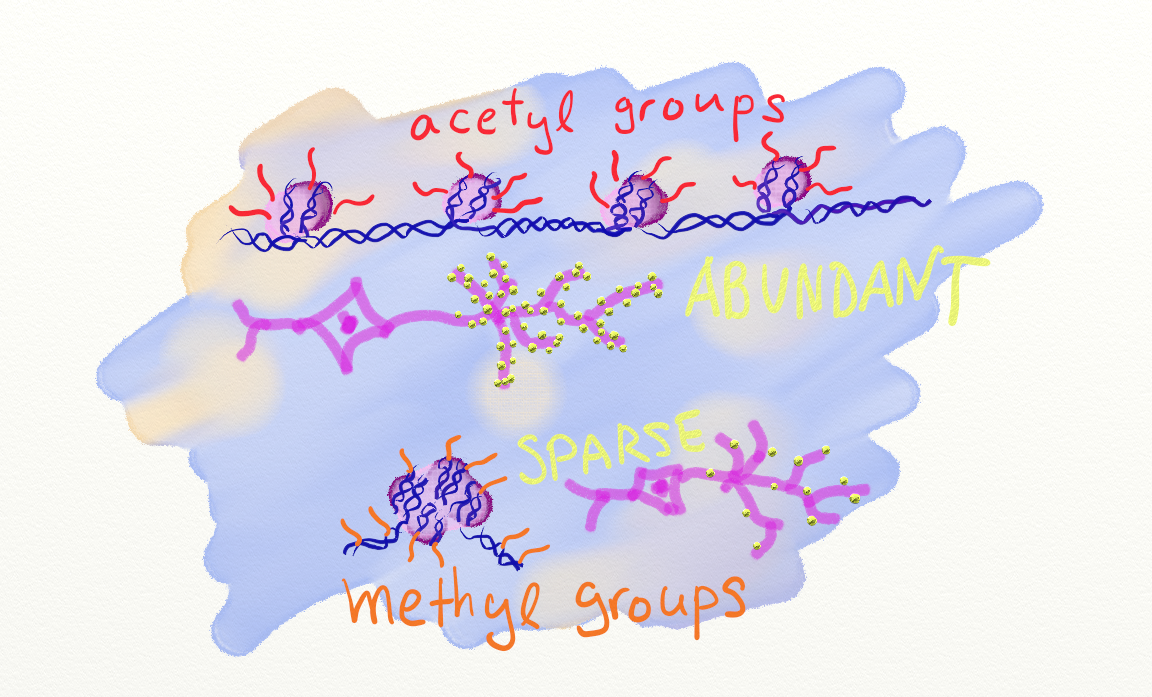
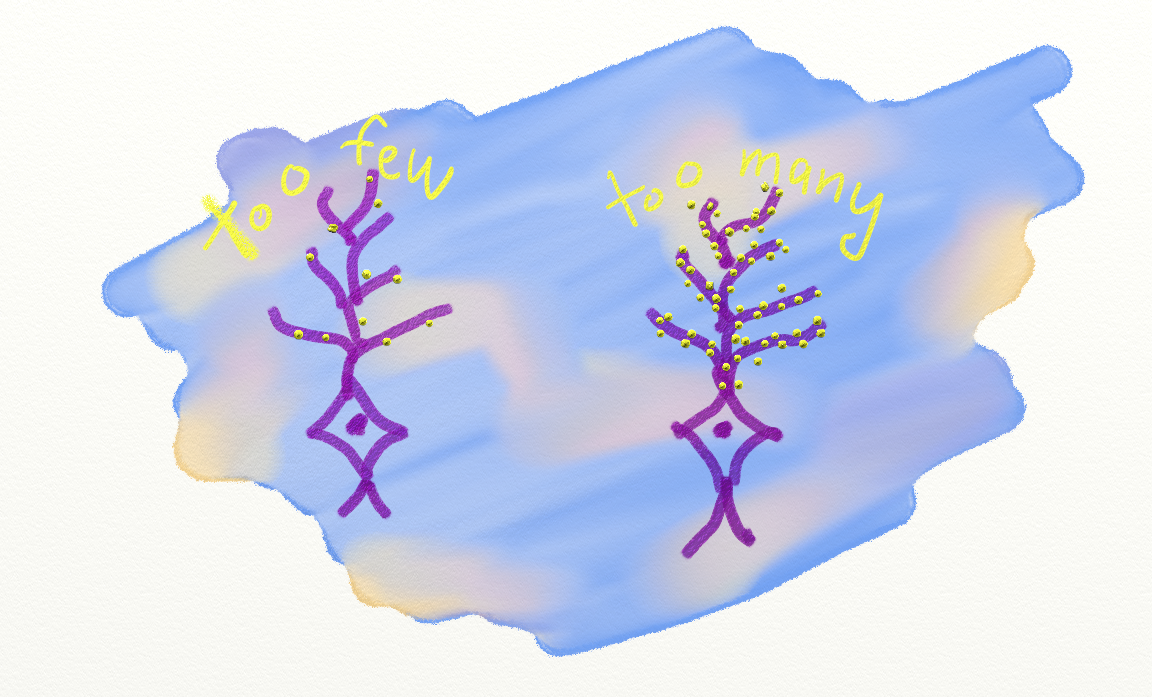
When DNA is accessible for gene expression, then it appears that – during brain development – there are relatively more synaptic spines produced (related post here). Is this a good thing? Rett syndrome would suggest that – NO – too many synaptic spines and too much excitatory activity during brain development may not be optimal. Neither is too little excitatory (too much inhibitory) activity and too few synaptic spines. It is likely that you need just the right balance (related post here). Some have argued (here) that autism & schizophrenia are consequences of too many & too few synapses during development.
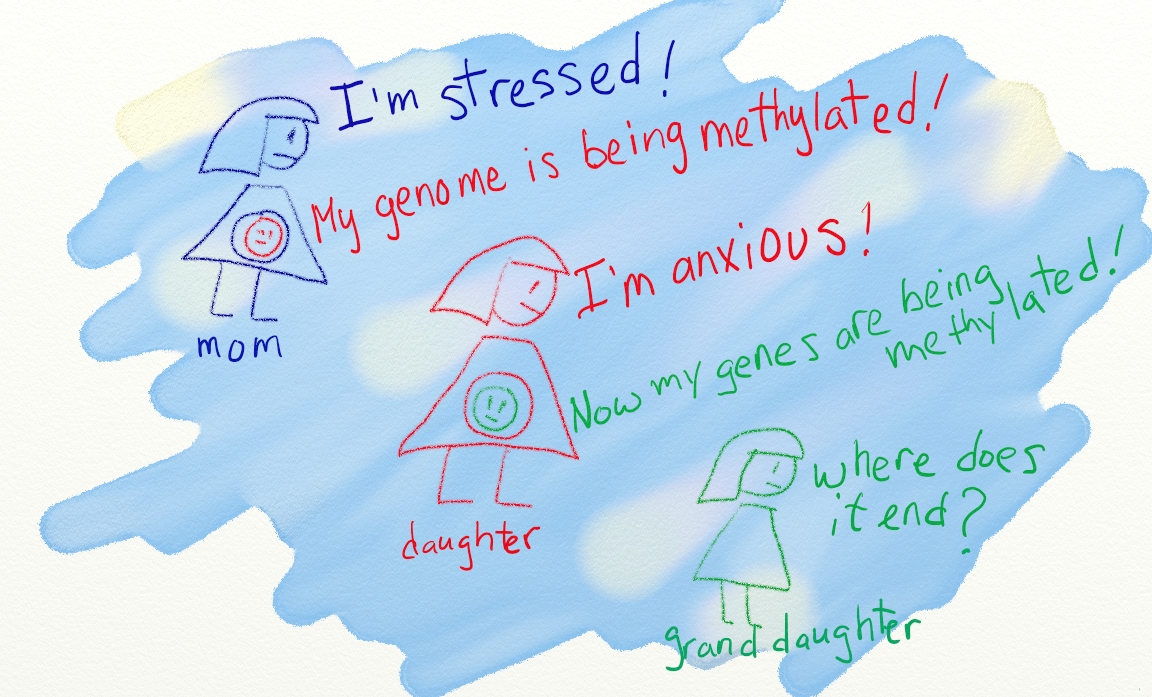
The sketch above illustrates a theoretical conjecture – not a scenario that has been verified by extensive scientific study. It tries to explain why epigenetic effects can, in practice, be difficult to disentangle from true (changes in the A,G,T,C sequence) genetic effects. This is because – for one reason – a mother’s experience (extreme stress, malnutrition, chemical toxins) can – based on some evidence – exert an effect on the methylation of her child’s genome. Keep in mind, that methylation is normal and widespread throughout the genome during development. However, in this scenario, if the daughter’s behavior or physiology were to be influenced by such methylation, then she could, in theory, when reaching reproductive age, expose her developing child to an environment that leads to altered methylation (shown here of the grandaughter’s genome). Thus, an epigenetic change would look much like there is a genetic variant being passed from one generation to the next, but such a genetic variant need not exist (related post here, here) – as its an epigenetic phenomenon. Genes such as BDNF have been the focus of many genetic/epigenetic studies (here, here) – however, much, much more work remains to determine and understand just how much stress/malnutrition/toxin exposure is enough to cause such multi-generational effects. Disentangling the interaction of genetics with the environment (and its influence on the epigenome) is a complex task, and it is very difficult to prove the conjecture/model above, so be sure to read the literature and popular press on these topics carefully.
![Reblog this post [with Zemanta]](https://i0.wp.com/img.zemanta.com/reblog_e.png)
Posted in BDNF, MECP2 | Tagged Anxiety, Art, autism, Cognition, cognitive development, Development, Epigenetics, Gene, Gene expression, MECP2, meme-art, Rett Syndrome, schizophrenia, Stress, synaptogenesis, Transcription | 2 Comments »

- Image via Wikipedia

In their forecast “The World in 2010” special issue, the Economist points to “The looming crisis in human genetics” wherein scientists will reluctantly acknowledge that, even with super-cheap genome sequencing tools, we may not soon understand how genetic variation contributes to complex illness. The argument is a valid one to be sure, but only time will tell.
A paper I read recently, reminded me of the long hard slog ahead in the area of genomics and psychiatric illness. The authors in “Association of the Glutamate Transporter Gene SLC1A1 With Atypical Antipsychotics–Induced Obsessive-compulsive Symptoms” [Kwon et al., (2009) Arch Gen Psychiatry 66(11)] are trying to do something very important. They would like to understand why certain (most) psychiatric medications have adverse side-effects and how to steer patients clear of adverse side-effects. This is because, nowadays, a patient learns via a drawn-out trial-and-error ordeal about which medications he/she can manage the benefits/costs.
Specifically, the authors focused their efforts on so-called obsessive-compulsive symptoms that can arise from treatment with atypical antipsychotic medications. Working from 3 major medical centers (Samsung Medical Center, Seoul National University Hospital and Asan Medical Center) Kwon et al., were able to cobble together a mere 40 patients who display these particular adverse side-effects and matched them with 54 patients based on several demographic and medication-based criteria. Keep in mind that most genetic studies use upwards of 1,000 samples and still – hardly – are able to obtain significant effects.
Nevertheless, the authors note that the glutamate transporter gene (SLC1A1 or EAAC1) is a most logical candidate gene, being a located in a region mapped for obsessive-compulsive disorder risk and also a gene that appears to be down-regulated in response to atypical anti-psychotic treatment (particularly clozapine). A series of statistical association tests for 10 SNPs in this gene reveal that two SNPs (rs2228622 and rs3780412) and a 3-SNP haplotype (the A/C/G haplotype at rs2228622-rs3780413-rs3780412) showed modestly significant association (about 4-fold higher risk) with the adverse symptoms.
To me, this is a very noteworthy finding. A lot of work went into a very important problem – perhaps THE most pressing problem for patients on anti-psychotic medications today – and the results, while only of modest significance, are probably biologically valid. The authors point out that rs2228622 and rs3780412 have previously been associated with OCD in other studies.
But when you compare these modest results (that these authors fought hard to obtain) with the big promises of the genomic era (as noted in the Economist article), well then, the results seem rather diminutive. Will all patients who carry the risk haplotype be steered away from atypical antipsychotics? Will big pharma (the authors of this paper disclose a great many ties to big pharma) support the fragmentation of their blockbuster drug markets into a hundred sub-populations? I doubt it. But some doctors and patients will experiment and continue to explore this avenue of inquiry – and it will take a long time to work out. Better check back in 2020.
Posted in SLC1A1 | Tagged 23andMe, anti-psychotic, Biology, clozapine, DNA, economics, genetic association, Genetic testing, Glutamate, Health care, medication, Mental disorder, Mental health, obsessive-compulsive, Personalized medicine, side-effect | Leave a Comment »

- Image via Wikipedia

In his book, The Beak of the Finch, Jonathan Weiner describes the great diversity of finches on the Galapagos Islands – so much diversity – that Darwin himself initially thought the finch variants to be completely different birds (wrens, mockingbirds, blackbirds and “gross-bills”). It turns out that one of the pivotal events in Charles Darwin‘s life was his work in 1837 with the great ornithologist John Gould who advised that the birds were actually closely related finches and also specific to separate islands!
Fast-forward to 2009, and we are well on our way to understanding how closely related species can, via natural selection of genetic variation, diverge across space and time. The BMP4 and CaM genes, for example, have been associated with beak morphology in what are now known as Darwin’s Finches. Wonderful indeed, but now consider, for a moment, the variability – not of finch beaks – but of human cognition.
If you’ve ever been a part of a team or group project at work or school, you know that very few people THINK just like you. Indeed, variability in human cognition can be the source of a lot of frustration. Let’s face it, people have different experiences stored away (in a highly distributed fashion) in their memory banks, and each persons brain is extensively wired with trillions of synapses. Of course! nobody thinks like you. How could such a complex organ function exactly the same way in 2 separate individuals.
Perhaps then, if you were an alien visitor (as Darwin was to the Galapagos Islands) and you watched 5 separate individuals devise a plan to – oh lets just say, to improve healthcare accessibility and affordability – and you measured individuals based solely on their “thinking patterns” you might conclude (as Darwin did) that you were dealing with 5 separate “species”. Just flip the TV between FOX, CNN, CNBC, CSPAN and MSNBC if you’re not convinced!
However, if you were to take a more in-depth approach and crack open a current issue of a neuroimaging journal – you might come to the exact opposite conclusion. That’s right. If you looked at patterns of brain activity and other indirect measures of neural network dynamics (what I casually meant by “thinking patterns” ) you would mostly see conclusions drawn from studies where many individuals are pooled into large groups and then probed for forms of brain activity that are common rather than different. Most studies today show that humans use a common set of neural systems to perform mental operations (e.g., recalling events and information). Brain structures including the hippocampus, frontal cortex, thalamus, parietal cortex are all known to be involved in deciding whether or not you have seen something before. Thus, if you perform an fMRI brain scanning study on individuals and ask them to complete an episodic memory recall task (show them a list of words before scanning and then – when they are in the scanner – ask them to respond to words they remember seeing), you will likely observe that all or most individuals show some BOLD response activity in these structures.
OK great! But can you imagine where we would be if Charles Darwin returned home from his voyage and said, “Oh, just a bunch of birds out there … you know, the usual common stuff … beaks, wings, etc.” I’d rather not imagine.
Enter Professor Michael Miller and colleagues and their recent paper, “Unique and persistent individual patterns of brain activity across different memory retrieval tasks” [doi:10.1016/j.neuroimage.2009.06.033]. This paper looks – not just at the common stuff – but the individual differences in BOLD responses among individuals who perform a number of different memory tasks. The team reports that there are dramatic differences in the patterns of brain activity between individuals. This can be seen very clearly in Figure 1 which shows left hemisphere activity associated with memory recall. The group data (N=14) show nice clean frontal parietal activations – but when the data is broken down on an individual-by-individual basis, you might – without knowing that the all subjects were performing the same recall tasks – suspect that each person was doing or “thinking” something quite different. The research team then re-scanned each subject several months later and asked whether the individual differences were consistent from person to person. Indeed, the team shows that the 2nd brain scan is much more similar to the first (correlations were about 0.5) and that the scan-rescan data for an individual was more similar than the correlation between any single person and the rest of the group (about 0.25). Hence, as the authors state, “unique patterns of brain activity persist across different tasks”.
Vive la difference! Yes, the variability is – if you’re interested in using genetics to understand human history and cognitive development – the really exciting part! Of course, genetics is not the main reason for the stable individual-to-individual differences in brain activity. There are likely to be many factors that could alter the neural dynamics of broadly distributed neural networks used for memory recall. Environment, experience, gender are just a few factors that are known to influence the function of these networks. The authors reveal that individuals may also differ in the strategies and criteria they use to make decisions about whether they can recall or detect a previously viewed item. Some people will respond only when they are very certain (high criteria) and others will respond even if they feel only slightly sure they’ve seen an item before (low criteria). The authors show in Figure 5 that the folks who showed similar decision criteria are more likely to have similar patterns of brain activity.
Perhaps then, the genetic differences that (partially) underlie individual differences in brain activity might relate to personality or other aspects of decision making? I don’t have a clue, but I do know that this approach – of looking carefully at individual differences – is a step forward to doing what Darwin (and don’t forget John Gould!) is so well known for. Understand where the variation comes from, and you will understand where you come from!
I will follow this literature more closely in the months to come.
Posted in Uncategorized | Tagged Charles Darwin, Development, episodic memory, evolution, Frontal lobe, Functional magnetic resonance imaging, Galápagos Islands, Genetics, individual differences, John Gould, Jonathan Weiner, Memory, Natural selection, Neuroimaging, Psychology | Leave a Comment »


- Image via Wikipedia

If you slam your hand in the car door and experience physical pain, medical science can offer you a “pain killer!“. Certainly morphine (via its activation of the mu opioid receptor (OPRM1)) will make you feel a whole lot better. However, if your boyfriend or girlfriend breaks up with you and you experience emotional pain, its not so clear whether medical science has, or should offer, such a treatment. Most parents and doctors would not offer a pain killer. Rather, it’s off to sulk in private, perhaps finding relief in the writings of countless poets who’ve attested to the acute pain that ensues when emotional bonds are broken.
Love hurts! But why should this be? Why does the loss of love hurt so much?
From a purely biological point of view, it seems obvious that during certain periods of life – childhood for instance – social bonds are important for survival. Perhaps anything that helped make the breaking of such bonds feel bad, might be selected for? Its a very complex evolutionary genetic problem to be sure. One way to begin to solve this question might be to study genes like OPRM1 and ask how and why they might be important for survival.
Such is the case for Christina Barr and colleagues, who, in their paper, “Variation at the mu-opioid receptor gene (OPRM1) influences attachment behavior in infant primates” [doi:10.1073/pnas.0710225105] examine relationships between emotional bonds and genetics in rhesus macaques. The team examines an amino acid substitution polymorphism in the N-terminus of the OPRM1 protein (C77G which leads to an Arginine to Proline change at position 26). This polymorphism is similar to the human polymorphism (covered here) A118G (which leads to an Asparagine to Aspartate change at position 40). Binding studies showed that both the 77G and 118G alleles have a higher affinity for beta-endorphin peptides.
Interestingly, Barr and colleagues find that the classical “pain gene” OPRM1 G-allele carrier macaques display higher levels of attachment to their mothers during a critical developmental phase (18-24 months of age). These G-allele carriers were also more prone to distress vocalizations when temporarily separated from their mothers and they also spent more time (than did CC controls) with their mothers when reunited. Hence, there ?may be? some preliminary credence to the notion that a gene involved in feeling pleasant/unpleasant might have been used during evolution to reinforce social interactions between mother and child. The authors place their results into a larger context of the work of John Bowlby who is known for developing a theory of attachment and the consequences of attachment style on later phases of emotional life.
Click here for a previous interview with Dr. Barr and a post on another related project of hers.
Posted in OPRM1 | Tagged attachment, Development, Emotion, evolution, John Bowlby, Mental health, Morphine, Mu Opioid receptor, Pain, Pain management, Psychology, Social Sciences | 1 Comment »

 The recent paper, “Comparative genomics of autism and schizophrenia” by Bernard Crespi and colleagues provides a very exciting take on how genetic data can be mined to understand cognitive development and mental illness. Looking at genetic association data for autism and schizophrenia, the authors point out that 4 loci are associated with both schizophrenia and autism – however, with a particular twist. In the case of 1q21.1 and 22q11.21 it seems that genetic deletions are associated with schizophrenia while duplications at this locus are associated with autism. At 16p11.2 and 22q13.3 it seems that duplications are associated with schizophrenia and deletions are associated with autism. Thus both loci contain genes that regulate brain development such that too much (duplication) or too little (deletion) of these genes can cause brain development to go awry. The authors point to genes involved in cellular and synaptic growth for which loss-of-function in growth inhibition genes (which would cause overgrowth) have been associated with autism while loss-of-function in growth promoting genes (which would cause undergrowth) have been associated with schizophrenia. Certainly there is much evidence for overproduction of synapses in the autism-spectrum disorders and loss of synapses in schizophrenia. Crespi et al., [doi:10.1073/pnas.0906080106]
Other research covered (here, here) demonstrates the importance of the proper balance of excitatory and inhibitory signalling during cortical development.
Posted in Chromosome structural variants, Intronic or repetitive sequences | Tagged autism, Autism spectrum, Cognition, Genetic testing, Mental disorder, Mental health, Neural development, Neurodevelopmental, schizophrenia | 1 Comment »


 We are all familiar with the notion that genes are NOT destiny and that the development of an individual’s mind and body occur in a manner that is sensitive to the environment (e.g. children who eat lots of healthy food grow bigger and stronger than those who have little or no access to food). In the case of the brain, one of the ways in which the environment gets factored into development – is via so-called “sensitive periods” where certain parts of the brain transiently rely on sensory experience in order to develop. Children born with cataracts, for example, will have much better vision if the cataracts are removed in the first few weeks of life rather than later on. This is because the human visual system has a “sensitive period” early in development where it is extra-sensitive to visual input and, after which, the function and connectivity of various parts of the system is – somewhat permanently – established for the rest of the person’s life. Hence, if there is little visual input (cataracts) during the sensitive period, then the visual system is somewhat permanently unable to process visual information – even if the cataracts are subsequently removed. (To learn more about this topic, visit Pawan Sinha’s lab at M.I.T and his Project Prakash intervention study on childhood blindness.)
What the heck is an “in”sensitive period then? Well, whereas visual input is clearly a “good thing” for the sensitive period of visual development, perhaps some inputs are “bad” and it may be useful to shield or protect the brain from exposure. Maybe some environmental inputs are “bad” and one would not want the developing brain to be exposed to them and say, “OK, this (bad stuff) is normal“. As a parent, I am constantly telling my children that the traffic-filled street is a “bad place” and, like all parents, I would not want my children to think that it was OK to wander into the street. Clearly, I want my child to recognize the car-filled street as a “bad thing”.
In the developing brain, it turns out that there are some “bad things” that one would NOT like (the brain) to get accustomed to. Long-term exposure to glucocorticoids is one example – well-known to cause a type of neuronal remodelling in the hippocampus, that is associated with poor cognitive performance (visit Bruce McEwen’s lab at Rockefeller University to learn more about this). Perhaps an “in”sensitive period – where the brain is insensitive to glucocorticoids – is one way to teach the brain that glucocorticoids are “bad” and DO NOT get too familiar with them (such a period does actually occur during early post-natal mammalian development). Of course, we do need our brains to mount an acute stress response, if and when, we are being threatened, but it is also very important that the brain learn to TURN-OFF the acute stress response when the threat has passed – an extensive literature on the deleterious effects of chronic exposure to stress bears this out. Hence, the brain needs to learn to recognize the flow of glucocorticoids as something that needs to be shut down.
OK, so our developing brain needs to learn what/who is “good vs. bad”. Perhaps sensitive and insensitive periods help to reinforce this learning – and also – to cement learning into the system in a sort of permanent way (I’m really not sure if this is the consensus view, but I’ll try and podcast interview some of the experts here asap). In any case, in the case of the visual system, it is clear that the lack of visual input during the sensitive period has long lasting consequences. In the case of the stress response, it is also clear that if there is untoward stress early in development, one can be (somewhat) destined to endure a lifetime of emotional difficulty. Previous posts here, here, here cover research on behavioral/genomic correlates of early life stress.
Genes meet environment in the epigenome during sensitive and insensitive periods?
As stated at the outset – genes are not destiny. The DNA cannot encode a system that knows who/what is good vs. bad, but rather can only encode a system of molecular parts that can assemble to learn these contingencies on the fly. During sensitive periods in the visual system, cells in the visual system are more active and fire more profusely during the sensitive period. This extra firing leads to changes in gene expression in ways that (somewhat) permanently set the connectivity, strength and sensitivity of visual synapses. The expression of neuroligins, neurexins, integrins and all manner of extracellular proteins that stabilize synaptic connections are well-known tagets of activity-induced gene expression. Hence the environment “interacts” with the genome via neuronal firing which induces gene expression which – in turn – feeds back and modulates neuronal firing. Environment –> neuronal firing –> gene expression –> modified neuronal firing. OK.
Similarly, in the stress response system, the environment induces changes in the firing of cells in the hypothalamus which leads (through a series of intermediates) to the release of glucocorticoids. Genes induced during the firing of hypothalamic cells and by the release of glucocorticoid can modify the organism’s subsequent response to stressful events. Environment –> neuronal firing –> gene expression –> modified neuronal firing. OK.
Digging deeper into the mechanism by which neuronal firing induces gene expression, we find an interesting twist. Certainly there is a well-studied mechanism wherein neuronal firing causes Ca++ release which activates gene expression of neuroligins, neurexins, integrins and all manner of extracellular proteins that stabilize synaptic connections – for many decades. There is another mechanism that can permanently mark certain genes and alter their levels of expression – in a long-lasting manner. These are so-called epigenetic mechanisms such as DNA methylation and acetylation. As covered here and here, for instance, Michael Meaney’s lab has shown that DNA CpG methylation of various genes can vary in response to early-life stress and/or maternal care. In some cases, females who were poorly cared for, may, in turn, be rather lousy mothers themselves as a consequence of these epigenetic markings.
A new research article, “Dynamic DNA methylation programs persistent adverse effects of early-life stress” by Chris Murgatroyd and colleagues [doi:10.1038/nn.2436] explores these mechanisms in great detail. The team explored the expression of the arginine vasopressin (AVP) peptide – a gene which is important for healthy social interaction and social-stress responsivity. Among many other interesting results, the team reports that early life stress (using a mouse model) leads to lower levels of methylation in the 3rd CpG island which is located downstream in a distal gene-expression-enhancer region. In short, more early-life stress was correlated with less methylation, more AVP expression which is known to potentiate the release of glucocorticoids (a bad thing). The team reports that the methyl binding MeCP2 protein, encoded by the gene that underlies Rett syndrome, acts as a repressor of AVP expression – which would normally be a good thing since it would keep AVP levels (and hence glucocorticoid levels) down. But unfortunately, early-life stress removes the very methyl groups to which MeCP2 binds and also the team reports that parvocelluar neuronal depolarization leads to phosphorylation (on serine residue #438) of MeCP2 – a form of MeCP2 that is less accessible to its targets. So, in a manner similar to other examples, early life stress can have long-lasting effects on gene expression via an epigenetic mechanism – and disables an otherwise protective mechanism that would shield the organism from the effects of stress. Much like in the case of Rett syndrome (as covered here) it seems that when MeCP2 is bound – then it silences gene expression – which would seem to be a good thing when it comes to the case of AVP.
So who puts these epigenetic marks on chromosomes and why?
I’ll try and explore this further in the weeks ahead. One intriguing idea about why methylation has been co-opted among mammals, has to do with the idea of parent-offspring conflict. According to David Haig, one of the experts on this topic, males have various incentives to cause their offspring to be large and fast growing, while females have incentive to combat the genomic tricks that males use, and to keep their offspring smaller and more manageable in size. The literature clearly show that genes that are marked or methylated by fathers (paternally imprinted genes) tend to be growth promoting genes and that maternally imprinted genes tend to be growth inhibitors. One might imagine that maternally methylated genes might have an impact on maternal care as well.
Lastly, the growth promoting/inhibiting effects of paternal/maternal genes and gene markings is now starting to be discussed somewhat in the context of autism/schizophrenia which have have been associated with synaptic under-/over-growth, respectively.
Building a brain is already tough enough – but to have to do it amidst an eons-old battle between maternal and paternal genomes. Sheesh! More on this to come.
Posted in Hippocampus, Hypothalamus, NRXB1 | Tagged Brain, Bruce McEwen, Chemical synapse, Development, DNA, DNA methylation, Epigenetics, Gene expression, Health, Neural development, Rett Syndrome, Rockefeller University, Stress, synapse, synaptic plasticity | Leave a Comment »
The human brain is renown for its complexity. Indeed, while we often marvel at the mature brain in its splendid form and capability, its even more staggering to consider how to build such a powerful computing machine. Admittedly, mother nature has been working on this for a long time – perhaps since the first neuronal cells and cell networks appeared on the scene hundreds of millions of years ago. In that case, shouldn’t things be pretty well figured out by now? Consider the example of Down syndrome, a developmental disability that affects about 1 in 800 children. In this disability, a mere 50% increase in a relative handful of genes is enough to alter the development of the human brain. To me, its somehow surprising that the development of such a complex organ can be so sensitive to minor disruptions – but perhaps that’s the main attribute of the design – to factor-in aspects of the early environment whilst building. Perhaps?
So what are these genes that, in the case of Down syndrome, can alter the course of brain development? Well, it is widely known that individuals with Down syndrome have an extra copy of chromosome 21. However, the disorder does not necessarily depend on having an extra copy of each and every gene on chromosome 21.  Rare partial trisomies of only 5.4 million base-pairs on 21q22 can produce the same developmental outcomes as the full chromosome trisomy. Also, it turns out that mice have a large chunk of mouse chromosome 16 that has the very same linear array of genes (synteny) found on human chromosome 21 (see the figure here). In mice that have an extra copy of about 104 genes, (the Ts65Dn segment above) many of the developmental traits related to brain structure and physiology are observed. In mice that have an extra copy of about 81 genes, this is also the case (the Ts1Cje segment).
To focus this line of research even further, the recent paper by Belichenko et al., “The “Down Syndrome Critical Region” Is Sufficient in the Mouse Model to Confer Behavioral, Neurophysiological, and Synaptic Phenotypes Characteristic of Down Syndrome” [DOI:10.1523/JNEUROSCI.1547-09.2009] examine brain structure, physiology and behavior in a line of mice that carry an extra copy of just 33 genes (this is the Ts1Rhr segment seen in the figure above). Interestingly, these mice display many of the various traits (admittedly mouse versions) that have been associated with Down syndrome – thus greatly narrowing the search from a whole chromosome to a small number of genes. 20 out of 48 Down syndrome-related traits such as enlargement of dendritic spines, reductions of dendritic spines, brain morphology and various behaviors were observed. The authors suggest that 2 genes in this Ts1Rhr segment, in particular, look like intriguing candidates. DYRK1A a gene, that when over-expressed can lead to hippocampal-dependent learning deficits, and KCNJ6, a potassium channel which could readily drive neurons to hyperpolarize if over-expressed.
Posted in DYRK1A, KCNJ6 | Tagged Chromosome, Development, Down syndrome, Genetics, Hippocampus, Karyotype, Mental disorder, Mental health, mouse-model, Neurological Disorders, Prenatal, synaptogenesis, Trisomy 21 | Leave a Comment »
Remarks
Re-Tweetin’
Tweets by genes2brains2meBlog Stats
- 192,024 clickitas
Posting since April 2007
General topics
23andMe Addiction Add new tag aging Anxiety Art Arts autism B. K. S. Iyengar Biology Brain Buddism Central nervous system Cognition comics Consciousness Depression Development DNA Dopamine dualism economics Emotion Empathy Epigenetics evolution fear Frontal lobe Functional magnetic resonance imaging Gene Gene expression Genetics Genetic testing GWAS Health Health care Health insurance Hippocampus History Intelligence Kundalini language Major depressive disorder medication Meditation meme-art Memory Mental disorder Mental health Mind Mutation Nervous system Neural network Neuron Pain parasympathetic nervous system Patañjali Personalized medicine philosophy placebo Psychology Reactive oxygen species Religion and Spirituality Rett Syndrome schizophrenia Social Sciences spirituality Stem cell Stress Suicide synaptogenesis Teachers and Centers Twin Yoga Yoga Sutras of PatanjaliSpecific Items
- 5HTT
- ABCB1
- acetylcholine
- Actin
- ACTN3
- ADH1C
- ADORA2A
- ADRA2A
- AKT
- AMPA receptor
- Amygdala
- Angular gyrus
- ANK3
- APOE
- ARHGAP18
- ASIC1a
- ASPM
- ATXN1
- AVPR1a
- BAF53b
- Basal Ganglia
- BDNF
- CABYR
- CACNA1C
- CACNA2D1
- Caudate nucleus
- CB1 receptor
- CDC34
- CDH13
- Cell adhesion molecules
- Cerebellum
- CHAT
- CHRM3
- CHRNA4
- CHRNA7
- Chromosome structural variants
- Cingulate cortex
- Circadian
- clinical trial
- CNR1
- CNTNAP2
- Collateral sulcus
- COMT
- Corpus callosum
- COX1
- CREB
- CRHR1
- DARPP32
- DAT
- default network
- DISC1
- DLPFC
- DNAJC
- DNMT
- Dopamine
- DPP4
- DRD2
- DRD4
- DTNBP1
- DYRK1A
- EDA2R
- EGR1
- Estrogen
- evolution
- FGF20
- FMR1
- FNBP1L
- FOXA2
- FOXP2
- Frontal cortex
- Frontal pole
- Fusiform gyrus
- G-protein
- GAB2
- GABA
- GABRA2
- GABRG1
- GATA4
- Glucocorticoid receptor
- Glutamate
- GPR6
- GRIA3
- GRIK2
- GTPase
- HDACs
- Hippocampus
- HOXB8
- HRK
- HTR2A
- Hypothalamus
- IL3
- immunity
- Inferior frontal gyrus
- Insula
- Intronic or repetitive sequences
- Kalirin
- KCNA2
- KCNH2
- KCNIP3
- KCNJ6
- Kinesin
- Lateral septum
- Lateral ventricle
- LDB1
- Leptin
- LIMK1
- Locus coeruleus
- MAOA
- MAPK
- MCPH1
- MCR1-4
- MDGA2
- MECP2
- meditation
- MET
- metabolism
- MHC loci
- microRNA
- Middle frontal gyrus
- middle occipital gyrus
- Middle temporal gyrus
- Mindfulness
- Mitochondria
- MKP-1
- Motor cortex
- Myelin
- Neural crest
- NEUROG1
- NLGN3/4
- Noradrenaline
- NPBWR1
- NPSR1
- NRG1
- NRXB1
- NTRK2
- Nucleus accumbens
- NURR1
- Olfactory bulb
- OPRM1
- Orbitofrontal cortex
- OTR
- OXTR
- Parahippocampal gyrus
- Parasympathetic NS
- Parietal cortex
- PARP-1
- PAX6
- PCLO
- PER1
- PINK1
- PLCB1
- Posterior parietal cortex
- PSD95
- Putamen
- quantum physics
- RARB
- RGS2
- RGS4
- Rho GTPase
- RLN
- ROR1
- RORB
- Rostral fronto-occipital fasciculus
- RSRC1
- SAPAP3
- self-awareness
- SEMA(1-7)
- SETDB1
- SEZ6
- SIRT1
- SLC1A1
- SLITRK1
- SNAP25
- SNORD115
- SNRPN
- SOD2
- Somatosensory cortex
- SRPX2
- Stria terminalis
- Striatum
- Substantia nigra
- Subthalamic nucleus
- Superior temporal cortex
- Suprachiasmatic nucleus
- Supramarginal gyrus
- SWI/SNF
- Sylvian fissure
- Telomere
- Temporal lobe
- TGF-alpha
- TH
- Thalamus
- Thap1
- THBS1
- THBS2
- TNF-alpha
- Torsin A
- TPH2
- UBE3A
- UGT2B17
- Uncategorized
- Vagus
- VEGF
- Ventral tegmental area
- VGF
- Visual cortex
- White matter
- Yoga and Meditation
- ZNF804A


 Genes 2 Brains 2 Mind 2 Me