Feeds:
Posts
Comments
Water droplets forming out of turned on shower...
Image via Wikipedia

Last summer I took a day to drive to Camden, NJ to attend a free lecture & spit event at the Coriell Institute.  Today, I was pleased to find that the data are flowing through their user-friendly web portal.  After about 40 minutes of standardized online family, lifestyle & medical history questionnaires, I was able to view my data:

Iron Overload Genetic Variant #1 (HFE rs1800562)
GG – low risk
Type 2 Diabetes – Variant #1 (rs7754840)
CG – medium risk
Prostate Cancer – Variant #1 (rs16901979)
CC – low risk
Coronary Artery Disease – Variant #1 (rs1333049)
GC  – low risk
Melanoma Genetic Variant #1 (rs910873)
CC  – low risk

These data match my 23andMe results (except for Melanoma Genetic Variant #1 (rs910873) which is not covered by 23andMe) and the online medical education resources for each genetic test are extensive.  According to the site, more data and related medical education will be flowing soon.

Glad to have this free, albeit minimal,  access to my genome information!

Reblog this post [with Zemanta]
Esther Dyson
Image by rexhammock via Flickr

pointer to: Information technology investor and member of the pioneering “PGP-10” personal genome volunteer Esther Dyson has a great article on the Health 2.0 movement in – the mainstream of all mainstream media – the Financial Times.

Reblog this post [with Zemanta]
Image representing 23andMe as depicted in Crun...
Image via CrunchBase

pointer to: Great Q&A on Freakonomics with 23andMe founder Anne Wojcicki. Nice overview of peoples’ concerns and interests in personal genomes.

Reblog this post [with Zemanta]
1/365 [dazed & confused]
Image by PhotoJonny via Flickr

pointer to: Daniel MacArthur and Neil Walker’s (@ Genetic Future bog) in-depth coverage of various critiques on the recent back-to-back-to-back Nature magazine trifecta (covered here) on GWAS results for schizophrenia.  Rough going for the global corsortia and a major f**king bummer for folks like myself who have been hoping that these vast studies would provide a solid basis for genome-based cognitive intervention strategies in the future.  Some of the discussion in the comments section points to the weakness in the diagnostic criteria, which is a topic also covered here recently.

Perhaps there is hope in the brain systems / imaging-based approaches that are taking off as genome technology spreads into cognitive and imaging science. Tough to scan 10’s of thousands of people however. Double F**K!

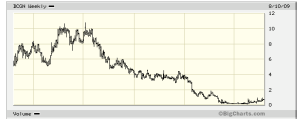
I guess DSM-based psychiatric genetics is just about dead for the time being.  The announcement of the soon to shutter deCODE Genetics and its 5-year stock price captures the failure of this endeavor.

decode1

Reblog this post [with Zemanta]
Backyard trampoline
Image by Kevin Steele via Flickr

For more than a decade, we’ve known that at least 95% of the human genome is junk – or junque – if you’re offended by the thought that “you” emerged from a single cell whose genome is mostly a vast pile of crap – or crappe – if you insist.  Hmmm, what is this crap?  It turns out to be a lot of random repeating sequences and a massive collection of evolutionary artifacts left over from the evolution of earlier genomes – mainly bits of retroviruses who once inserted themselves irreversibly into our ancestors’ genomes.  One subset of this type of – can we upgrade it from crappe to “relic” now? – is something we’ve labelled “autonomously mobile DNA sequences” or more specifically, “long interspersed nuclear elements (LINEs or L1s)”.  This class of DNA relic comprises more than 15% of the human genome (that’s about 3-5x more than the relevant genomic sequence from which you emerge) and retains the ability to pick itself up out of the genome – via an RNA intermediate – and insert itself into new places in the genome.  This has been observed to happen in the germ line of humans and a few L1 insertions are even responsible for genetic forms of humn disease (for example in the factor VIII gene giving rise to haemophilia).  The mechanism of transposition – or “jumping” as these elements are sometimes called “jumping genes” – involves the assembly of a certain type of transcriptional, transport and reverse-transcription (RNA back to DNA) apparatus that is known to be available in stem cells, but hardly ever  in somatic cells.

Except, it would seem, for the brain – which as we’ve covered here before – keeps its precious neurons and glia functioning under separate rules.  Let’s face it, if a liver cell dies, you just replace it without notice, but if neurons die, so do your childhood memories.  So its not too surprising, perhaps, that brain cells have special ‘stem-cell-like’ rules for keeping themselves youthful.  This seems to be borne out again in a paper entitled, “L1 retrotransposition in human neural progenitor cells” by Coufal et al., [doi:10.1038/nature08248].  Here the team shows that L1 elements are able to transpose themselves in neural stem cells and that there are more L1 elements (about 80 copies more per cell) in the hippocampus than in liver or heart cells.  So apparently, the hippocampus, which does seem to contain a niche of stem cells, permits the transposition or “jumping” of L1 elements in a way that the liver and heart do not.  Sounds like a fun place to be a gene!

Reblog this post [with Zemanta]
Printing press from 1811, photographed in Muni...
Image via Wikipedia

“B-b-book”? you say – as in words printed – on paper?  Yes, its a book, “The Genetics of Cognitive Neuroscience” for which my colleagues and I contributed chapter 5. Despite the 15th century medium, the collection of ideas and expertise assembled by the editors makes the book a great intoduction to this evolving topic.

Reblog this post [with Zemanta]
Passing the Wreckage
Image by arbyreed via Flickr

Was sort of holding my breath with fingers and toes crossed these past few weeks, but now am given up.  Much like team Obama’s efforts to regulate the financial services industry (only slightly less of a clusterf**k than healthcare), its a slow motion trainwreck where the average taxpayer just ends up worseoff after all the political concessions.  Seems like the very folks who are most vocal are the ones who’d rather not change a thing.

This is my take on the doublespeak within the beltway:

BUSINESS: We are being crushed by rising healthcare costs.

INSURANCE: We only make a nickel on every $1 we pay out to doctors, and they are always raising their fees.

DOCTORS: We’re forced to treat the growing ranks of uninsured and must shoulder the burden when they cannot pay.

OK, so lets try to expand medicare and design a wider government managed plan…

BUSINESS: We can’t afford the higher taxes to pay for universal care and our employees don’t want to give up the plans they have.

INSURANCE: We don’t want to compete with the government-run plan since it will undercut ours.

DOCTORS:  We don’t want “evidence-based medicine” and to be told by the government what we can do and how much we can charge – we like our perverse incentives!

And don’t forget about Mr. and Mrs. middle-class USA who want top-o-the-line care but don’t want to pay more than they did in the 1960’s.

What a total bust. I think the Health 2.0 movement is doing something really interesting – outside the system – and also very key – something that can elevate the most needy, uninsured members of society to the forefront.

No more dwelling on the wreckage.  On to strategies that help.  More science & more Health 2.0!

Reblog this post [with Zemanta]
A column of the cortex
Image by Ethan Hein via Flickr

Here’s a new addition to a rapidly growing list of findings for the valine-to-methionine substitution in the COMT gene (rs4680).  The paper, “Effects of the Val158Met catechol-O-methyltransferase polymorphism on cortical structure in children and adolescents” by Shaw and colleagues at the NIMH [doi:10.1038/mp.2008.121] finds that when genotype was used as a regressor for cortical thickness measures in children (8-14 years of age) significant associations were found in the right inferior frontal gyrus and the right superior/middle temporal gyrus (in both areas, the met/met group had thicker cortex).  The team notes that the findings in the frontal cortex were expected – as many others have found associations of COMT with this brain area using other imaging modalities.  However, the temporal lobe finds are something new.  No speculations on the mechanisms/implications are provided by the researchers on this new finding, but known interconnectivities of these two brain regions exist – perhaps supporting aspects of language, memory and/or other cognitive processes?

Perhaps the findings provide a clue to an important role that genes may play in the development of cognitive function.

Reblog this post [with Zemanta]
Antigen presentation stimulates T cells to bec...
Image via Wikipedia

Its not often that Nature magazine publishes a triple-back-to-back-to-back, so take note if you’re interested in the genetics of mental illness. The 3 papers – [doi:10.1038/nature08185] involving 3,322 individuals with schizophrenia and 3,587 controls, [doi:10.1038/nature08186] 4,999 cases and 15,555 controls and [doi:10.1038/nature08192] 8,008 cases and 19,077 controls – are as massive and powerful as any genome-wide effort to-date.  The results?  Overall a common result showing linkage to the major histocompatibility complex or so-called ‘MHC genes’ located on chromosome 6.  What to these genes do? and what’s the relevence to mental illness?

Here’s a quickie immunology primer on the biological function of the major histocompatibility genes.  They encode proteins whose molecular function is display short peptides on the surface of aptly named antigen presenting cells in the immune system (think of your hand as an MHC protein holding onto an apple (the short peptide) and holding it out or presenting it to someone (an Helper T-Cell).  This act of “presentation” is done so that the Helper T-Cells can determine whether such peptides are “self” or “non-self”.  If such displayed peptides are non-self (such as a virus, endotoxin or bacterium), then the helper T-Cells will sound the alarm and initiate a T- or B-Cell based immune response aimed specifically at the offending invader.  The movies below show the MHC proteins in their place displaying antigen peptides on the cell surface for binding with a helper T-Cell.


So, what does this have to do with mental illness? Although there are other non-immunological genes interspersed among the MHC genes, there is good reason to begin to explore the role of external infection and early development.  The authors of one paper note that,  “Schizophrenia patients are more likely, compared to the general population, to have been born in the winter or the spring. Although infections such as influenza and measles have been proposed as a possible mechanism for this distortion, a clear association between infectious agents and schizophrenia has not been demonstrated.”

The more we know, the more we don’t know.  Hopefully more early environment data will be analyzed.

Reblog this post [with Zemanta]
Municipality Hall of Chongqing, China
Image via Wikipedia

Hat tip to Daniel MacArthur who points to this story from CNN. “About 30 children aged 3 to 12 years old and their parents are participating in a new program that uses DNA testing to identify genetic gifts and predict the future”  “For about $880, Chinese parents can sign their kids up for the test and five days of summer camp in Chongqing, where the children will be evaluated in various settings from sports to art. The scientific results, combined with observations by experts throughout the week, will be used to make recommendations to parents about what their child should pursue.

What’s the chinese word for SCAM?

Reblog this post [with Zemanta]
Homo Sapiens album cover
Image via Wikipedia

pointer to: Professor Paul De Grauwe‘s interview (mp3) and recent article in the Financial Times declaring the flawed debate on macroeconomic policy (to stimulate or not) based on present models that do not account for the emotional and cognitive biases of homo sapiens.  He calls for new behavioral economic models based on the work of Robert Shiller and others who – together with psychologists and neuroimagers – are synthesizing a newer evolution of homo economicus – which may lead us to a better (less crisis-prone perhaps?) macroeconomic world.  (A few related posts on this topic here)

Hmmm. What might the genome of homo economicus look like?

Reblog this post [with Zemanta]
NewAntidepressant.png
Image by mrapplegate via Flickr

pointer to: Study: US Anti-Depressant Use Doubles From 1996 to 2005 at the Furious Seasons blog.  Yikes!  What is happening?

Reblog this post [with Zemanta]
The hydrophobic cell membrane prevents charged...
Image via Wikipedia

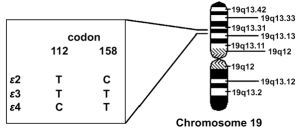
Few genes have been studies as intensely as apolipoprotein E (APOE).  In particular, one of its variants, the epsilon-4 allele has been especially scrutinized because it is correlated with an earlier onset (about 10 years earlier than average) of Alzheimer’s Disease.  Among the many roles of APOE – its just a tiny cholesterol binding protein – are those as participant in synaptic plasticity, early neural development, damage-response and other processes – all of which share the need for the synthesis and movement of neuronal membranes (see the fluid mosaic model) and their component parts – such as cholesterol.   Hence, whenever neural membranes are being synthesized (plasticity & development) or damaged (overstimulation and other sources of oxidative damage) the tiny APOE is there to help with its membrane stabilizing cholesterol molecule in hand. Over the course of a lifetime, routine damage to neuronal membranes adds up (particularly in the hippocampus where constant storage-recall memory functions place enormous demands on synaptic plasticity systems), and individuals (such as epsilon-4 carriers) may simply show more wear-and-tear because their version of APOE is not as optimal as the other forms (epsilon-2 and -3).

apoeWith this etiological model in mind, perhaps you would like to take better care of you cell membranes (much like your car mechanic implores to change your car’s spark plugs and oil to keep the engine clean on the inside).  Moreover, perhaps you would like to do-so especially if you knew that your APOE system was less optimal than average.  Indeed, results from the recent REVEAL study suggest that folks who are in their 50’s are not unduly distressed to make this genetic inquiry and find out their genotypic status at this APOE polymorphism – even though those who discovered that they were epsion-4 carriers reported more negative feelings, understandably.  Still, with a number of education and intervention strategies available, an optimistic outlook can prevail.

Furthermore, there are ever newer diagnostic strategies that can improve the rather weak predictive power of the genetic test.  For example, cognitive assessments that measure hippocampal-dependent aspects of memory or visual orienting have been shown to be valid predictors of subsequent dementia – even moreso in populations that carry the APOE epsilon-4 allele.  Other forms of neuroimaging that directly measure the structure and function of the hippocampus also have tremendous sensitivity (here for a broad review of imaging-genetics of AD) and can, in principle, provide a more predictive view into one’s distant future.

On the very cutting edge of this imaging-genetic crystal ball technology, lies a recent paper entitled, “Distinct patterns of brain activity in young carriers of the APOE-e4 allele” by Fillippini and colleagues [doi: 10.1073/pnas.0811879106].  Here, the research team asks whether individuals in their late 20’s show structural/functional brain differences that are related to APOE genotype.  They employ various forms of imaging analysis such as a comparison of brain activity when subjects were performing a novel vs. familiar memory task and also an analysis of so-called resting state networks – which reflect a form of temporal coherence (brain areas that oscillate in-sync with each other when subjects are lying still and doing nothing in the scanner).  For the analysis of the memory task, the team found that APOEe4 carriers showed more activation in the hippocampus as well as other brain regions like the anterior midbrain and cerebellum.  When the team analysed a particular resting state network – the default mode network – they found differences in the medial temporal lobe (containing head of the hippocampus and amygdala) as well as the medial prefronal cortex.  According to the paper, none of these differences could be explained by differences in the structure or resting perfusion of the young-adult brains in the study.

Wow, these results seem to suggest that decades before any mild cognitive impairments are observable, there are already subtle differences in the physiology of the APOEe4 brain – all of which could be detected using the data obtained in 6 minutes of rest. 6 minutes of rest and spit in a cup – what does the future hold?

Reblog this post [with Zemanta]
Nalazište pračovjeka Krapina
Image via Wikipedia

pointer to this 5-part video discussion from the 2009 World Science Festival.

In part 1 @ 8:30mins Sir Paul Nurse makes the plug for the nexus of neuroscience-genomics-humanities.  In part 3 @0:20secs Renee Reijo Pera makes the case for basic developmental biology as a key, while @12:00mins Francis Collins makes the case for parenting as a key shaper of the potential of the genome.  In part 4 @16:00mins Nikolas Rose cautions on the “screen & intervene” mentality that has grown (degenerated) around the nexus of genomics and neuroscience.  Lastly, in part 5 @4:25mins Francis Collins stirs up the panel with questions on human spirituality.

Each of these topics is something I’m striving to explore more here.  What a wonderfully interesting future lies ahead in this area!


Reblog this post [with Zemanta]
Example of a Genome-wide Scan for Quantitative...
Image via Wikipedia

A recent summary statement from the Cross-Disorder Phenotype Group of the Psychiatric GWAS Consortium [doi 10.1192/bjp.bp.108.063156] highlights the recent convergence of GWAS findings in bipolar disorder (ANK3 & CACNA1C) and schizophrenia (ZNF804A).  They also suggest that, “the most useful biological categories and/or dimensional definitions and measures are still unknown” and that “there may be overlap in the genetic susceptibility across disorders” and furthermore, “The notion that there is a gene for one of more psychiatric disorders is inappropriate and unhelpful“.

As someone whose been covering the more granular details of genes and brain function, it is reassuring to hear that the genome experts at 10,000 feet find that the evidence suggests that DSM-based diagnostics do not always jibe with basic brain biology.

How to interpret past psychiatric genetic data and how to move forward to make sense of the waves of new data (the PGC will have more than 80,000 participants each with more than 500,000 genotypes on record by end of 2009)?   Jeebus help us!

Reblog this post [with Zemanta]
labyrinthine circuit board lines
Image by quapan via Flickr

Amidst a steady flow of upbeat research news in the behavioral-genetics literature, there are many inconvenient, uncomfortable, party-pooping sentiments that are more often left unspoken.  I mean, its a big jump – from gene to behavior – and just too easy to spoil the mood by reminding your colleagues that, “well, everything is connected to everything” or “that gene association holds only for that particular task“.  Such may have been the case often times in the past decade when the so-called imaging-genetics literature emerged to parse out a role for genetic variation in the structure and functional activation of the brain using various neuroimaging methods.  Sure, the 5HTT-LPR was associated with amygdala activation during a face matching task, but what about other tasks (and imaging modalities) and other brain regions that express this gene.  How could anyone (let alone NIMH) make sense out of all of those – not to mention the hundreds of other candidate genes poised for imaging-genetic research?

With this in mind, it is a pleasure to meet the spoiler-of-spoilers! Here is a research article that examines a few candidate genetic polymorphisms and compares their findings across multiple imaging modalities.  In his article, “Neural Connectivity as an Intermediate Phenotype: Brain Networks Under Genetic Control” [doi: 10.1002/hbm.20639] Andreas Meyer-Lindenberg examines the DARPP32, 5HTT and MAOA genes and asks whether their associations with aspects of brain structure/function are in any way consistent across different neuroimaging modalities.  Amazingly, the answer seems to be, yes.

For example, he finds that the DARPP32 associations are consistently associated with the striatum and prefrontal-striatal connectivity – even as the data were collected using voxel-based morphometry, fMRI in separate tasks, and an analysis of functional connectivity.  Similarly, both the 5HTT and MAOA gene promoter repeats also showed consistent findings within a medial prefrontal and amygdala circuit across these various modalities.

This type of finding – if it holds up to the spoilers & party poopers – could radically simplify the understanding of how genes influence cognitive function and behavior.  As suggested by Meyer-Lindenberg, “features of connectivity often better account for behavioral effects of genetic variation than regional parameters of activation or structure.”  He suggests that dynamic causal modeling of resting state brain function may be a powerful approach to understand the role of a gene in a rather global, brain-wide sort of way.  I hope so and will be following this cross-cutting “connectivity” approach in much more detail!

Reblog this post [with Zemanta]
Histopathogic image of senile plaques seen in ...
Image via Wikipedia

Having blogged here several times on various and sundry roles of BDNF in cognitive function, it was pretty cool to see the recent paper, “Neural stem cells improve cognition via BDNF in a transgenic model of Alzheimer disease” [doi: 10.1073/pnas.0901402106].  It seems that in a transgenic mouse model for Alzheimer’s Disease that injection of neural stem cells into the plaqued/tangled hippocampus can rescue hippocampal-dependent behaviors.  This rescue however, seems to have been dependent on the secretion of BDNF since knock-down of BDNF ablated the rescue, while increasing BDNF improved the rescue.  The stem-cell treatment did not however reduce levels of plaques or tangles but did increase synaptic density – which I’d be happy to have more of – plaques/tangles notwithstanding.  Promising findings!

Reblog this post [with Zemanta]

pointer to Jen S. McCabe’s blog on healthcare management and gracious video share of her experience with her 23andMe personal genome data.

Reblog this post [with Zemanta]

vix

In 1802, in a letter to then Secretary of the Treasury, Albert Gallatin, Thomas Jefferson warned that, “If the American people ever allow private banks to control the issue of their money, first by inflation and then by deflation, the banks and corporations that will grow up around them (around the banks), will deprive the people of their property until their children will wake up homeless on the continent their fathers conquered.” (source)  Although the US now does have a central government bank, Jefferson’s warning still chillingly echoes through our current crisis as we teeter on this very brink.

The reasons why the US financial system lies stricken now (not to mention many times before) are complex for sure, but for a neuroscience & genetics buff like myself, its fun to consider the underlying mechanisms of human biology and behavior within a macroeconomic framework.  What role for the brain and human nature? How does our understanding of human social and emotional behavior reconcile with the premise of so-called “rational” behavior of investors and consumers in a marketplace? Can we regulate and design a debacle-proof economic system that accounts for human social and emotional influences on otherwise rational behavior? Luckily, if you are interested in these questions, you need only to pick up a copy of “Animal Spirits: How Human Psychology Drives the Economy, and Why It Matters for Global Capitalism” by George Akerlof and Robert Shiller, who cover this very topic in great detail and provide a broad framework for neuropsychological research to inform macroeconomic policy.  A lofty and distant goal indeed, but perhaps the only way forward from such spectacular wreckage of the current system.

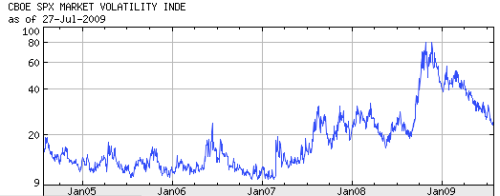
One such aspect of so-called “animal  spirits” could be, for example – fear – which has been blamed many times for financial panics and is covered in great measure by Akerlof and Shiller.  During the depths of the great depression, FDR famously tried to shake people loose from their animal spirits by suggesting “Only Thing We Have to Fear Is Fear Itself” (listen to the audio).   As another example, consider the chart at the top of the post – a 5yr trace of the VIX an index of volatility in the price of stock options over time.  In a bull or a bear market, when there are clear economic signals that stock prices should rise or fall, the VIX is rather low – since people feel relatively certain about the overall direction of the market.  Note however, what happened in the fall of 2008, when the heady days of the housing boom ended and our current crisis began – the VIX rockets toward 100% volatility – indicating rather dramatic swings in future earnings estimates and hence, tremendous uncertainty about the future direction of the market.  Indeed, for high flying investors (who may reside in tall buildings with windows that open) the VIX is sometimes referred to as the fear index.

What – in terms of brain mechanisms – might underlie such fear – which seems to stem from the uncertainty of whether things will get better or worse?  What do we know about how humans react to uncertainty and how humans process uncertainty?  What brain systems and mechanisms are at play here? One recent report that uses genetic variation as a tool to peer into such brain mechanisms suggests that dopamine signaling modulates different brain areas and our propensity to respond in conditions of low and high uncertainty.

In their article, “Prefrontal and striatal dopaminergic genes predict individual differences in exploration and exploitation“, [doi:10.1038/nn.2342] Michael Frank and colleagues examine individual differences in a so-called exploration/exploitation dilemma.  In their ‘‘temporal utility integration task’’, individuals could maximize their rewards by pressing “stop” on a rotating dial which can offer greater rewards when individuals press faster, or when individuals learn to withold and wait longer, and, in a third condition when rewards are uncertain.  The authors liken the paradigm to a common life dilemma when there are clear rewards to exploiting something you know well (like the restaurant around the corner), but, however, there may be more rewards obtained by exploring the unknown (restaurants on the other side of town).  In the case of the VIX and its massive rise on the eve of our nations financial calamity, investors were forced to switch from an exploitation strategy (buy housing-related securities!!!) to an exploration strategy (oh shit, what to do?!!).

The neurobiological model hypothesized by Frank and colleagues predicts that the striatum will be important for exploitation strategies and find supporting data in gene associations with the striatally-enriched DARPP-32 gene (a marker for dopamine D1-dependent signalling) and DRD2 for the propensity to respond faster and slower, respectively, in the exploitative conditions (rs907094 & rs1800496).  For the exploratory conditions, the team found an association with the COMT gene which is well-known to modulate neural function in the prefrontal cortex (rs4680). Thus, in my (admittedly loose) analogy, I can imagine investors relying on their striata during the housing boom years and then having to rely more on their prefrontal cortices suddenly in the fall of 2008 when it was no longer clear how to maximize investment rewards.  Egregious bailouts were not yet an option!

Click here and here to read more breakthrough neuroeconomics & genetic research from Michael Frank and colleagues.  Here and here for more on Shiller and Keynes.

Reblog this post [with Zemanta]
PRINCETON, NJ - OCTOBER 13:  Princeton Profess...
Image by Getty Images via Daylife

pointer to: Paul Krugman’s summary of basic factors that prevent healthcare from ever functioning in an efficient Adam Smith, Burton Malkiel kind of free market.  His comments based on Kenneth Arrow‘s 1963 paper “Uncertainty and the welfare economics of health care“.

Reblog this post [with Zemanta]