Feeds:
Posts
Comments

Archive for the ‘Uncategorized’ Category

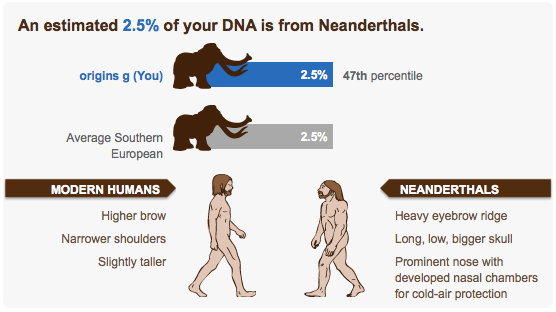
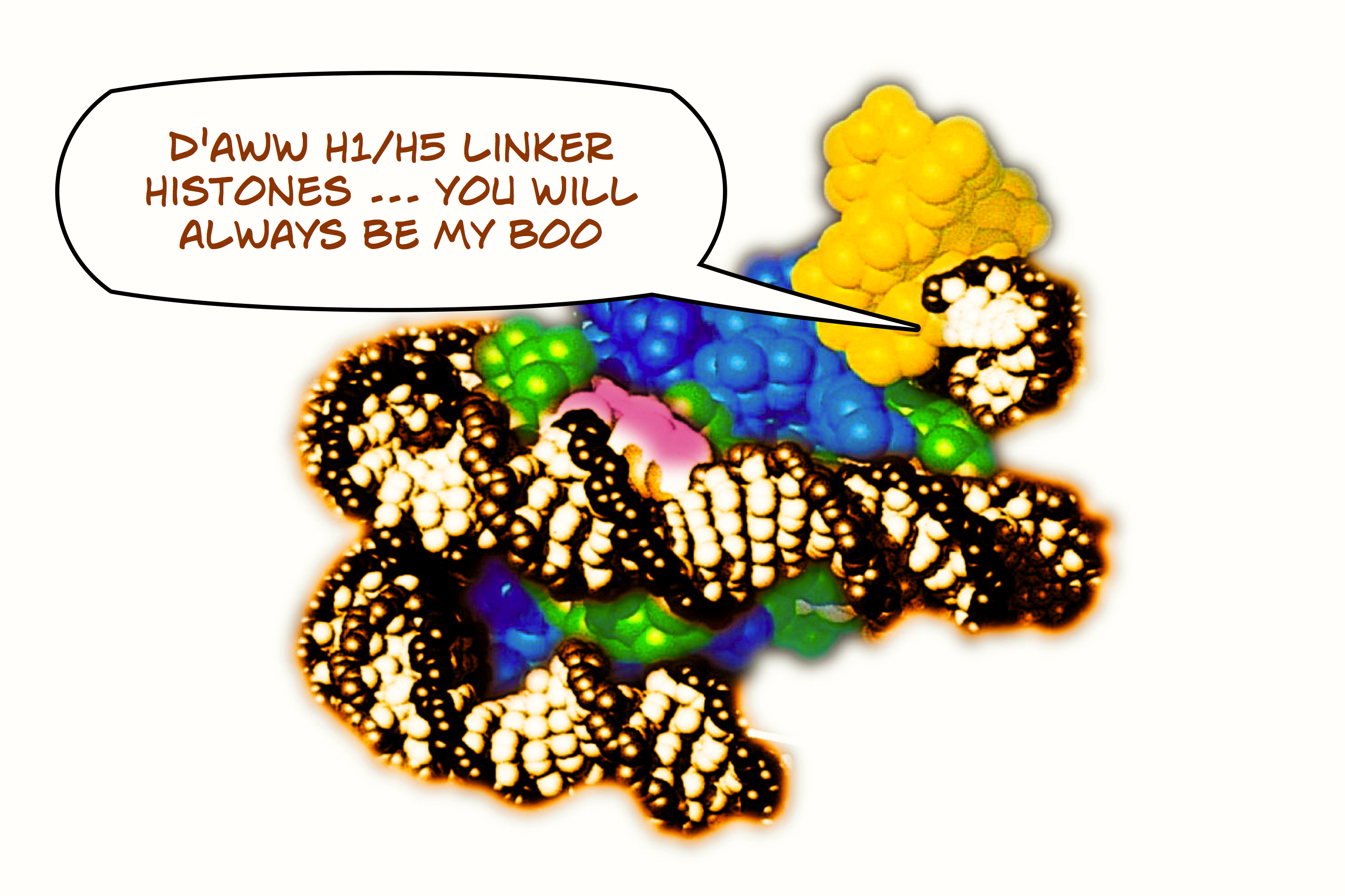
Check out the Interpretome! developed by students and staff at Stanford University.

– I have 17 European alleles and 3 East Asian alleles … the genetic proof is in … white boys can’t jump.
– I have 17 out of 32 Type 2 Diabetes risk alleles … put down those carbs now … and 19 out of 30 Coronary Artery Disease risk alleles … and go for a jog.
– I have a combined Risk of Narcolepsy: 2.92 … but the score jumps to 85 with an issue of GENETICS in my hand.
– I’m not exactly on the leading edge of human evolution … a 72/110 of positive selection score.
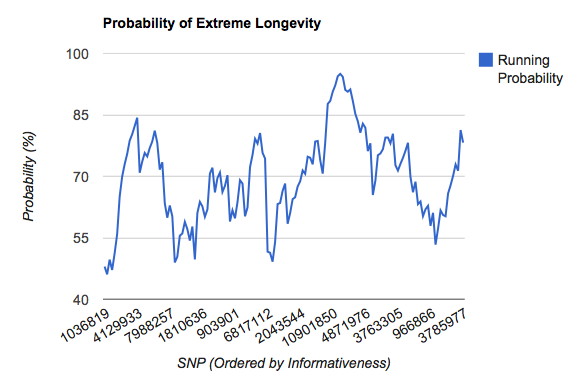
– I’d better start saving for a long-ass retirement … probability of extreme longevity: 78.2

More on the interpretome here, here and here!

Read Full Post »

Come to think of it, I was never very, um, choosy, back in my wanton late teens and early 20’s … apparently, it runs in the family.  News blurb.

Read Full Post »

Really enjoyed part 1 here … man’s co-evolving sense of self along with his technology … seems like brain & genome science are adding another layer on to “the Edifice” … so much fun to watch

Read Full Post »

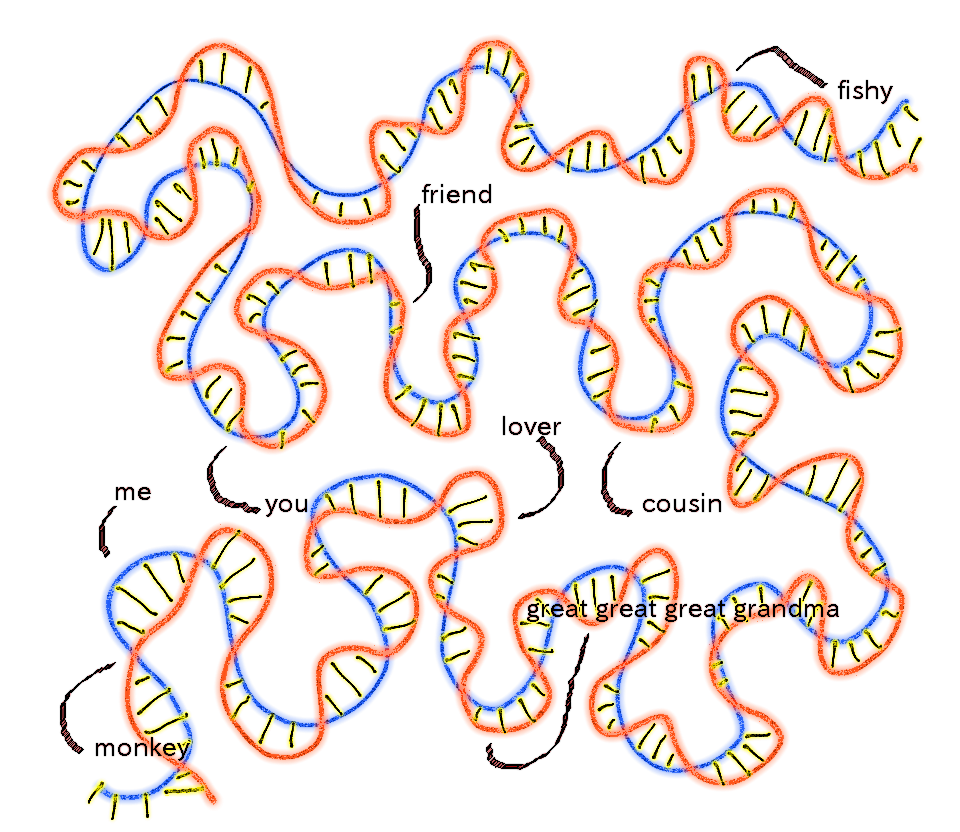
My genome is full of you

Read Full Post »

Sanity check

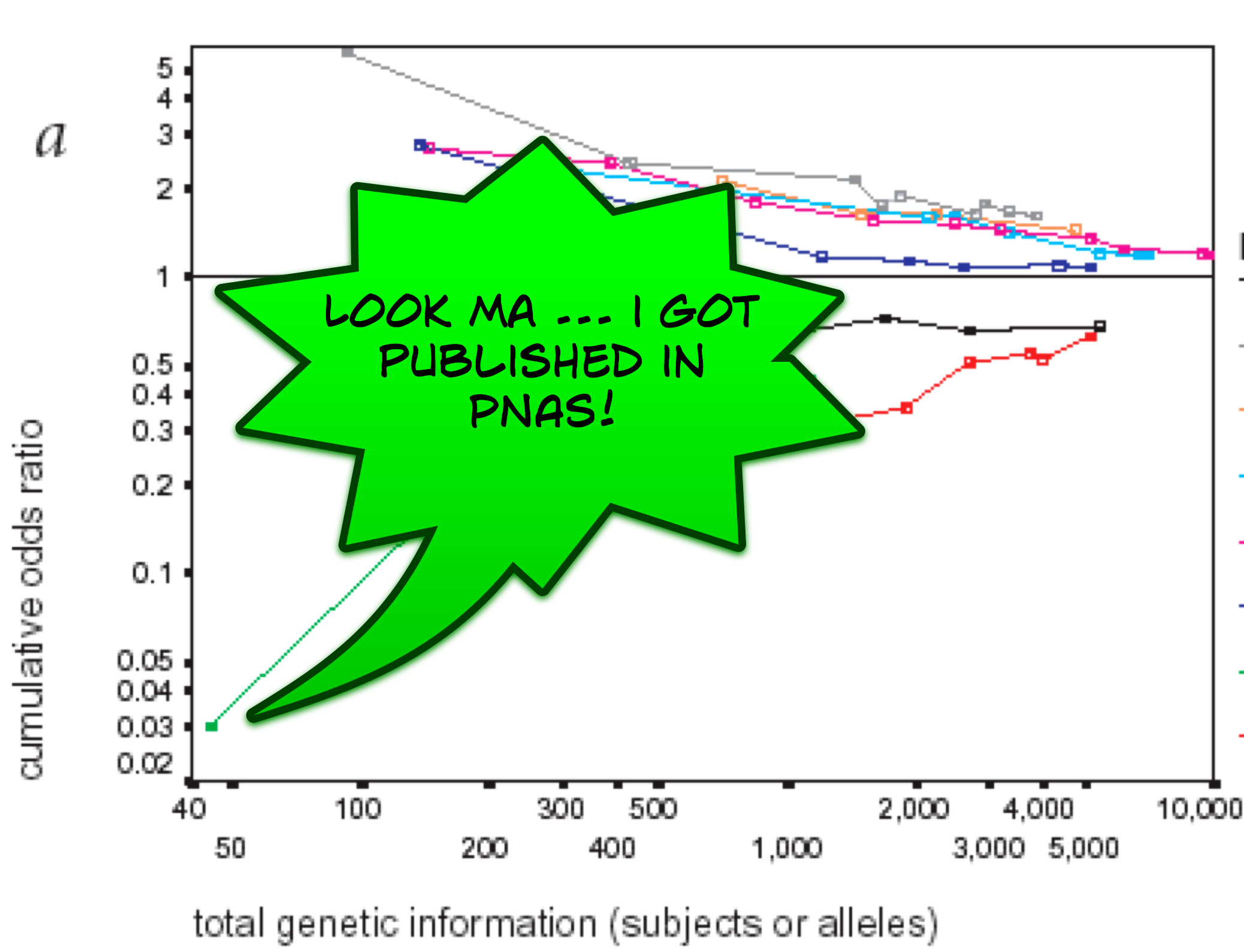
Here’s a pointer to a reality check on the scientific literature and genetics … especially when it comes to behavioral genetics.

Finally, we extend a plea to science writers: before writing about any article claiming a genetic association, it’s worth doing some simple sanity checks. Is the sample large enough to capture the typically tiny effect sizes we expect to see for complex human traits?

I do … and will … try and keep this in mind.  The genome (and your brain) are very interesting places … but interesting ain’t necessarily the same thang as informative.

Read Full Post »

Embodied brain

Read Full Post »

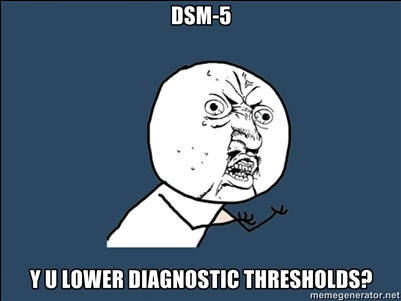
Regular life now an illness

Open letter to the DSM-5

Read Full Post »

An RNA editor

Read Full Post »

Read Full Post »

Statistical pickles

Just a pointer to Dr. Ben Goldacre’s wonderful book and recent blog post on some widespread statistical flubs.  Readers of genetics and neuroscience media should be alert to conclusions of this ilk: “people with genotype AA respond differently to treatment (pre- vs. post-) than people with genotype aa (pre- vs. post-).”

You can say that there is a statistically significant effect for your chemical reducing the firing rate in the mutant cells. And you can say there is no such statistically significant effect in the normal cells. But you cannot say that mutant cells and mormal cells respond to the chemical differently.

Read Full Post »

Check it out!

October 30 – November 1, 2011, The Westin Boston Waterfront, Boston, MA, USA

The field of epigenetics has come to the fore in recent years, making its mark in both basic research and also fields relevant to human disease, such as stem cells and cancer. “Epigenetics” has become synonymous with modifications to DNA and associated molecules that influence whether genes are on or off. But are these epigenetic modifications self-propagating and inherited like DNA, the physical manifestation of Mendel’s gene? Given the great interest in the topic and huge public and private investment made in epigenetics, Cell Press has decided to tackle this and other aspects of epigenetics in a multi-day meeting. In addition to fostering critical discussions on the proposed mechanisms of epigenetic inheritance and the challenges that lay ahead in understanding these mechanisms, the meeting will focus on more well established epigenetic mechanisms and how they are implemented in cell and developmental biology, particularly the maintenance of cell states, such as occurs during X-inactivation and polycomb-mediated gene silencing. The scope will be broad, giving the interested attendee a glimpse of epigenetics at both the molecular as well as the organism level.

As the field of epigenetics gains momentum, this is the perfect time to take a breather, stand back, and take a critical look at the claims, the issues to be addressed, and how we move ahead.

Topic List:
– Transgenerational Epigenetic Inheritance
– Inheritance of cellular states: x-inactivation, imprinting, and lambda phage
– Replication of chromatin
– RNA and epigenetic inheritance
– Mechanisms of polycomb-mediated gene silencing

Read Full Post »
Enjoyed the August 2011 Neuropod(cast) on the topic of genetics and intelligence.  There is no mention of a major “intelligence gene”  (the author suggests there should be, rather, hundreds of very weak, small-effect genetic factors) but the author does point to their finding of a gene FNBP1L  that plays a role in the regulation of actin polymerization.  Why might the polymerization of actin matter?  The video below from Tom Bartol and colleagues shows just how wildly intertwined and elaborate synaptic connections can be.  The formation of this synaptic spaghetti is dependent on actin polymerization!  Mo’ spaghetti, mo’ smarts?

More on genes and intelligence here and here.


Read Full Post »

Could it be?

Read Full Post »

Lamarck in Vennville

Read Full Post »

Do they want my genome?

Read Full Post »

Over at Open Secrets, there are some great tools to “… investigate the cash flowing from well-heeled special interests within the health industries to your representatives, the committee members with the most power to shape the legislation …”

A big money political circus with $500 million spent on lobbying in 2010 alone!  Can a wave of new personal informatic and genomic tools take root and grow amidst a corporate money-fueled politicized regulatory environment?  I hope so, but the paradigm shift to personalized-genomic-medicine definitely stirs up some thorny conflicts between our individual rights of freedom, privacy and access to healthcare vs. the profit models of corporations vs. government policy.

The info graphic is here at Many Eyes.  Here is a related post on possible innovation-crushing regulation and below is a video summary of how “We the People” lost control of our democratic process.

Read Full Post »

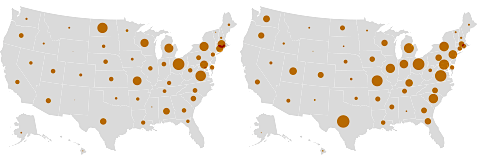
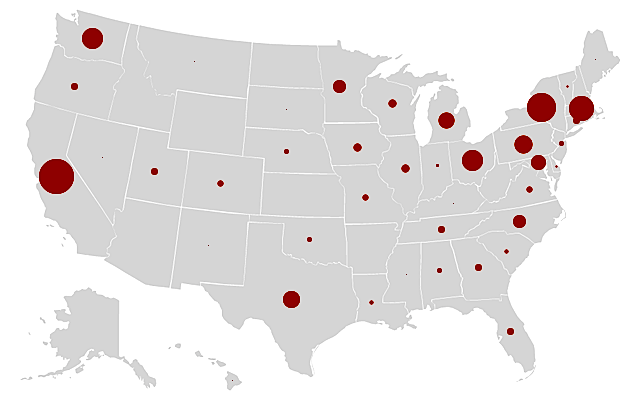
Having some fun here learning to visualize data using Processing.  Here is a map showing the relative number of genetic testing laboratories.  California is listed with the most (35 labs).  *Note, these are genetic testing laboratories which may service a wide range of health care providers and clinics.

Read Full Post »

A big wave is breaking in Santa Cruz, California.

Image via Wikipedia

Fathers Day means more to some Dads than others.

What was once, $50 of beer money for a vial of semen, is now, a wave of cards and emails on Fathers Day for Todd Whitehurst – posterdad for the Donor Sibling Registry and focus of a recent article on super donors.

Statistically speaking, said one biogeneticist, Whitehurst could be the father of 42 to 60 children.

Enhanced by Zemanta

Read Full Post »

Zen meditators are famous for their equanimity in the face of physical discomfort.  How do they do it?  Well, according to a recent neuroimaging investigation, it may be because they do not “think” about pain.  Rather, they just “experience” pain:

An ancient Eastern text describes two temporally distinct aspects of pain perception; the direct experience of the sensation and habitual, negative, mentation which follows. It was suggested that the so-called ‘second dart’ of pain could be removed via meditative training, obliterating the suffering associated with noxious stimulation.

It’s a subtle distinction … to just experience something in the moment  vs. to ruminate on it and its causes, consequences, duration, etc.  How many times have you heard the sage advice, just let it go?  Is this what the brain imaging shows … that the meditators are not ruminating (they have decreased activity in parts of the brain involved in ruminating) … they have experienced the pain and then let it go?  Experience and forget?

Reminded me of an interesting little protein named DREAM.  Interesting because it modulates pain (when DREAM is inactivated in experimental mice the animals feel no pain) and interesting also because the gene plays a role in the formation of memories (mice show poor contextual fear memory when the gene is inactivated).

Experience and forget.  A Zen teaching encoded in our DNA?

Enhanced by Zemanta

Read Full Post »

Political power must feel pretty good … especially if you have deep-seated personal insecurities and can conveniently use the notoriety of your office to indulge in a sense of superiority and vanity.  Among many, many brain systems that develop slowly during childhood – inflated ego, interpersonal hostility and impulsivity can emerge very early during development.  Instantaneous electronic “boner-to-picture-to-internet” hand-held technology just makes it that much easier to get busted once you’ve become a full-grown asshole.

Here’s a small insight into how this unfortunate developmental pathway might unfold … from a small-scale genetic study on variation in an intra-cytoplasmic loop of the Dopamine DRD4 receptor and its relationship to infidelity:

[DRD4] 7R+ individuals exhibit augmented anticipatory desire response to stimuli signaling dopaminergic incentives, such as food, alcohol, tobacco, gambling, and opiates. Although it is as yet speculative, these associations suggest that 7R+ individuals may allocate greater attention to appetitive rewards, contributing to the behavioral differences in promiscuity and infidelity observed here.

Neither the first, nor the last gene-twitter interaction to have gone badly for someone …

More on the DRD4 and social bonding genes

Read Full Post »

« Newer Posts - Older Posts »