
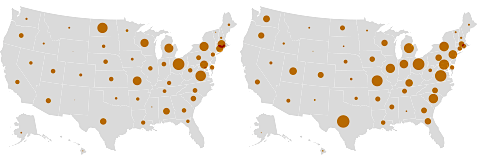
 Over at Open Secrets, there are some great tools to “… investigate the cash flowing from well-heeled special interests within the health industries to your representatives, the committee members with the most power to shape the legislation …”
A big money political circus with $500 million spent on lobbying in 2010 alone! Can a wave of new personal informatic and genomic tools take root and grow amidst a corporate money-fueled politicized regulatory environment? I hope so, but the paradigm shift to personalized-genomic-medicine definitely stirs up some thorny conflicts between our individual rights of freedom, privacy and access to healthcare vs. the profit models of corporations vs. government policy.
The info graphic is here at Many Eyes. Here is a related post on possible innovation-crushing regulation and below is a video summary of how “We the People” lost control of our democratic process.
–
Posted in Uncategorized | Tagged economics, healthcare policy, politics | Leave a Comment »
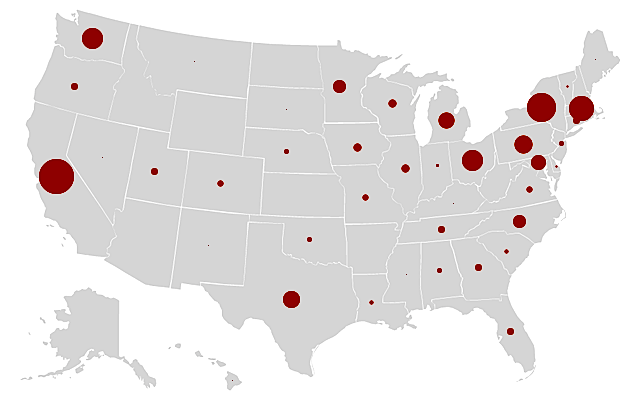 Having some fun here learning to visualize data using Processing. Here is a map showing the relative number of genetic testing laboratories. California is listed with the most (35 labs). *Note, these are genetic testing laboratories which may service a wide range of health care providers and clinics.
Posted in Uncategorized | Tagged Art, Genetic testing | 6 Comments »

Image via Wikipedia
Fathers Day means more to some Dads than others.
What was once, $50 of beer money for a vial of semen, is now, a wave of cards and emails on Fathers Day for Todd Whitehurst – posterdad for the Donor Sibling Registry and focus of a recent article on super donors.
Statistically speaking, said one biogeneticist, Whitehurst could be the father of 42 to 60 children.

Posted in Uncategorized | Tagged Parenting, sperm | 1 Comment »
 Zen meditators are famous for their equanimity in the face of physical discomfort. How do they do it? Well, according to a recent neuroimaging investigation, it may be because they do not “think” about pain. Rather, they just “experience” pain:
An ancient Eastern text describes two temporally distinct aspects of pain perception; the direct experience of the sensation and habitual, negative, mentation which follows. It was suggested that the so-called ‘second dart’ of pain could be removed via meditative training, obliterating the suffering associated with noxious stimulation.
It’s a subtle distinction … to just experience something in the moment vs. to ruminate on it and its causes, consequences, duration, etc. How many times have you heard the sage advice, just let it go? Is this what the brain imaging shows … that the meditators are not ruminating (they have decreased activity in parts of the brain involved in ruminating) … they have experienced the pain and then let it go? Experience and forget?
Reminded me of an interesting little protein named DREAM. Interesting because it modulates pain (when DREAM is inactivated in experimental mice the animals feel no pain) and interesting also because the gene plays a role in the formation of memories (mice show poor contextual fear memory when the gene is inactivated).
Experience and forget. A Zen teaching encoded in our DNA?
Posted in Hippocampus, KCNIP3, Uncategorized | Tagged Meditation, Memory, Pain, Pain management, Yoga | 2 Comments »
 Political power must feel pretty good … especially if you have deep-seated personal insecurities and can conveniently use the notoriety of your office to indulge in a sense of superiority and vanity. Among many, many brain systems that develop slowly during childhood – inflated ego, interpersonal hostility and impulsivity can emerge very early during development. Instantaneous electronic “boner-to-picture-to-internet” hand-held technology just makes it that much easier to get busted once you’ve become a full-grown asshole.
Here’s a small insight into how this unfortunate developmental pathway might unfold … from a small-scale genetic study on variation in an intra-cytoplasmic loop of the Dopamine DRD4 receptor and its relationship to infidelity:
[DRD4] 7R+ individuals exhibit augmented anticipatory desire response to stimuli signaling dopaminergic incentives, such as food, alcohol, tobacco, gambling, and opiates. Although it is as yet speculative, these associations suggest that 7R+ individuals may allocate greater attention to appetitive rewards, contributing to the behavioral differences in promiscuity and infidelity observed here.
Neither the first, nor the last gene-twitter interaction to have gone badly for someone …
More on the DRD4 and social bonding genes
Posted in DRD4, Uncategorized | Tagged bonding, Dopamine, Narcissism, Relationship, sex | Leave a Comment »
Thinking of bragging about the large size of your brain-function genes?
Brain-function genes can be very large. Genetic variation – specifically, copy number variation (CNV) – is often found in brain-function genes in populations with mental disability … but … not much more often than in healthy populations.
To demonstrate the potential impact of confounders, we genotyped rare CNV events in 2,415 unaffected controls with Affymetrix 6.0; we then applied standard pathway analyses using four sets of brain-function genes and observed an apparently highly significant enrichment for each set. The enrichment is simply driven by the large size of brain-function genes.
The full story and a new statistical test – that aims to control for this confounding effect of large brain-function genes. More on chromosomal structural variation and schizophrenia here.
Posted in Chromosome structural variants | Tagged Copy number variation, Genetic testing | Leave a Comment »
THE ultimate guide to your genome … ‘nuf said.
The mission of the Encyclopedia of DNA Elements (ENCODE) Project is to enable the scientific and medical communities to interpret the human genome sequence and apply it to understand human biology and improve health. The ENCODE Consortium is integrating multiple technologies and approaches in a collective effort to discover and define the functional elements encoded in the human genome, including genes, transcripts, and transcriptional regulatory regions, together with their attendant chromatin states and DNA methylation patterns. In the process, standards to ensure high-quality data have been implemented, and novel algorithms have been developed to facilitate analysis. Data and derived results are made available through a freely accessible database. Here we provide an overview of the project and the resources it is generating and illustrate the application of ENCODE data to interpret the human genome.
Posted in Uncategorized | Tagged ENCODE, Epigenetics, Genetic testing, GWAS, mapping, maps | Leave a Comment »

 Teenagers are (in)famous for their hysterics. They are biologically mature, but society and their parents don’t allow them the freedom they desire. Toss in a steady diet of advertisement-laced TV … often for alcohol (an average of 301/year in 2007 – up from 216 in 2001), and you’ve got an enduring (not endearing) epic struggle.
Now toss the human genome … into the drowsy parents-watching-teenagers-watching beer ads on TV (until drowsy parents fall asleep and the real fun begins). Will it lead to a night of harmless fun? or a lifetime struggle full of rehab and alcohol addiction?
The research article, “Role of GABRA2 in Trajectories of Externalizing Behavior Across Development and Evidence of Moderation by Parental Monitoring” suggests that some of the genetic risk for alcoholism is foreshadowed in, or somewhat overlapping with, the externalizing behaviors of teenagers. Furthermore, the role of parental oversight can interact with, and reduce this genetic risk.
Here we present analyses aimed at delineating the pathways of risk associated with GABRA2 OMIM 137140. This gene was originally associated with adult alcohol dependence in the Collaborative Study on the Genetics of Alcoholism (COGA) project.13 The association with adult alcohol dependence has been replicated in several independent samples.14–17 Subsequent analyses of GABRA2 in the COGA sample also yielded evidence of association with other forms of drug dependence,18,19 antisocial personality disorder,20 and childhood conduct disorder,19 leading to the hypothesis that GABRA2 may be involved in the predisposition to alcohol dependence through general externalizing pathways.21
Importantly, parental monitoring has been shown to moderate the importance of genetic effects on substance use across adolescence.29,30 In a population-based sample of twins aged 14 and 17 years, as parental monitoring increased, genetic effects on substance use significantly decreased.30
Using data on externalizing behavior as reported at 9 time points between ages 12 and 22 years, we used person-oriented latent class analysis to identify 2 classes of trajectories of externalizing behavior; most of the sample (83%) showed a decrease in externalizing behavior from early adolescence to adulthood, while 17% of the sample showed consistent elevated levels of externalizing behavior that persisted into adulthood. The individuals showing this pattern of persistently high externalizing behavior were significantly more likely to carry the variant of GABRA2 that was originally associated with increased risk for adult alcohol dependence in the COGA sample13 (though we note that there is inconsistency as to the risk allele across studies).39
What might be the mechanism by which GABRA2 affects risk for externalizing behavior? All of the outcomes that have been associated with GABRA2 (adult alcohol dependence, drug dependence, adult antisocial behavior, childhood conduct problems, adolescent externalizing behavior) are characterized by aspects of impulsivity.
Importantly, we find evidence that the association between GABRA2 and trajectories of externalizing behavior is moderated by parental monitoring; the effect of the genotype on externalizing behavior is stronger under conditions of lower parental monitoring and weaker under conditions of higher parental monitoring.
“Parental monitoring?” … I dunno what that exactly involves … I’m usually pretty busy just looking for the remote control. Here is a genomic beer ad.
Posted in GABRA2 | Tagged Addiction, Alcoholism, inhibition | Leave a Comment »

Image via Wikipedia
Hands shake and wobble as the decades pass … moreso in some.
A recently evolved “T” allele (rs12720208) in the 3′ untranslated region (3′ UTR) of the FGF20 gene has been implicated in the risk of Parkinson’s Disease … namely by creating a wobbly G:U base-pair between microRNA-433 (miR-433) and the FGF20 transcript. Since the normal function of microRNA-433 is to repress translation of proteins (such as FGF20), it is suspected that the PD risk “T” allele carriers make relatively more FGF20 … which, in turn … leads to the production of higher levels of alpha-synuclein (the main component of Lewy body fibrils, a pathological marker of diseases such as PD). This newly evolved T-allele has also been associated with brain structural differences in healthy individuals.
My hands will shake and wobble as the decades pass … but not because I carry the G:U wobble pairing between miR-433:FGF20. My 23andMe profile shows that I carry 2 C alleles and will produce the thermodynamically favorable G:C pairing. Something to keep in mind as I lose my mind in the decades to come.

Posted in Dopamine, FGF20, Hippocampus, microRNA | Tagged 23andMe, aging, Dopamine, Parkinson's disease | Leave a Comment »

Image by Getty Images via @daylife
Your melanocortin receptor ligands.
Several selective ligands for the melanocortin receptors are known and some synthetic compounds have been investigated as potential tanning, anti-obesity and aphrodisiac drugs, with tanning effects mainly from stimulation of MC1, while anorectic and aphrodisiac effects appear to involve both MC3 and MC4.
Posted in MCR1-4 | Tagged diet, obesity | Leave a Comment »
… from The Big Picture
Posted in Telomere | Tagged aging, economics, Insurance | Leave a Comment »


Posted in Uncategorized | Leave a Comment »
In Greek, the word genome (γίνομαι) means
“I become, I am born, to come into being”.
Posted in Uncategorized | Leave a Comment »
Nope.
… from the debunking analysis:
The key comparison here comes from the two extremes: 2 alleles vs. 0. People with 2 alleles are 4 percentage points (more precisely, 3.6 percentage points) more likely to report themselves as very satisfied with their lives. The standard error of this difference in proportions is sqrt(.41*(1-.41)/862+.37*(1-.37)/509) = 0.027, so the difference is not statistically significant at a conventional level.
more on this totally over-hyped gene here.Posted in 5HTT | Tagged economics, happiness | Leave a Comment »
Have you ever suddenly realized, “OMG, I’m just like my dad (or mom)!” Oh, the horror .. the horror. Here’s John Updike from A Month of Sundays:
Also my father, who in space-time occupied a stark room of a rest home an hour distant, which he furnished with a vigorous and Protean suite of senility’s phantoms, was in a genetic dimension unfolding within me, as time advanced, and occupying my body like, as Colette had written to illustrate another phenomenon, a hand being forced into a tight glove.
Posted in APOE, Hippocampus | Tagged aging, Art, Development, Memory | Leave a Comment »
Remarks
Re-Tweetin’
Tweets by genes2brains2meBlog Stats
- 192,017 clickitas
Posting since April 2007
General topics
23andMe Addiction Add new tag aging Anxiety Art Arts autism B. K. S. Iyengar Biology Brain Buddism Central nervous system Cognition comics Consciousness Depression Development DNA Dopamine dualism economics Emotion Empathy Epigenetics evolution fear Frontal lobe Functional magnetic resonance imaging Gene Gene expression Genetics Genetic testing GWAS Health Health care Health insurance Hippocampus History Intelligence Kundalini language Major depressive disorder medication Meditation meme-art Memory Mental disorder Mental health Mind Mutation Nervous system Neural network Neuron Pain parasympathetic nervous system Patañjali Personalized medicine philosophy placebo Psychology Reactive oxygen species Religion and Spirituality Rett Syndrome schizophrenia Social Sciences spirituality Stem cell Stress Suicide synaptogenesis Teachers and Centers Twin Yoga Yoga Sutras of PatanjaliSpecific Items
- 5HTT
- ABCB1
- acetylcholine
- Actin
- ACTN3
- ADH1C
- ADORA2A
- ADRA2A
- AKT
- AMPA receptor
- Amygdala
- Angular gyrus
- ANK3
- APOE
- ARHGAP18
- ASIC1a
- ASPM
- ATXN1
- AVPR1a
- BAF53b
- Basal Ganglia
- BDNF
- CABYR
- CACNA1C
- CACNA2D1
- Caudate nucleus
- CB1 receptor
- CDC34
- CDH13
- Cell adhesion molecules
- Cerebellum
- CHAT
- CHRM3
- CHRNA4
- CHRNA7
- Chromosome structural variants
- Cingulate cortex
- Circadian
- clinical trial
- CNR1
- CNTNAP2
- Collateral sulcus
- COMT
- Corpus callosum
- COX1
- CREB
- CRHR1
- DARPP32
- DAT
- default network
- DISC1
- DLPFC
- DNAJC
- DNMT
- Dopamine
- DPP4
- DRD2
- DRD4
- DTNBP1
- DYRK1A
- EDA2R
- EGR1
- Estrogen
- evolution
- FGF20
- FMR1
- FNBP1L
- FOXA2
- FOXP2
- Frontal cortex
- Frontal pole
- Fusiform gyrus
- G-protein
- GAB2
- GABA
- GABRA2
- GABRG1
- GATA4
- Glucocorticoid receptor
- Glutamate
- GPR6
- GRIA3
- GRIK2
- GTPase
- HDACs
- Hippocampus
- HOXB8
- HRK
- HTR2A
- Hypothalamus
- IL3
- immunity
- Inferior frontal gyrus
- Insula
- Intronic or repetitive sequences
- Kalirin
- KCNA2
- KCNH2
- KCNIP3
- KCNJ6
- Kinesin
- Lateral septum
- Lateral ventricle
- LDB1
- Leptin
- LIMK1
- Locus coeruleus
- MAOA
- MAPK
- MCPH1
- MCR1-4
- MDGA2
- MECP2
- meditation
- MET
- metabolism
- MHC loci
- microRNA
- Middle frontal gyrus
- middle occipital gyrus
- Middle temporal gyrus
- Mindfulness
- Mitochondria
- MKP-1
- Motor cortex
- Myelin
- Neural crest
- NEUROG1
- NLGN3/4
- Noradrenaline
- NPBWR1
- NPSR1
- NRG1
- NRXB1
- NTRK2
- Nucleus accumbens
- NURR1
- Olfactory bulb
- OPRM1
- Orbitofrontal cortex
- OTR
- OXTR
- Parahippocampal gyrus
- Parasympathetic NS
- Parietal cortex
- PARP-1
- PAX6
- PCLO
- PER1
- PINK1
- PLCB1
- Posterior parietal cortex
- PSD95
- Putamen
- quantum physics
- RARB
- RGS2
- RGS4
- Rho GTPase
- RLN
- ROR1
- RORB
- Rostral fronto-occipital fasciculus
- RSRC1
- SAPAP3
- self-awareness
- SEMA(1-7)
- SETDB1
- SEZ6
- SIRT1
- SLC1A1
- SLITRK1
- SNAP25
- SNORD115
- SNRPN
- SOD2
- Somatosensory cortex
- SRPX2
- Stria terminalis
- Striatum
- Substantia nigra
- Subthalamic nucleus
- Superior temporal cortex
- Suprachiasmatic nucleus
- Supramarginal gyrus
- SWI/SNF
- Sylvian fissure
- Telomere
- Temporal lobe
- TGF-alpha
- TH
- Thalamus
- Thap1
- THBS1
- THBS2
- TNF-alpha
- Torsin A
- TPH2
- UBE3A
- UGT2B17
- Uncategorized
- Vagus
- VEGF
- Ventral tegmental area
- VGF
- Visual cortex
- White matter
- Yoga and Meditation
- ZNF804A


 Genes 2 Brains 2 Mind 2 Me