

- Image via Wikipedia

This past friday, I attended my first meditation session at my new yoga school. I love this school and hope – someday – to make it through the full Ashtanga series and other sequences the instructors do. In the meantime, I found myself sitting on my folded up blanket, letting my mind wander, listening to my breath and just trying to enjoy the moment.
What a wonderful experience it was … it felt great! … I think I my have even given my brain a rest. A simple kindness to repay it for all it has done for me!
Although I did not know what I was supposed to be “doing” during meditation, the experience itself has me hooked and fascinated with a new research article, “Genetic control over the resting brain” [doi: 10.1073/pnas.0909969107] by David Glahn and colleages.
Reading this paper, I learned that my brain “at rest” is really very active with neural activity in a series of interconnected circuits known as the default network. Moreover, the research team finds that many of these interconnected circuits fire together in a way that is significantly influenced by genetic factors (overall heritability of about 0.42). By analyzing the resting state (lay in the MRI and let your mind wander) patterns of activity in 333 folks from extended pedigrees, the team shows that certain interconnections (neural activity between 2 or more regions) within the default network are more highly correlated in people who are more related to each other. For example, the left parahippocampal region was genetically correlated with many of the other brain areas in the default network.
Of course, these genetic effects on resting state connectivity are far from determinative, and the authors noted that some interconnections within the default network were more sensitive to environmental factors – such as functional connectivity between right temporal-parietal & posterior cingulate/precuneus & medial prefronal cortex.
Wow, so my resting state activity must – at some level – as a partial product of my genome – be rather unique and special. It certainly felt that way as my mind wandered freely during meditation class. The authors point out that their heritability study lays more groundwork for follow-up gene hunting expeditions to isolate specific genetic variants. This will be very exciting!
Some other items from their paper that I’ll be pondering in my next meditation class are the facts that these default neural networks are already present in the infant brain! and in our non-human primate cousins (even when they are not conscious)! Whoa! These genetics & resting-state brain studies will really push our sense of what it means to be human, to be unique, to be interconnected by a common (genetic) thread from generation to generation over vast spatial and temporal distances (is this karma of sorts?).
I suppose yogis & other practitioners of meditation might be bemused at this recent avenue of “cutting edge” scientific inquiry – I mean – duh?! of course, it makes sense that by remaining calm and sitting quietly that we would discover ourselves.
Related posts here, here, here
![Reblog this post [with Zemanta]](https://i0.wp.com/img.zemanta.com/reblog_c.png)
Posted in default network | Tagged Brain, default mode network, default network, Emotion, Functional magnetic resonance imaging, Genetics, Heritability, Meditation, Mental health, Neural network, Research, Yoga | Leave a Comment »
 Just a pointer to a great book – The Loss of Sadness: How Psychiatry Transformed Normal Sorrow into Depressive Disorder by Allan V. Horwitz and Jerome C. Wakefield. Its an in-depth treatment on the many reasons and contexts in which we – quite naturally – feel sad and depressed and the way in which diagnostic criteria can distort the gray area between normal sadness and a psychiatric disorder. I really enjoyed the developmental perspective on the natural advantages of negative emotions in childhood (a signal to attract caregivers) as well as the detailed evolution of the DSM diagnostic criteria. The main gist of the book is that much of what psychiatrists treat as emotional disorders are more likely just the natural responses to the normal ups and downs of life – not disorders at all. A case for American consumers as pill-popping suckers to medical-pharma-marketing overreach (here’s a related post on this overreach notion pointing to the work of David Healy).
Reading the book makes me feel liberated from the medical labels that are all too readily slapped on healthy people. There is much that is healthy about sadness and many reasons and contexts in which its quite natural. From now on, instead of trying to escape from, or rid myself of sadness, I will embrace it and let myself feel it and work through it. Who knows, maybe this is a good first step in a healthy coping process.
If depressed emotional states are more a part of the normal range of emotions (rather than separate disordered states) then does this allow us to make predictions about the underlying genetic bases for these states? Perhaps not. However, on page 172, the authors apply their critical view to the highly cited Caspi et al., article (showing that 5HTT genotype interacts with life stress in the presentation of depressive illness – critiqued here). They note that the incidence of depression at 17% in the sample is much too high – most certainly capturing a lot of normal sadness. Hence, the prevalent short allele in the 5HTT promoter might be better thought of as a factor that underlies how healthy people respond to social stress – rather than as a drug target or risk factor for psychiatric illness.
![Reblog this post [with Zemanta]](https://i0.wp.com/img.zemanta.com/reblog_e.png)
Posted in 5HTT | Tagged Book Reviews, Depression, Disorders, economics, Emotion, Genetics, Health care, Major depressive disorder, Mental health | Leave a Comment »
 When making our jello-brain, we entombed a tiny lego man in the frontal lobe to capture the idea of an homunculus, or tiny human. Neuroscientists try and avoid implicating this little guy when positing mechanisms of self-control and decision making. Here, my son Ben decided to liberate our lego homunculus whilst eating the left parietal lobe … that’s one way to get rid of the homunculus – just dig in and pull him right out of the brain!
Posted in Uncategorized | Tagged Art, meme-art | 2 Comments »


- Image by noahg. via Flickr
If you’ve started to notice the arrival of spring blossoms, you may have wondered, “how do the blossoms know when its spring?” Well, it turns out that its not the temperature, but rather, that plants sense the length of the day-light cycle in order to synchronize their own life cycles with the seasons. According to the photoperiodism entry for wikipedia, “Many flowering plants use a photoreceptor protein, such as phytochrome or cryptochrome, to sense seasonal changes in night length, or photoperiod, which they take as signals to flower.”
It turns out that humans are much the same. Say wha?!
Yep, as the long ago descendants of single cells who had to eek out a living during day (when the sun emits mutagenic UV radiation) and night cycles, our very own basic molecular machinery that regulates the transcription, translation, replication and a host of other cellular functions is remarkably sensitive – entrained – in a clock-like fashion to the rising and setting sun. This is because, in our retinas, there are light-sensing cells that send signals to the suprachiasmatic nucleus (SCN) which then – via the pineal gland – secretes systemic hormones such as melatonin that help synchronize cells and organs in your brain and body. When this process is disrupted, folks can feel downright lousy, as seen in seasonal affective disorder (SAD), delayed sleep phase syndrome (DSPS) and other circadian rhythm disorders.
If you’re skeptical, consider the effects of genetic variation in genes that regulate our circadian rhythms, often called “clock” genes – very ancient genes that keep our cellular clocks synchronized with each other and the outside environment. Soria et al., have a great paper entitled, “Differential Association of Circadian Genes with Mood Disorders: CRY1 and NPAS2 are Associated with Unipolar Major Depression and CLOCK and VIP with Bipolar Disorder” [doi: 10.1038/npp.2009.230] wherein they reveal that normal variation in these clock genes is associated with mood regulation.
A few of the highlights reported are rs2287161 in the CRY1 gene, rs11123857 in the NPAS2 gene, and rs885861 in the VIPR2 gene – where the C-allele, G-allele and C-allele, respectively, were associated with mood disorders.
I’m not sure how one would best interpret genetic variation of such circadian rhythm genes. Perhaps they index how much a person’s mood could be influenced by changes or disruptions to the normal rhythm?? Not sure. My 23andMe data shows the non-risk AA genotype for rs11123857 (the others are not covered by 23andMe).
Posted in Suprachiasmatic nucleus | Tagged 23andMe, Add new tag, Biology, bipolardisorder, Brain, Circadian rhythm, CLOCK, Depression, DNA, Mental health, Mood disorder, Seasonal affective disorder | Leave a Comment »
 An historic find has occurred in the quest (gold-rush, if you will) to link genome variation with brain structure-function variation. This is the publication of the very first genome-wide (GWAS) analysis of individual voxels (voxels are akin to pixels in a photograph, but are rather 3D cubes of brain-image-space about 1mm on each side) of brain structure – Voxelwise genome-wide association study (vGWAS) [doi: 10.1016/j.neuroimage.2010.02.032] by Jason Stein and colleagues under the leadership of Paul M. Thompson, a leader in the area of neuroimaging and genetics – well-known for his work on brain structure in twin and psychiatric patient populations.
In an effort to discover genes that contribute to individual differences in brain structure, the authors took on the task of statistically analyzing the some 31,622 voxels (per brain) obtained from high-resolution structural brain scans; with 448,293 Illumina SNP genotypes (per person) with minor allele frequencies greater than 0.1 (common variants); in 740 unrelated healthy caucasian adults. When performed on a voxel-by-voxel basis, this amounts to some 14 billion statistical tests.
Yikes! A statistical nightmare with plenty of room for false positive results, not to mention the recent disillusionment with the common-variant GWAS approach? Certainly. The authors describe these pitfalls and other scenarios wherein false data is likely to arise and most of the paper addresses the pros and cons of different statistical analysis strategies – some which are prohibitive in their computational demands. Undaunted, the authors describe several approaches for establishing appropriate thresholds and then utilize a ‘winner take all’ analysis strategy wherein a single ‘most-associated winning snp’ is identified for each voxel, which when clustered together in hot spots (at P = 2 x 10e-10), can point to specific brain areas of interest.
Using this analytical approach, the authors report that 8,212 snps were identified as ‘winning, most-associated’ snps across the 31,622 voxels. They note that there was not as much symmetry with respect to winning snps in the left hemispere and corresponding areas in the right hemisphere, as one might have expected. The 2 most significant snps across the entire brain and genome were rs2132683 and rs713155 which were associated with white matter near the left posterior lateral ventricle. Other notable findings were rs2429582 in the synaptic (and possible autism risk factor) CADPS2 gene which was associated with temporal lobe structure and rs9990343 which sits in an intergenic region but is associated with frontal lobe structure. These and several other notable snps are reported and brain maps are provided that show where in the brain each snp is associated.
As in most genome-wide studies, one can imagine that the authors were initially bewildered by their unexpected findings. None of the ‘usual suspects’ such as neurotransmitter receptors, transcription factors, etc. etc. that dominate the psychiatric genetics literature. Bewildered, perhaps, but maybe thats part of the fun and excitement of discovery! Very exciting stuff to come I’ll bet as this new era unfolds!
Posted in Frontal cortex, Lateral ventricle, Temporal lobe, White matter | Tagged 23andMe, Add new tag, Brain, brain structure, Development, Frontal lobe, Genetics, Genome-wide association study, GWAS, Neuroimaging, Statistical hypothesis testing, Statistics, Temporal lobe, White matter | 1 Comment »

- Image via Wikipedia

It was a delight to speak with Professor Vaidya this morning on her recent article, Neural response to working memory load varies by dopamine transporter genotype in children. An understanding of how a single genetic variant can relate to brain function, behavior and clinical intervention involves the synthesis of a great many points of view (molecular, neural, systems, pharmacological and psychological). Professor Vaidya provides an outstanding example of this type of synthesis in her discussion of the dopamine transporter variant. Here are links to her lab, the blog post and the podcast.
Thanks very much to Dr. Vaidya for sharing her thoughts with us!
Posted in Uncategorized | Tagged Add new tag, Dopamine transporter, Georgetown University, Podcast, Professor, Psychology | Leave a Comment »
 According to wikipedia, “Jean Philippe Arthur Dubuffet (July 31, 1901 – May 12, 1985) was one of the most famous French painters and sculptors of the second half of the 20th century.” “He coined the term Art Brut (meaning “raw art,” often times referred to as ‘outsider art’) for art produced by non-professionals working outside aesthetic norms, such as art by psychiatric patients, prisoners, and children.” From this interest, he amassed the Collection de l’Art Brut, a sizable collection of artwork, of which more than half, was painted by artists with schizophrenia. One such painting that typifies this style is shown here, entitled, General view of the island Neveranger (1911) by Adolf Wolfe, a psychiatric patient.
Obviously, Wolfe was a gifted artist, despite whatever psychiatric diagnosis was suggested at the time. Nevertheless, clinical psychiatrists might be quick to point out that such work reflects the presence of an underlying thought disorder (loss of abstraction ability, tangentiality, loose associations, derailment, thought blocking, overinclusive thinking, etc., etc.) – despite the undeniable aesthetic beauty in the work. As an ardent fan of such art, it made me wonder just how “well ordered” my own thoughts might be. Given to being rather forgetful and distractable, I suspect my thinking process is just sufficiently well ordered to perform the routine tasks of day-to-day living, but perhaps not a whole lot more so. Is this bad or good? Who knows.
However, Krug et al., in their recent paper, “The effect of Neuregulin 1 on neural correlates of episodic memory encoding and retrieval” [doi:10.1016/j.neuroimage.2009.12.062] do note that the brains of unaffected relatives of persons with mental illness show subtle differences in various patterns of activation. It seems that when individuals are using their brains to encode information for memory storage, unaffected relatives show greater activation in areas of the frontal cortex compared to unrelated subjects. This so-called encoding process during episodic memory is very important for a healthy memory system and its dysfunction is correlated with thought disorders and other aspects of cognitive dysfunction. Krug et al., proceed to explore this encoding process further and ask if a well-known schizophrenia risk variant (rs35753505 C vs. T) in the neuregulin-1 gene might underlie this phenomenon. To do this, they asked 34 TT, 32 TC and 28 CC individuals to perform a memory (of faces) game whilst laying in an MRI scanner.
The team reports that there were indeed differences in brain activity during both the encoding (storage) and retrieval (recall) portions of the task – that were both correlated with genotype – and also in which the CC risk genotype was correlated with more (hyper-) activation. Some of the brain areas that were hyperactivated during encoding and associated with CC genotype were the left middle frontal gyrus (BA 9), the bilateral fusiform gyrus and the left middle occipital gyrus (BA 19). The left middle occipital gyrus showed gene associated-hyperactivation during recall. So it seems, that healthy individuals can carry risk for mental illness and that their brains may actually function slightly differently.
As an ardent fan of Art Brut, I confess I hoped I would carry the CC genotype, but alas, my 23andme profile shows a boring TT genotype. No wonder my artwork sucks. More on NRG1 here.
Posted in Fusiform gyrus, Middle frontal gyrus, middle occipital gyrus, NRG1 | Tagged 23andMe, Add new tag, Art, Brain, Cognition, DNA, Frontal lobe, Functional magnetic resonance imaging, Fusiform gyrus, Memory, Mental disorder, Mental health, Outsider art, Painting | Leave a Comment »


- Image by theloushe via Flickr
** PODCAST accompanies this post**
I have a little boy who loves to run and jump and scream and shout – a lot. And by this, I mean running – at full speed and smashing his head into my gut, jumping – off the couch onto my head, screaming – spontaneous curses and R-rated body parts and bodily functions. I hope you get the idea. Is this normal? or (as I oft imagine) will I soon be sitting across the desk from a school psychologist pitching me the merits of an ADHD diagnosis and medication?
Of course, when it comes to behavior, there is not a distinct line one can cross from normal to abnormal. Human behavior is complex, multi-dimensional and greatly interpreted through the lens of culture. Our present culture is highly saturated by mass-marketing, making it easy to distort a person’s sense of “what’s normal” and create demand for consumer products that folks don’t really need (eg. psychiatric diagnoses? medications?). Anyhow, its tough to know what’s normal. This is an important issue to consider for those (mass-marketing hucksters?) who might be inclined to promote genetic data as “hard evidence” for illness, disorder or abnormality of some sort.
With this in mind, I really enjoyed a recent paper by Stollstorff et al., “Neural response to working memory load varies by dopamine transporter genotype in children” [doi:10.1016/j.neuroimage.2009.12.104] who asked how the brains of healthy children functioned, even though they carry a genotype that has been widely associated with the risk of ADHD. Healthy children who carry genetic risk for ADHD. Hmm, might this be my boy?
The researchers looked at a 9- vs. 10-repeat VNTR polymorphism in the 3′-UTR of the dopamine transporter gene (DAT1). This gene – which encodes the very protein that is targeted by so many ADHD medications – influences the re-uptake of dopamine from the synaptic cleft. In the case of 10/10 genotypes, it seems that DAT1 is more highly expressed, thus leading to more re-uptake and hence less dopamine in the synaptic cleft. Generally, dopamine is needed to enhance the signal/noise of neurotransmission, so – at the end of the day – the 10/10 genotype is considered less optimal than the 9/9-repeat genotype. As noted by the researchers, the ADHD literature shows that the 10-repeat allele, not the 9-repeat, is most often associated with ADHD.
The research team asked these healthy children (typically developing children between 7 and 12 years of age) to perform a so-called N-back task which requires that children remember words that are presented to them one-at-a-time. Each time a new word is presented, the children had to decide whether that word was the same as the previous word (1-back) or the previous, previous word (2-back). Its a maddening task and places an extreme demand on neural circuits involved in active maintenance of information (frontal cortex) as well as inhibition of irrelevant information that occurs during updating (basal ganglia circuits).
As the DAT1 protein is widely expressed in the basal ganglia, the research team asked where in the brain was variation in the DAT1 (9- vs. 10-repeat) associated with neural activity? and where was there a further difference between 1-back and 2-back? Indeed, the team finds that brain activity in many regions of the basal ganglia (caudate, putamen, substantia nigra & subthalamic nucleus) were associated with genetic variation in DAT1. Neat! the gene may be exerting an influence on brain function (and behavior) in healthy children, even though they do not carry a diagnosis. Certainly, genes are not destiny, even though they do influence brain and behavior.
What was cooler to me though, is the way the investigators examined the role of genetic variation in the 1-back (easy or low load condition) vs. 2-back (harder, high-load condition) tasks. Their data shows that there was less of an effect of genotype on brain activation in the easy tasks. Rather, only when the task was hard, did it become clear that the basal ganglia in the 10/10 carriers was lacking the necessary brain activation needed to perform the more difficult task. Thus, the investigators reveal that the genetic risk may not be immediately apparent under conditions where heavy “loads” or demands are not placed on the brain. Cognitive load matters when interpreting genetic data!
This result made me think that genes in the brain might be a lot like genes in muscles. Individual differences in muscle strength are not associated with genotype when kids are lifting feathers. Only when kids are actually training and using their muscles, might one start to see that some genetically advantaged kids have muscles that strengthen faster than others. Does this mean there is a “weak muscle gene” – yes, perhaps. But with the proper training regimen, children carrying such a “weak muscle gene” would be able to gain plenty of strength.
I guess its off to the mental and physical gyms for me and my son.
** PODCAST accompanies this post** also, here’s a link to the Vaidya lab!
Posted in Basal Ganglia, Caudate nucleus, DAT, Dopamine, Putamen, Substantia nigra, Subthalamic nucleus | Tagged ADHD, Attention-deficit hyperactivity disorder, Basal Ganglia, Brain, Cognition, Development, Frontal lobe, Gene expression, Genetic testing, Genetics, Health, inhibition, Mental disorder, Mental health, Neural network, Personalized medicine, Substantia nigra | 1 Comment »

- Image via Wikipedia

The A-to-T SNP rs7794745 in the CNTNAP2 gene was found to be associated with increased risk of autism (see Arking et al., 2008). Specifically, the TT genotype, found in about 15% of individuals, increases these folks’ risk by about 1.2-1.7-fold. Sure enough, when I checked my 23andMe profile, I found that I’m one of these TT risk-bearing individuals. Interesting, although not alarming since me and my kids are beyond the age where one typically worries about autism. Still, one can wonder if such a risk factor might have exerted some influence on the development of my brain?
The recent paper by Tan et al., “Normal variation in fronto-occipital circuitry and cerebellar structure with an autism-associated polymorphism of CNTNAP2” [doi:10.1016/j.neuroimage.2010.02.018 ] suggests there may be subtle, but still profound influences of the TT genotype on brain development in healthy individuals. According to the authors, “homozygotes for the risk allele showed significant reductions in grey and white matter volume and fractional anisotropy in several regions that have already been implicated in ASD, including the cerebellum, fusiform gyrus, occipital and frontal cortices. Male homozygotes for the risk alleles showed greater reductions in grey matter in the right frontal pole and in FA in the right rostral fronto-occipital fasciculus compared to their female counterparts who showed greater reductions in FA of the anterior thalamic radiation.”
The FA (fractional anisotropy – a measurement of white-matter or myelination) results are consistent with a role of CNTNAP2 in the establishment of synaptic contacts and other cell-cell contacts especially at Nodes of Ranvier – which are critical for proper function of white-matter tracts that support rapid, long-range neural transmission. Indeed, more severe mutations in CNTNAP2 have been associated with cortical dysplasia and focal epilepsy (Strauss et al., 2006).
Subtle changes perhaps influencing long-range information flow in my brain – wow!
More on CNTNAP2 … its evolutionary history and role in language development.
Posted in Cerebellum, CNTNAP2, Frontal cortex, Frontal pole, Fusiform gyrus, Rostral fronto-occipital fasciculus, Thalamus, White matter | Tagged 23andMe, Add new tag, autism, Autism spectrum, Brain, Development, Frontal lobe, Functional magnetic resonance imaging, Genetic testing, Genetics, Grey matter, Health, Mental disorder, Mental health, Neural development, Neurodevelopmental, synaptogenesis, White matter | Leave a Comment »
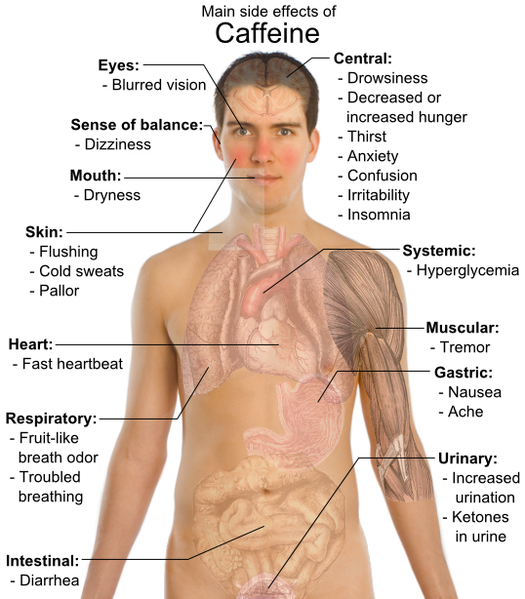 If you’re a coffee drinker, you may have noticed the new super-sized portions available at Starbucks. On this note, it may be worth noting that caffeine is a potent psychoactive substance of which – too much – can turn your buzz into a full-blown panic disorder. The Diagnostic and Statistical Manual for psychiatry outlines a number of caffeine-related conditions mostly involving anxieties that can arise when the natural alertness-promoting effects are pushed to extremes. Some researchers have begun to explore the way the genome interacts with caffeine and it is likely that many genetic markers will surface to explain some of the individual differences in caffeine tolerance.
Here’s a great paper, “Association between ADORA2A and DRD2 Polymorphisms and Caffeine-Induced Anxiety” [doi: 10.1038/npp.2008.17] wherein polymorphisms in the adenosine A2A receptor (ADORA2A encodes the protein that caffeine binds to and antagonizes) – as well as the dopamine D2 receptor (DRD2 encodes a protein whose downstream signals are normally counteracted by A2A receptors) — show associations with anxiety after the consumption of 150mg of caffeine (about an average cup of coffee – much less than the super-size, super-rich cups that Starbucks sells). The variants, rs5751876 (T-allele), rs2298383 (T-allele) and rs4822492 (G-allele) from the ADORA2A gene as well as rs1110976 (-/G genotype) from the DRD2 gene showed significant increases in anxiety in a test population of 102 otherwise-healthy light-moderate regular coffee drinkers.
My own 23andMe data only provides a drop of information suggesting I’m protected from the anxiety-promoting effects. Nevertheless, I’ll avoid the super-sizes.
rs5751876 (T-allele) C/C – less anxiety
rs2298383 (T-allele) – not covered
rs4822492 (G-allele) – not covered
rs1110976 (-/G genotype) – not covered
Posted in ADORA2A, DRD2, Uncategorized | Tagged 23andMe, Anxiety, Brain, Caffeine, Coffee, Cognition, Disorders, DNA, evolution, Genetic testing, Genetics, Mental disorder, Mental health, panic disorder, Personalized medicine, Psychoactive drug, Starbucks, Stress | Leave a Comment »


- Image by mbrownstone via Flickr
Walter Dean Myers, an author of The Young Landlords and many other classic coming of age novels once remarked, “The special place of the young adult novel should be in its ability to address the needs of the reader to understand his or her relationships with the world, with each other, and with adults.” Indeed, the wonderful elaborations of psychosocial development that occur during the teenage years makes for a vivid and tumultuous time – worthy of many a book – especially those like Myers’ that so help adolescents to cope. During this time, a child’s brain and body is supplanted by adult systems, which, from a physiological point of view, place the adolescent’s mind and body at the mercy of thousands of shifting biochemical processes. Such a notion of the shifting sands of adolescence were brought to mind while reading a research article focused on one – just one single example – of biochemical change.
The paper entitled, “Cortico-striatal synaptic defects and OCD-like behaviors in SAPAP3 mutant mice” [doi: 10.1038/nature06104] points out that mice who lack the function of the post-synaptic density scaffolding protein encoded by the SAPAP3 gene display excessive grooming and other behaviors reminiscent of obsessive compulsive disorder – a condition that frequently emerges during adolescence. One of the main findings of the paper is that a normal developmental shift of NR2B –> NR2A subunits of the NMDA receptor does NOT seem to occur – rendering the SAPAP3 mutant mice with an immature form of NMDA receptor. The authors suggest that this may be the underlying reason for the aberrant behavior, and were able to normalize the mutant mice by re-introducing SAPAP3 protein via a lentiviral-mediated expression vector placed in the striatum.
Gosh. This NR2B –> NR2A shift is just one example – one grain – in the shifting biochemical sands of development. Just one of thousands. How did my brain ever make it through?
Posted in SAPAP3, Striatum | Tagged Add new tag, Adolescence, Brain, Chemical synapse, Development, Mental disorder, NMDA, NMDA receptor, Obsessive–compulsive disorder, Walter Dean Myers, Young Landlords | Leave a Comment »

- Image by MAMJODH via Flickr
Oxygen is the key to life. This is because it loves electrons. In the mitochondria of every cell in your body, oxygen (in is atmospheric O2 state) serves as the ultimate electron acceptor and provides the chemical energy that drives the formation of ATP (a form of chemical energy storage that our body uses for all its cellular functions).
Oxygen is the key to death. This is because it loves electrons. When so-called reactive oxygen species (small molecules that contain oxygen in an ionized form) are permitted to roam free in cell and the body, they can indiscriminately pull electrons from other molecules (oxidation) and cause undesirable protein damage and premature cell death.
There is no escaping this chemical reality. The very substance that giveth life, doth take it away and our longevity teeters on the quantum mechanical balance of electrons whizzing around the nucleus of the oxygen atom. (I’ll think about this and the chemical symbol for oxygen (O), next time I chant “Om” in yoga class).
So it is with this humbling knowledge that many search for ways to optimize this balance (several populations have already figured out how to routinely live to 100+ years!) or at least improve the quality of our naturally limited life-span. Light exercise, vegetables, friends and not too much alcohol.
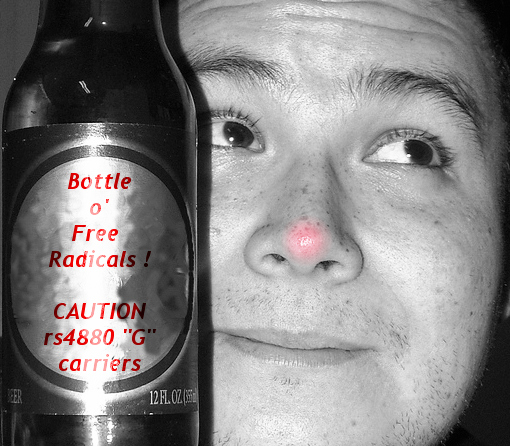
Consider the recent paper, by Srivastava et al., “Association of SOD2, a Mitochondrial Antioxidant Enzyme, with Gray Matter Volume Shrinkage in Alcoholics” [doi: 10.1038/npp.2009.217]. The authors report that shrinkage of the neocortex (gray matter) of the brain is associated chronic high levels of alcohol consumption. That’s right, too much alcohol shrinks your brain. Yikes! How does alcohol exert its effect on brain shrinkage? Well, the authors measured many aspects of liver function (various enzyme levels), but these did not correlate with gray matter shrinkage. Rather, the authors traced the effect to an enzyme that normally keeps harmful reactive oxygen species at bay – the so-called superoxide dismutase (SOD) enzyme. We all have this enzyme, but in some of us, those who carry the rs4880 “G” allele of our SOD2 gene produce an enzyme that has an alanine at position 16 (Ala16) and is less active than the rs4880 “A” allele which encodes a more active enzyme with a Valine at position 16 (Val16). The authors report that the rs10370 “TT”, rs4880 “GG” diplo-genotype (diplotype) was associated with more gray matter shrinkage in 76 individuals who report chronic high levels of alcohol consumption. Here, the less active form of SOD2 is seemingly less able to metabolize all the harmful superoxide radicals that are generated during chronic exposure to alcohol. Apparently their neurons are in retreat.
Posted in SOD2 | Tagged aging, Brain, Mental health, Mitochondrion, Neuron, Oxygen, Reactive oxygen species, Superoxide, Superoxide dismutase | Leave a Comment »
Remarks
Re-Tweetin’
Tweets by genes2brains2meBlog Stats
- 191,755 clickitas
Posting since April 2007
General topics
23andMe Addiction Add new tag aging Anxiety Art Arts autism B. K. S. Iyengar Biology Brain Buddism Central nervous system Cognition comics Consciousness Depression Development DNA Dopamine dualism economics Emotion Empathy Epigenetics evolution fear Frontal lobe Functional magnetic resonance imaging Gene Gene expression Genetics Genetic testing GWAS Health Health care Health insurance Hippocampus History Intelligence Kundalini language Major depressive disorder medication Meditation meme-art Memory Mental disorder Mental health Mind Mutation Nervous system Neural network Neuron Pain parasympathetic nervous system Patañjali Personalized medicine philosophy placebo Psychology Reactive oxygen species Religion and Spirituality Rett Syndrome schizophrenia Social Sciences spirituality Stem cell Stress Suicide synaptogenesis Teachers and Centers Twin Yoga Yoga Sutras of PatanjaliSpecific Items
- 5HTT
- ABCB1
- acetylcholine
- Actin
- ACTN3
- ADH1C
- ADORA2A
- ADRA2A
- AKT
- AMPA receptor
- Amygdala
- Angular gyrus
- ANK3
- APOE
- ARHGAP18
- ASIC1a
- ASPM
- ATXN1
- AVPR1a
- BAF53b
- Basal Ganglia
- BDNF
- CABYR
- CACNA1C
- CACNA2D1
- Caudate nucleus
- CB1 receptor
- CDC34
- CDH13
- Cell adhesion molecules
- Cerebellum
- CHAT
- CHRM3
- CHRNA4
- CHRNA7
- Chromosome structural variants
- Cingulate cortex
- Circadian
- clinical trial
- CNR1
- CNTNAP2
- Collateral sulcus
- COMT
- Corpus callosum
- COX1
- CREB
- CRHR1
- DARPP32
- DAT
- default network
- DISC1
- DLPFC
- DNAJC
- DNMT
- Dopamine
- DPP4
- DRD2
- DRD4
- DTNBP1
- DYRK1A
- EDA2R
- EGR1
- Estrogen
- evolution
- FGF20
- FMR1
- FNBP1L
- FOXA2
- FOXP2
- Frontal cortex
- Frontal pole
- Fusiform gyrus
- G-protein
- GAB2
- GABA
- GABRA2
- GABRG1
- GATA4
- Glucocorticoid receptor
- Glutamate
- GPR6
- GRIA3
- GRIK2
- GTPase
- HDACs
- Hippocampus
- HOXB8
- HRK
- HTR2A
- Hypothalamus
- IL3
- immunity
- Inferior frontal gyrus
- Insula
- Intronic or repetitive sequences
- Kalirin
- KCNA2
- KCNH2
- KCNIP3
- KCNJ6
- Kinesin
- Lateral septum
- Lateral ventricle
- LDB1
- Leptin
- LIMK1
- Locus coeruleus
- MAOA
- MAPK
- MCPH1
- MCR1-4
- MDGA2
- MECP2
- meditation
- MET
- metabolism
- MHC loci
- microRNA
- Middle frontal gyrus
- middle occipital gyrus
- Middle temporal gyrus
- Mindfulness
- Mitochondria
- MKP-1
- Motor cortex
- Myelin
- Neural crest
- NEUROG1
- NLGN3/4
- Noradrenaline
- NPBWR1
- NPSR1
- NRG1
- NRXB1
- NTRK2
- Nucleus accumbens
- NURR1
- Olfactory bulb
- OPRM1
- Orbitofrontal cortex
- OTR
- OXTR
- Parahippocampal gyrus
- Parasympathetic NS
- Parietal cortex
- PARP-1
- PAX6
- PCLO
- PER1
- PINK1
- PLCB1
- Posterior parietal cortex
- PSD95
- Putamen
- quantum physics
- RARB
- RGS2
- RGS4
- Rho GTPase
- RLN
- ROR1
- RORB
- Rostral fronto-occipital fasciculus
- RSRC1
- SAPAP3
- self-awareness
- SEMA(1-7)
- SETDB1
- SEZ6
- SIRT1
- SLC1A1
- SLITRK1
- SNAP25
- SNORD115
- SNRPN
- SOD2
- Somatosensory cortex
- SRPX2
- Stria terminalis
- Striatum
- Substantia nigra
- Subthalamic nucleus
- Superior temporal cortex
- Suprachiasmatic nucleus
- Supramarginal gyrus
- SWI/SNF
- Sylvian fissure
- Telomere
- Temporal lobe
- TGF-alpha
- TH
- Thalamus
- Thap1
- THBS1
- THBS2
- TNF-alpha
- Torsin A
- TPH2
- UBE3A
- UGT2B17
- Uncategorized
- Vagus
- VEGF
- Ventral tegmental area
- VGF
- Visual cortex
- White matter
- Yoga and Meditation
- ZNF804A


 Genes 2 Brains 2 Mind 2 Me