


- Image by cobalt123 via Flickr
If you have a minute, check out this “Autism Sensory Overload Simulation” video to get a feel for the perceptual difficulties experienced by people with autism spectrum disorders. A recent article, “Critical Period Plasticity Is Disrupted in the Barrel Cortex of Fmr1 Knockout Mice” [doi: 10.1016/j.neuron.2010.01.024] provides some clues to the cellular mechanisms that are involved in this phenomenon. The authors examined the developing somatosensory cortex in lab mice who carry a mutation in a gene called FMR1. The normal function of this gene is to help synapses mature and optimize their strength through a process known as activity-dependent plasticity. This a kind of “use-it-or-lose-it” neural activity that is important when you are practicing and practicing to learn something new – say, like riding a bike, or learning a new language. Improvements in performance that come from “using” the circuits in the brain are correlated with optimized synaptic connections – via a complex set of biochemical reactions (eg. AMPA receptor trafficking).
When FMR1 is not functioning, neuronal connections (in this case, synapses that connect the thalamus to the somatosensory cortex) cannot mature and develop properly. This wreaks havoc in the developing brain where maturation can occur in successive critical periods – where the maturation of one circuit is needed to ensure the subsequent development of another. Hence, the authors suggest, the type of sensory overload reported in the autism spectrum disorders may be related to a similar type of developmental anomaly in the somatosensory cortex.
![Reblog this post [with Zemanta]](https://i0.wp.com/img.zemanta.com/reblog_e.png)
Posted in FMR1, Somatosensory cortex, Thalamus | Tagged autism, Autism spectrum, Brain, Cognition, critical period, Development, Mental disorder, Mutation, pruning, Rett Syndrome, sensory overload, synaptic plasticity, synaptic pruning | Leave a Comment »

- Image by muffintoptn via Flickr
Humans are spiritual creatures – there’s no denyin’. How & why we got this way is one of THE BIG questions of all time. Since our genome shapes the development of our brain and its interaction with our culture, its not a surprise to see that, from time to time, folks will look for and find genetic links to various forms of spiritual and religious behavior. Here’s a recent paper from Kenneth Kendler’s research team at the Virginia Institute for Psychiatric and Behavioral Genetics, Virginia Commonwealth University School of Medicine entitled, “A Developmental Twin Study of Church Attendance and Alcohol and Nicotine Consumption: A Model for Analyzing the Changing Impact of Genes and Environment” [link to abstract]. An analysis of more than 700 pairs of twins found that the correlation between alcohol and nicotine consumption and church attendance (more church predicts less smokin’ and drinkin’) is more than 50% influenced by genetic factors – in adults. In children and teens, the genetic contribution to the correlation is much less and the strength of the correlation stems more from shared environmental factors (parents, school etc.). Is there a gene for going to church? Nope. Are there genes that shape a person’s inclination toward novelty or conscientiousness? More likely so. Are they distributed across all races and cultures? Yep. Lots to ponder next Sunday morning.
![Reblog this post [with Zemanta]](https://i0.wp.com/img.zemanta.com/reblog_c.png)
Posted in Uncategorized | Tagged Addiction, Brain, Development, evolution, Mental health, religion, Social Sciences, spirituality, Twin | Leave a Comment »


- Image via Wikipedia

Everyone has a birthday right. Its the day you (your infant self) popped into the world and started breathing, right? But what about the day “you” were born – that is – “you” in the more philosophical, Jungian, spiritual, social, etc. kind of a way when you became aware of being in some ways apart from others and the world around you. In her 1997 paper, “The Basal Ganglia and Cognitive Pattern Generators“, Professor Ann Graybiel writes,
The link between intent and action may also have a quite specific function during development. This set of circuits may provide part of the neural mechanism for building up cognitive patterns involving recognition of the self. It is well documented that, as voluntary motor behaviors develop and as feedback about the consequences of these behaviors occurs, the perceptuomotor world of the infant develops (Gibson 1969). These same correlations among intent, action, and consequence also offer a simple way for the young organism to acquire the distinction between actively initiated and passively received events. As a result, the infant can acquire the recognition of self as actor. The iterative nature of many basal ganglia connections and the apparent involvement of the basal ganglia in some forms of learning could provide a mechanism for this development of self-awareness.
As Professor Graybiel relates the “self” to function in the basal-ganglia and the so-called cortico-thalamic basal-ganglia loops – a set of parallel circuits that help to properly filter internal mental activity into specific actions and executable decisions – I got a kick out of a paper that describes how the development of the basal-ganglia can go awry for cells that are born at certain times.
Check out the paper, “Modular patterning of structure and function of the striatum by retinoid receptor signaling” by Liao et al. It reveals that mice who lack a certain retinoic acid receptor gene (RARbeta) have a type of defective neurogenesis in late-born cells that make up a part of the basal ganglia (striatum) known as a striosome. Normally, the authors say, retinoic acid helps to expand a population of late-born striosomal cells, but in the RARbeta mutant mice, the rostral striosomes remain under-developed. When given dopaminergic stimulation, these mutant mice showed slightly less grooming and more sterotypic behaviors.
So when was “my self’s” birthday? Was it when these late-born striosomal cells were, umm, born? Who knows, but I’m glad my retinoic acid system was intact.
Posted in Basal Ganglia, RARB, Striatum | Tagged Ann Graybiel, Basal Ganglia, Brain, Cognition, Development, Dopamine, Mental health, Neural network, Psychology, schizophrenia, self, self awareness, Striatum | Leave a Comment »
 Just a pointer to a brief chat with Dr. Lars Nyberg from Umea University on the aging brain, genetics and recent insights into “resting states” of the brain and their relation to genetic variation and aging. Links to posts on his current research are here and here.
Posted in Uncategorized | Leave a Comment »


- Image by BiggerPictureImages.com via Flickr
Sometimes, when flipping channels late at night, its hard NOT to stop and gawk at the various spectacles on reality-trash-TV. No self-respecting scientist would admit to being smitten by all the vanity and preening – right? Well, back in 2002, there was a mouse whose homeobox-B8 gene was disrupted – who caused a minor media sensation in the community – for its tendency toward, “excessive grooming … not unlike that of humans suffering from the OC-spectrum disorder”. Hunh? A mouse not-unlike trash-TV celebs who can’t stop fixing their hair? An interesting genetic effect to be sure.
A recent paper, “Loss of Hoxb8 alters spinal dorsal laminae and sensory responses in mice” reports a closer look at this mouse mutation and provides evidence that the excessive grooming is, instead, a consequence merely of “itch perception” which arises from disrupted development of itch specific GrpR-positive neurons in lamina I of the dorsal spinal cord“. Indeed, when the investigators applied sub cutaneous lidocaine to the peripheral nerve endings in the groomed regions – the excessive grooming stopped. If you are interested in the development of the peripheral nervous system, the paper is well worth a read! If you are into the psychology of excessive grooming, the Kardashian sisters always provide a steady stream of data.
Posted in HOXB8 | Tagged Conditions and Diseases, grooming, Neurological Disorders, Neuron, obsessive-compulsive, Perception, Peripheral nervous system, Spinal cord | Leave a Comment »


- Image via Wikipedia

For a great many reasons, research on mental illness is focused on the frontal cortex. Its just a small part of the brain, and certainly, many things can go wrong in other places during brain/cognitive development, but, it remains a robust finding, that when the frontal cortex is not working well, individuals have difficulties in regulating thoughts and emotions. Life is difficult enough to manage, let alone without a well functioning frontal cortex. So its no surprise that many laboratories look very closely at how this region develops prenatally and during childhood.
One of the more powerful genetic methods is the analysis of gene expression via microarrays (here is a link to a tutorial on this technology). When this technology is coupled with extremely careful histological analysis and dissection of cortical circuits in the frontal cortex, it begins to become possible to begin to link changes in gene expression with the physiological properties of specific cells and local circuits in the frontal cortex. The reason this is an exciting pursuit is because the mammalian neocortex is organized in a type of layered fashion wherein 6 major layers have different types of connectivity and functionality. The developmental origins of this functional specificity are thought to lie in a process known as radial migration (here is a video of a neuron as it migrates radially and finds its place in the cortical hierarchy). As cells are queued out of the ventricular zone, and begin their migration to the cortical surface, they are exposed to all sorts of growth factors and morphogens that help them differentiate and form the proper connectivities. Thus, the genes that regulate this process are of keen interest to understanding normal and abnormal cognitive development.
Here’s an amazing example of this – 2 papers entitled, “Infragranular gene expression disturbances in the prefrontal cortex in schizophrenia: Signature of altered neural development?” [doi:10.1016/j.nbd.2009.12.013] and “Molecular markers distinguishing supragranular and infragranular layers in the human prefrontal cortex [doi:10.1111/j.1460-9568.2007.05396.x] both by Dominique Arion and colleagues. In both papers, the authors ask, “what genes are differentially expressed in different layers of the cortex?”. This is a powerful line of inquiry since the different layers of cortex are functionally different in terms of their connectivity. For example, layers II-III (the so-called supragranular layers) are known to connect mainly to other cortical neurons – which is different functionally than layers V-VI (the so-called infragranular layers) that connect mainly to the striatum (layer V) and thalamus (layer VI). Thus, if there are genes whose expression is unique to a layer, then one has a clue as to how that gene might contribute to normal/abnormal information processing.
The authors hail from a laboratory that is well-known for work over many years on fine-scaled histological analysis of the frontal cortex at the University of Pittsburgh and used a method called, laser capture microdissection, where post-mortem sections of human frontal cortex (area 46) were cut to separate the infragraular layer from the supragranular layer. The mRNA from these tissue sections was then used for DNA microarray hybridization. Various controls, replicate startegies and in-situ tissue hybridizations were then employed to validate the initial microarray results.
In first paper, the where the authors compare infra vs. supragranular layers, they report that 40 genes were more highly expressed in the supragranular layers (HOP, CUTL2 and MPPE1 were among the most enriched) and 29 genes were highly expressed in the infragranular layers (ZNF312, CHN2, HS3ST2 were among the most enriched). Other differentially expressed genes included several that have previously been implicated in cortical layer formation such as RLN, TLX-NR2E1, SEMA3E, PCP4, SERPINE2, NR2F2/ARP1, PCDH8, WIF1, JAG1, MBP. Amazing!! A handful of genes that seem to label subpopulations of projection neurons in the frontal cortex. Polymorphic markers for these genes would surely be powerful tools for imaging-genetic studies on cognitive development.
In the second paper, the authors compare infra vs. supragranular gene expression in post-mortem brains from patients with schizophrenia and healthy matched controls. Using the same methods, the team reports both supra- and infragranular gene expression changes in schizophrenia (400 & 1200 differences respectively) – more than 70% of the differences appearing to be reductions in gene expression in schizophrenia. Interestingly, the team reports that the genes that were differentially expressed in the infragranular layers provided sufficient information to discriminate between cases and controls, whilst the gene expression differences in the supragranular layers did not. More to the point, the team finds that 51 genes that were differentially expressed in infra- vs. supragranular expression were also differentially expressed in cases vs. controls (many of these are also found to be associated in population genetic association studies of schiz vs. control as well!). Thus, the team has identified layer (function) -specific genes that are associated with schizophrenia. These genes, the ones enriched in the infragranular layers especially, seem to be at the crux of a poorly functioning frontal cortex.
The authors point to 3 such genes (SEMA3E, SEMA6D, SEMA3C) who happen to members of the same gene family – the semaphorin gene family. This gene family is very important for the neuronal guidance (during radial migration), morphology, pruning and other processes where cell shape and position are regulated. The authors propose that the semaphorins might act as “integrators” of various forms of wiring during development and in adulthood. More broadly, the authors provide a framework to understand how the development of connectivity on the frontal cortex is regulated by genetic factors – indeed, many suspected genetic risk factors play a role in the developmental pathways the authors have focused on.
Posted in RLN, SEMA(1-7) | Tagged Brain, cerebral cortex, Circuitry, Cognition, Development, economics, Frontal lobe, Gene expression, Mental disorder, Mental health, Messenger RNA, neural migration, Neuron, Prefrontal cortex, schizophrenia, Stem cell, University of Pittsburgh | Leave a Comment »

***PODCAST ACCOMPANIES THIS POST***
In his undergraduate writings while a student at Harvard in the early 1900’s E. E. Cummings quipped that, “Japanese poetry is different from Western poetry in the same way as silence is different from a voice”. Isabelle Alfandary explores this theme in Cummings’ poetry in her essay, “Voice and Silence in E. E. Cummings’ Poetry“, giving some context to how the poet explored the meanings and consequences of voice and silence. Take for example, his poem “silence”
silence
.is
a
looking
bird:the
turn
ing;edge, of
life
(inquiry before snow
e.e. cummings
Lately, it seems that the brain imaging community is similarly beginning to explore the meanings and consequences of the brain when it speaks (activations whilst performing certain tasks) and when it rests quietly. As Cummings beautifully intuits the profoundness of silence and rest, I suppose he might have been intrigued by just how very much the human brain is doing when we are not speaking, reading, or engaged in a task. Indeed, a community of brain imagers seem to be finding that the brain at rest has quite a lot to say – moreso in people who carry certain forms of genetic variation (related posts here & here).
A paper by Perrson and colleagues “Altered deactivation in individuals with genetic risk for Alzheimer’s disease” [doi:10.1016/j.neuropsychologia.2008.01.026] asked individuals to do something rather ordinary – to pay attention to words – and later to then respond to the meaning of these words (a semantic categorization task). This simple endeavor, which, in many ways uses the very same thought processes as used when reading poetry, turns out to activate regions of the temporal lobe such as the hippocampus and other connected structures such as the posterior cingulate cortex. These brain regions are known to lose function over the course of life in some individuals and underlie their age-related difficulties in remembering names and recalling words, etc. Indeed, some have described Alzheimer’s disease as a tragic descent into a world of silence.
In their recordings of brain activity of subjects (60 healthy participants aged 49-79), the team noticed something extraordinary. They found that there were differences not in how much the brain activates during the task – but rather in how much the brain de-activates – when participants simply stare into a blank screen at a small point of visual fixation. The team reports that individuals who carry at least one copy of epsilon-4 alleles of the APOE gene showed less de-activation of their their brain (in at least 6 regions of the so-called default mode network) compared to individuals who do not carry genetic risk for Alzheimer’s disease. Thus the ability of the brain to rest – or transition in and out of the so-called default mode network – seems impaired in individuals who carry higher genetic risk.
So, I shall embrace the poetic wisdom of E. E. Cummings and focus on the gaps, empty spaces, the vastness around me, the silences, and learn to bring my brain to rest. And in so doing, perhaps avoid an elderly descent into silence.
***PODCAST ACCOMPANIES THIS POST***
Posted in Cingulate cortex, Hippocampus, Temporal lobe | Tagged aging, Alzheimer's disease, Brain, Cognition, default mode network, default network, dementia, E. E. Cummings, Frontal lobe, Functional magnetic resonance imaging, Genetic testing, Health, Hippocampus, Human brain, Japanese poetry, Poetry, Temporal lobe | Leave a Comment »
 One of the complexities in beginning to understand how genetic variation relates to cognitive function and behavior is that – unfortunately – there is no gene for “personality”, “anxiety”, “memory” or any other type of “this” or “that” trait. Most genes are expressed rather broadly across the entire brain’s cortical layers and subcortical systems. So, just as there is no single brain region for “personality”, “anxiety”, “memory” or any other type of “this” or “that” trait, there can be no such gene. In order for us to begin to understand how to interpret our genetic make-up, we must learn how to interpret genetic variation via its effects on cells and synapses – that go on to function in circuits and networks. Easier said than done? Yes, but perhaps not so intractable.
Here’s an example. One of the most well studied circuits/networks/systems in the field of cognitive science are so-called basal-ganglia-thalamcortical loops. These loops have been implicated in a great many forms of cognitive function involving the regulation of everything from movement, emotion and memory to reasoning ability. Not surprisingly, neuroimaging studies on cognitive function almost always find activations in this circuitry. In many cases, the data from neuroimaging and other methodologies suggests that one portion of this circuitry – the frontal cortex – plays a role in the representation of such aspects as task rules, relationships between task variables and associations between possible choices and outcomes. This would be sort of like the “thinking” part of our mental life where we ruminate on all the possible choices we have and the ins and outs of what each choice has to offer. Have you ever gone into a Burger King and – even though you’ve known for 20 years what’s on the menu – you freeze up and become lost in thought just as its your turn to place your order? Your frontal cortex is at work!
The other aspect of this circuitry is the subcortical basla ganglia, which seems to play the downstream role of processing all that ruminating activity going on in the frontal cortex and filtering it down into a single action. This is a simple fact of life – that we can be thinking about dozens of things at a time, but we can only DO 1 thing at a time. Alas, we must choose something at Burger King and place our order. Indeed, one of the hallmarks of mental illness seems to be that this circuitry functions poorly – which may be why individuals have difficulty in keeping their thoughts and actions straight – the thinking clearly and acting clearly aspect of healthy mental life. Certainly, in neurological disorders such as Parkinson’s Disease and Huntington’s Disease, where this circuitry is damaged, the ability to think and move one’s body in a coordinated fashion is disrupted.
Thus, there are at least 2 main components to a complex system/circuits/networks that are involved in many aspects of learning and decision making in everyday life. Therefore, if we wanted to understand how a gene – that is expressed in both portions of this circuitry – inflenced our mental life, we would have to interpret its function in relation to each specific portion of the circuitry. In otherwords, the gene might effect the prefrontal (thinking) circuitry in one way and the basla-ganglia (action-selection) circuitry in a different way. Since we’re all familiar with the experience of walking in to a Burger King and seeing folks perplexed and frozen as they stare at the menu, perhaps its not too difficult to imagine that a gene might differentially influence the ruminating process (hmm, what shall I have today?) and the action selection (I’ll take the #3 combo) aspect of this eveyday occurrance (for me, usually 2 times per week).
Nice idea you say, but does the idea flow from solid science? Well, check out the recent paper from Cindy M. de Frias and colleagues “Influence of COMT Gene Polymorphism on fMRI-assessed Sustained and Transient Activity during a Working Memory Task.” [PMID: 19642882]. In this paper, the authors probed the function of a single genetic variant (rs4680 is the Methionine/Valine variant of the dopamine metabolizing COMT gene) on cognitive functions that preferentially rely on the prefronal cortex as well as mental operations that rely heavily on the basal-ganglia. As an added bonus, the team also probed the function of the hippocampus – yet a different set of circuits/networks that are important for healthy mental function. OK, so here is 1 gene who is functioning within 3 separable (yet connected) neural networks!
The team focused on a well-studied Methionine/Valine variant of the dopamine metabolizing COMT gene which is broadly expessed across the pre-frontal (thinking) part of the circuitry and the basal-ganglia part of the circuitry (action-selection) as well as the hippocampus. The team performed a neuroimaging study wherein participants (11 Met/Met and 11 Val/Val) subjects had to view a series of words presented one-at-a-time and respond if they recalled that a word was a match to the word presented 2-trials beforehand (a so-called “n-back task“). In this task, each of the 3 networks/circuits (frontal cortex, basal-ganglia and hippocampus) are doing somewhat different computations – and have different needs for dopamine (hence COMT may be doing different things in each network). In the prefrontal cortex, according to a theory proposed by Robert Bilder and colleagues [doi:10.1038/sj.npp.1300542] the need is for long temporal windows of sustained neuronal firing – known as tonic firing (neuronal correlate with trying to “keep in mind” all the different words that you are seeing). The authors predicted that under conditions of tonic activity in the frontal cortex, dopamine release promotes extended tonic firing and that Met/Met individuals should produce enhanced tonic activity. Indeed, when the authors looked at their data and asked, “where in the brain do we see COMT gene associations with extended firing? they found such associations in the frontal cortex (frontal gyrus and cingulate cortex)!
Down below, in the subcortical networks, a differerent type of cognitive operation is taking place. Here the cells/circuits are involved in the action selection (press a button) of whether the word is a match and in the working memory updating of each new word. Instead of prolonged, sustained “tonic” neuronal firing, the cells rely on fast, transient “phasic” bursts of activity. Here, the modulatory role of dopamine is expected to be different and the Bilder et al. theory predicts that COMT Val/Val individuals would be more efficient at modulating the fast, transient form of cell firing required here. Similarly, when the research team explored their genotype and brain activity data and asked, “where in the brain do we see COMT gene associations with transient firing? they found such associations in the right hippocampus.
Thus, what can someone who carries the Met/Met genotype at rs4680 say to their fellow Val/Val lunch-mate next time they visit a Burger King? “I have the gene for obesity? or impulsivity? or “this” or “that”? Perhaps not. The gene influences different parts of each person’s neural networks in different ways. The Met/Met having the advantage in pondering (perhaps more prone to annoyingly gaze at the menu forever) whist the Val/Val has the advantage in the action selecting (perhaps ordering promptly but not getting the best burger and fries combo).
Posted in Cingulate cortex, COMT, Frontal cortex, Hippocampus | Tagged Brain, Cognition, economics, Frontal lobe, Functional magnetic resonance imaging, Gene, Gene expression, Mental disorder, Mental health, Neural network, Neuron, Parkinson's disease | Leave a Comment »
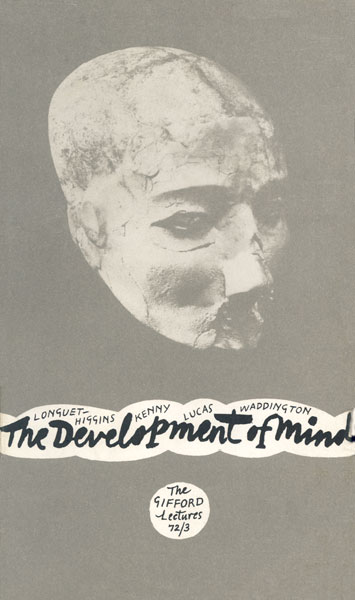 Just a pointer to onetime University of Edinburgh Professor C.H. Waddington’s 1972 Gifford Lecture on framing the genes vs. environment debate of human behavior. Although Waddington is famous for his work on population genetics and evolutionary change over time, several of his concepts are experiencing some resurgence in the neuroimaging and psychological development literatures these days.
One term, CHREOD, combines the Greek word for “determined” or “necessary” and the word for “pathway.” It describes a system that returns to a steady trajectory in contrast to homeostasis which describes a system which returns to a steady state. Recent reviews on the development of brain structure have suggested that the “trajectory” (the actual term “chreod” hasn’t survived) as opposed to any specific time point is the essential phenotype to use for understanding how genes relate to psychological development. Another term, CANALIZATION, refers to the ability of a population to produce the same phenotype regardless of variability in its environment or genotype. A recent neonatal twin study found that the heritability of grey matter in neonatal humans was rather low. However it seems to then rise until young adulthood – as genetic programs presumably kick-in – and then decline again. Articles by neurobiologist Jay N. Giedd and colleagues have suggested that this may reflect Waddington’s idea of canalization. The relative influence of genes vs. environment may change over time in ways that perhaps buffer against mutations and/or environmental insults to ensure the stability and robustness of functions and processes that are both appropriate for survival and necessary for future development. Another Waddington term, EPIGENETIC LANDSCAPE, refers to the limitations on how much influence genes and environment can have on the development of a given cell or structure. Certainly the environment can alter the differentiation, migration, connectivity, etc. of neurons by only so much. Likewise, most genetic mutations have effects that are constrained or compensated for by the larger system as well.
Its amazing to me how well these evolutionary genetic concepts capture the issues at the nexus of of genetics and cognitive development. From his lecture, it is clear that Waddington was not unaware of this. Amazing to see a conceptual roadmap laid out so long ago. Digging the book cover art as well!
Posted in Uncategorized | Tagged Add new tag, Brain, Cognition, cognitive development, Development, evolution, Genetics, Human behavior, Intelligence, Mutation, Population genetics, Psychology, Twin, University of Edinburgh | Leave a Comment »

- Image by Corrie… via Flickr
Coping with fear and anxiety is difficult. At times when one’s life, livelihood or loved one’s are threatened, we naturally hightenen our senses and allocate our emotional and physical resources for conflict. At times, when all is well, and resources, relationships and relaxation time are plentiful, we should unwind and and enjoy the moment. But most of us don’t. Our prized cognitive abilities to remember, relive and ruminate on the bad stuff out there are just too well developed – and we suffer – some more than others (see Robert Saplosky’s book “Why Zebras Don’t Get Ulcers” and related video lecture (hint – they don’t get ulcers because they don’t have the cognitive ability to ruminate on past events). Such may be the flip side to our (homo sapiens) super-duper cognitive abilities.
Nevertheless, we try to understand our fears and axieties and understand their bio-social-psychological bases. A recent paper entitled, “A Genetically Informed Study of the Association Between Childhood Separation Anxiety, Sensitivity to CO2, Panic Disorder, and the Effect of Childhood Parental Loss” by Battaglia et al. [Arch Gen Psychiatry. 2009;66(1):64-71] brought to mind many of the complexities in beginning to understand the way in which some individuals come to suffer more emotional anguish than others. The research team addressed a set of emotional difficulties that have been categorized by psychiatrists as “panic disorder” and involving sudden attacks of fear, sweating, racing heart, shortness of breath, etc. which can begin to occur in early adulthood.
Right off the bat, it seems that one of the difficulties in understanding such an emotional state(s) are the conventions (important for $$ billing purposes) used to describe the relationship between “healthy” and “illness” or “disorder”. I mean, honestly, who hasn’t experienced what could be described as a mild panic disorder once or twice? I have, but perhaps that doesn’t amount to a disorder. A good read on the conflation of normal stress responses and disordered mental states is “Transforming Normality into Pathology: The DSM and the Outcomes of Stressful Social Arrangements” by Allan V. Horwitz.
Another difficulty in understanding how and why someone might experience such a condition has to do with the complexities of their childhood experience (not to mention genes). Child development and mental health are inextrictably related, yet, the relationship is hard to understand. Certainly, the function of the adult brain is the product of countless developmental unfoldings that build upon one another, and certainly there is ample evidence that when healthy development is disrupted in a social or physical way, the consequences can be very unfortunate and long-lasting. Yet, our ability to make sense of how and why an individual is having mental and/or emotional difficulty is limited. Its a complex, interactive and emergent set of processes.
What I liked about the Battaglia et al., article was the way in which they acknowledged all of these complexities and – using a multivariate twin study design – tried to objectively measure the effects of genes and environment (early and late) as well as candidate biological pathways (sensitivity to carbon dioxide). The team gathered 346 twin pairs (equal mix of MZ and DZ) and assessed aspects of early and late emotional life as well as the sensitivity to the inhalation of 35% CO2 (kind of feels like suffocating and is known to activate fear circuitry perhaps via the ASC1a gene). The basic notion was to parcel out the correlations between early emotional distress and adult emotional distress as well as with a very specific physiological response (fear illicited by breathing CO2). If there were no correlation or covariation between early and late distress (or the physiological response) then perhaps these processes are not underlain by any common mechanism.
However, the team found that there was covariation between early life emotion (criteria for separation anxiety disorder) and adult emotion (panic disorder) as well as the physiological/fear response illicited by CO2. Indeed there seems to be a common, or continuous, set of processes whose disruption early in development can manifest as emotional difficulty later in development. Furthermore, the team suggests that the underlying unifying or core process is heavily regulated by a set of additive genetic factors. Lastly, the team finds that the experience of parental loss in childhood increased (but not via an interaction with genetic variation) the strength of the covariation between early emotion, late emotion and CO2 reactivity. The authors note several limitations and cautions to over-interpreting these data – which are from the largest such study of its kind to date.
For individuals who are tangled in persistent ruminations and emotional difficulties, I don’t know if these findings help. They seem to bear out some of the cold, cruel logic of life and evolution – that our fear systems are great at keeping us alive when we’ve had adverse experience in childhood, but not necessarily happy. On the other hand, the covariation is weak, so there is no such destiny in life, even when dealt unfortunate early experience AND genetic risk. I hope that learning about the science might help folks cope with such cases of emotional distress.
Posted in Uncategorized | Tagged Biology, Cognition, Development, DSM, Emotion, fear, Genetics, Mental disorder, Mental health, panic disorder, parental loss, separation anxiety disorder, Stress, Twin | 1 Comment »
Posted in Uncategorized | Tagged Art, meme-art | Leave a Comment »

 DON’T tell the grant funding agencies, but, in at least one way, the effort to relate genetic variation to individual differences in cognitive function is a totally intractable waste of money.
Let’s say we ask a population of folks to perform a task – perhaps a word memory task – and then we use neuroimaging to identify the areas of the brain that (i) were associated with performance of the task, and (ii) were not only associated with performance, but were also associated with genetic variation in the population. Indeed, there are already examples of just this type of “imaging-genetic” study in the literature. Such studies form a crucial translational link in understanding how genes (whose biochemical functions are most often studied in animal models) relate to human brain function (usually studied with cognitive psychology). However, do these genes relate to just this task? What if subjects were recalling objects? or feelings? What if subjects were recalling objects / experiences / feelings / etc. from their childhoods? Of course, there are thousands of common cognitive operations one’s brain routinely performs, and, hence, thousands of experimental paradigms that could be used in such “imaging-genetic” gene association studies. At more than $500/hour (some paradigms last up to 2 hours) in imaging costs, the translational genes-to-cognition endeavor could get expensive!
DO tell the grant funding agencies that this may not be a problem any longer.
The recent paper by Liu and colleagues “Prefrontal-Related Functional Connectivities within the Default Network Are Modulated by COMT val158met in Healthy Young Adults” [doi: 10.1523/jneurosci.3941-09.2010] suggests an approach that may simplify matters. Their approach still involves genotyping (in this case for rs4680) and neuroimaging. However, instead of performing a specific cognitive task, the team asks subjects to lay in the scanner – and do nothing. That’s right – nothing – just lay still with eyes closed and just let the mind wander and not to think about anything in particular – for a mere 10 minutes. Hunh? What the heck can you learn from that?
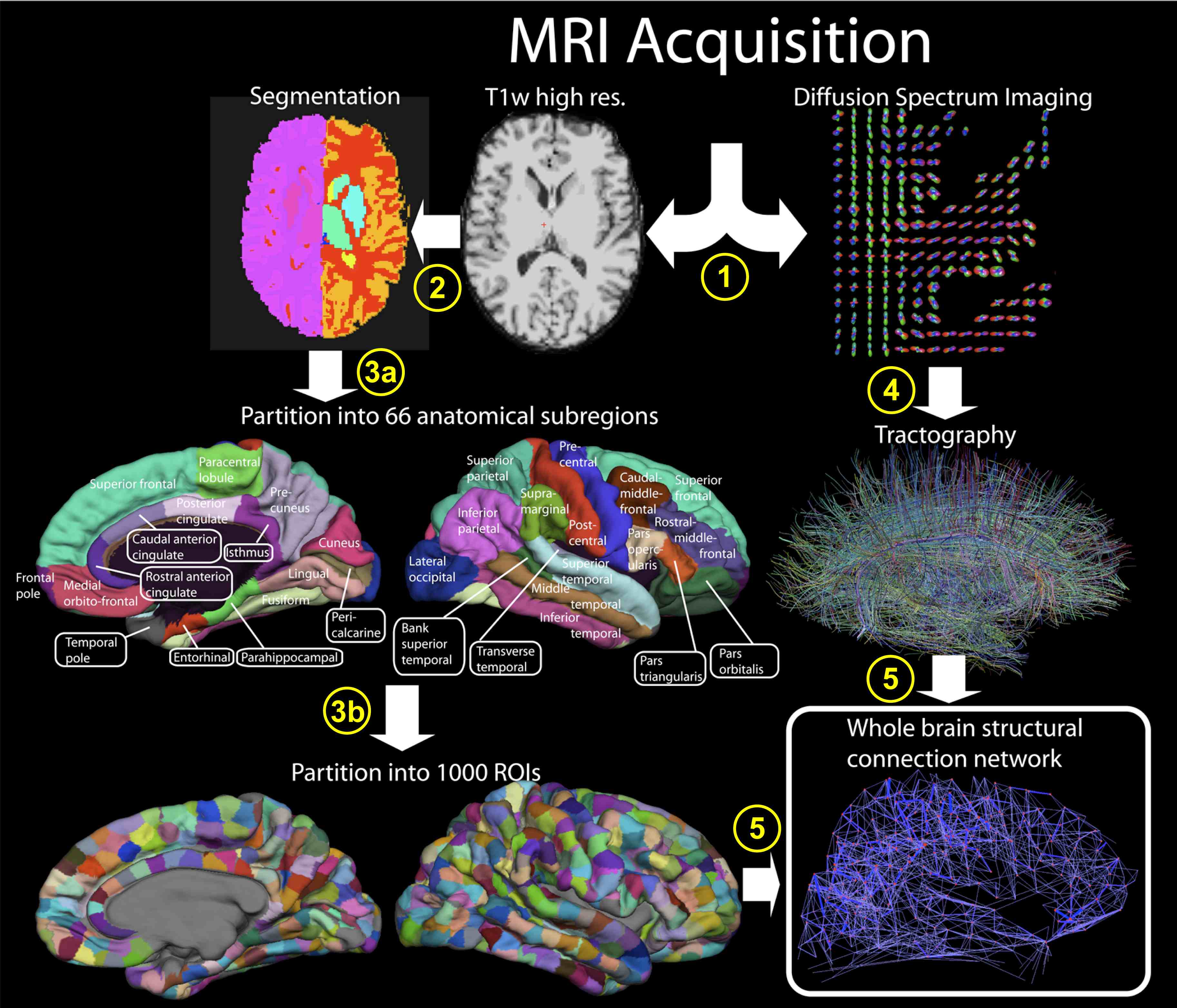
It turns out that one can learn a lot. This is because the neural pathways that the brain uses when you are actively doing something (a word recall task) are largely intact even when you are doing nothing. Your brain does not “turn off” when you are laying still with your eyes closed and drifting in thought. Rather, your brain slips into a kind of default pattern, described in studies of “default networks” or “resting-state networks” where wide-ranging brain circuits remain dynamically coupled and actively exchange neural information. One really great paper that describes these networks is a free-and-open article by Hagmann et al., “Mapping the Structural Core of Human Cerebral Cortex” [doi: 10.1371/journal.pbio.0060159] from which I’ve lifted their Figure 1 above. The work by Hagmann et al., and others show that the brain has a sort of “connectome” where there are thousands of “connector hubs” or nodes that remain actively coupled (meaning that if one node fires, the other node will fire in a synchronized way) when the brain is at rest and when the brain is actively performing cognitive operations. In a few studies, it seems that the strength of functional coupling in certain brain areas at rest is correlated (positively and negatively) with the activation of these areas when subjects are performing a specific task.
In the genetic study reported by Liu and colleagues, they found that genotype (N=57) at the dopaminergic COMT gene correlated with differences in the functional connectivity (synchronization of firing) of nodes in the prefrontal cortex. This result is eerily similar to results found for a number of specific tasks (N-back, Wisconsin Card Sorting, Gambling, etc.) where COMT genotype was correlated with the differential activation of the frontal cortex during the task. So it seems that one imaging paradigm (lay still and rest for 10 minutes) provided comparable insights to several lengthy (and diverse) activation tasks. Perhaps this is the case. If so, might it provide a more direct route to linking genetic variation with cognitive function?
Liu and colleagues do not comment on this proposition directly nor do they seem to be over-interpreting their results in they way I have editorialized things here. They very thoughtfully point out the ways in which the networks they’ve identified and similar and different to the published findings of others. Certainly, this study and the other one like it are the first in what might be a promising new direction!
Posted in Uncategorized | Tagged Biology, Brain, Cognition, connectome, default network, Development, DNA, Dopamine, Frontal lobe, Functional magnetic resonance imaging, Genetics, Memory, Mental health, Prefrontal cortex, Psychology, resting state network | Leave a Comment »
Remarks
Re-Tweetin’
Tweets by genes2brains2meBlog Stats
- 191,755 clickitas
Posting since April 2007
General topics
23andMe Addiction Add new tag aging Anxiety Art Arts autism B. K. S. Iyengar Biology Brain Buddism Central nervous system Cognition comics Consciousness Depression Development DNA Dopamine dualism economics Emotion Empathy Epigenetics evolution fear Frontal lobe Functional magnetic resonance imaging Gene Gene expression Genetics Genetic testing GWAS Health Health care Health insurance Hippocampus History Intelligence Kundalini language Major depressive disorder medication Meditation meme-art Memory Mental disorder Mental health Mind Mutation Nervous system Neural network Neuron Pain parasympathetic nervous system Patañjali Personalized medicine philosophy placebo Psychology Reactive oxygen species Religion and Spirituality Rett Syndrome schizophrenia Social Sciences spirituality Stem cell Stress Suicide synaptogenesis Teachers and Centers Twin Yoga Yoga Sutras of PatanjaliSpecific Items
- 5HTT
- ABCB1
- acetylcholine
- Actin
- ACTN3
- ADH1C
- ADORA2A
- ADRA2A
- AKT
- AMPA receptor
- Amygdala
- Angular gyrus
- ANK3
- APOE
- ARHGAP18
- ASIC1a
- ASPM
- ATXN1
- AVPR1a
- BAF53b
- Basal Ganglia
- BDNF
- CABYR
- CACNA1C
- CACNA2D1
- Caudate nucleus
- CB1 receptor
- CDC34
- CDH13
- Cell adhesion molecules
- Cerebellum
- CHAT
- CHRM3
- CHRNA4
- CHRNA7
- Chromosome structural variants
- Cingulate cortex
- Circadian
- clinical trial
- CNR1
- CNTNAP2
- Collateral sulcus
- COMT
- Corpus callosum
- COX1
- CREB
- CRHR1
- DARPP32
- DAT
- default network
- DISC1
- DLPFC
- DNAJC
- DNMT
- Dopamine
- DPP4
- DRD2
- DRD4
- DTNBP1
- DYRK1A
- EDA2R
- EGR1
- Estrogen
- evolution
- FGF20
- FMR1
- FNBP1L
- FOXA2
- FOXP2
- Frontal cortex
- Frontal pole
- Fusiform gyrus
- G-protein
- GAB2
- GABA
- GABRA2
- GABRG1
- GATA4
- Glucocorticoid receptor
- Glutamate
- GPR6
- GRIA3
- GRIK2
- GTPase
- HDACs
- Hippocampus
- HOXB8
- HRK
- HTR2A
- Hypothalamus
- IL3
- immunity
- Inferior frontal gyrus
- Insula
- Intronic or repetitive sequences
- Kalirin
- KCNA2
- KCNH2
- KCNIP3
- KCNJ6
- Kinesin
- Lateral septum
- Lateral ventricle
- LDB1
- Leptin
- LIMK1
- Locus coeruleus
- MAOA
- MAPK
- MCPH1
- MCR1-4
- MDGA2
- MECP2
- meditation
- MET
- metabolism
- MHC loci
- microRNA
- Middle frontal gyrus
- middle occipital gyrus
- Middle temporal gyrus
- Mindfulness
- Mitochondria
- MKP-1
- Motor cortex
- Myelin
- Neural crest
- NEUROG1
- NLGN3/4
- Noradrenaline
- NPBWR1
- NPSR1
- NRG1
- NRXB1
- NTRK2
- Nucleus accumbens
- NURR1
- Olfactory bulb
- OPRM1
- Orbitofrontal cortex
- OTR
- OXTR
- Parahippocampal gyrus
- Parasympathetic NS
- Parietal cortex
- PARP-1
- PAX6
- PCLO
- PER1
- PINK1
- PLCB1
- Posterior parietal cortex
- PSD95
- Putamen
- quantum physics
- RARB
- RGS2
- RGS4
- Rho GTPase
- RLN
- ROR1
- RORB
- Rostral fronto-occipital fasciculus
- RSRC1
- SAPAP3
- self-awareness
- SEMA(1-7)
- SETDB1
- SEZ6
- SIRT1
- SLC1A1
- SLITRK1
- SNAP25
- SNORD115
- SNRPN
- SOD2
- Somatosensory cortex
- SRPX2
- Stria terminalis
- Striatum
- Substantia nigra
- Subthalamic nucleus
- Superior temporal cortex
- Suprachiasmatic nucleus
- Supramarginal gyrus
- SWI/SNF
- Sylvian fissure
- Telomere
- Temporal lobe
- TGF-alpha
- TH
- Thalamus
- Thap1
- THBS1
- THBS2
- TNF-alpha
- Torsin A
- TPH2
- UBE3A
- UGT2B17
- Uncategorized
- Vagus
- VEGF
- Ventral tegmental area
- VGF
- Visual cortex
- White matter
- Yoga and Meditation
- ZNF804A


 Genes 2 Brains 2 Mind 2 Me